⚠️ This page connects you to Atovia’s partners and affiliate markets. We may receive a commission from affiliate partners for activities made through these links. Discount offers may change at any time according to policy! Rest assured, there are no additional costs to you! We hope this saves you time in finding the right items!
- 1. What Is Total Quality Management? Defining the Foundation
- 2. The History and Evolution of TQM: From Deming to Modern Practice
- 3. Core Principles of Total Quality: Customer Focus and Process Thinking
- 4. Leadership and Commitment: The Role of Management in TQM
- 5. Continuous Improvement Tools: PDCA, Six Sigma, and Kaizen
- 6. Building a Quality Culture: Employee Involvement and Empowerment
- 7. Measuring Quality: Key Performance Indicators and Benchmarking
- 8. TQM in Practice: Real-World Applications and Case Studies
In today’s competitive global marketplace, organizations that consistently deliver high-quality products and services are the ones that survive, grow, and lead. Total Quality Management (TQM) is not simply a set of techniques — it is a comprehensive philosophy that transforms how an organization thinks, operates, and serves its customers. Whether you are a business leader, manager, educator, or student, understanding TQM is essential for building organizations capable of sustained excellence.
This guide provides a thorough introduction to Total Quality Management, tracing its origins, unpacking its core principles, and demonstrating how its tools and practices can be applied in real organizations today.
- Total Quality Management is a holistic, organization-wide approach to achieving consistent quality and continuous improvement.
- TQM originated from the work of quality pioneers such as W. Edwards Deming, Joseph Juran, and Philip Crosby.
- The core principles of TQM include customer focus, process thinking, leadership commitment, and employee involvement.
- Practical TQM tools such as PDCA cycles, Six Sigma, and Kaizen provide structured methods for identifying and solving quality problems.
- Measuring quality through KPIs and benchmarking allows organizations to track progress and sustain improvements over time.
1. What Is Total Quality Management? Defining the Foundation
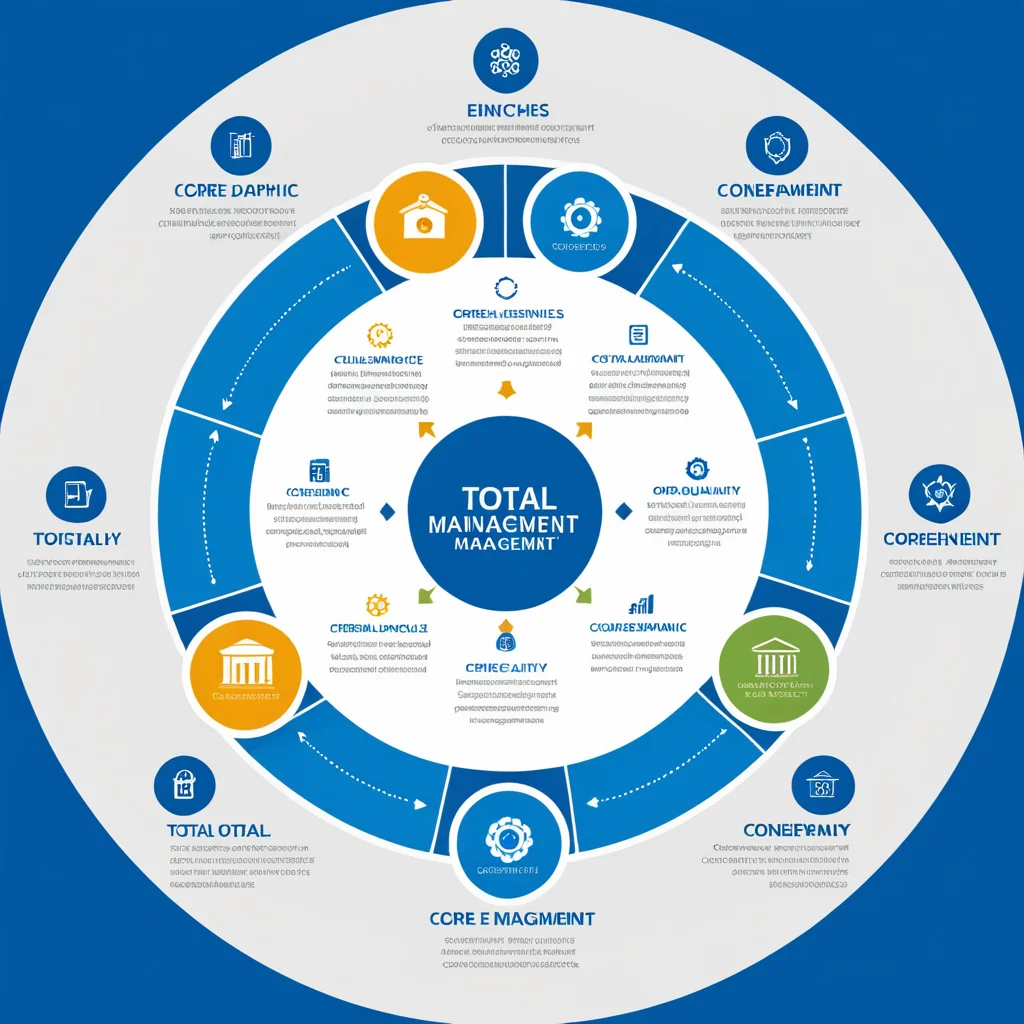
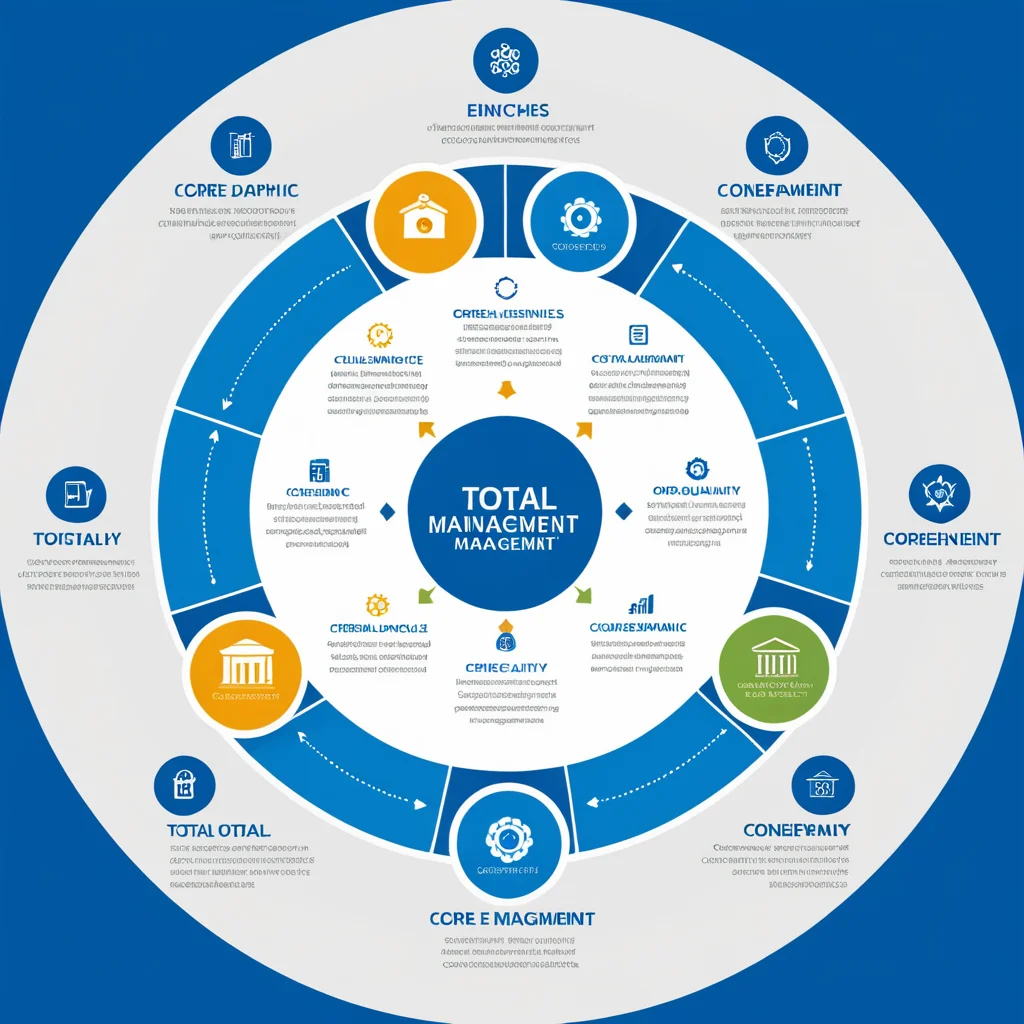
Total Quality Management is a management framework centered on the belief that long-term success comes from customer satisfaction and that all members of an organization must participate in improving processes, products, services, and the culture in which they work. The word total signals that quality is not the responsibility of a single department or individual, but a shared commitment that permeates every function, every process, and every level of the organization.
At its core, TQM rests on several foundational ideas. First, quality must be defined by the customer, not the producer. A product or service is only as good as the value it delivers to the people who use it. Second, quality problems are almost always rooted in systems and processes, not in the failings of individual workers. Third, prevention is always more cost-effective than correction. Catching defects before they reach the customer — or better yet, designing processes that prevent defects from occurring — saves time, money, and reputation.
TQM differs from traditional quality control in a fundamental way. Traditional quality control focuses on inspecting finished products to catch defects. TQM, by contrast, seeks to build quality into every step of the production or service delivery process. It is proactive rather than reactive, systemic rather than piecemeal, and strategic rather than operational.
2. The History and Evolution of TQM: From Deming to Modern Practice
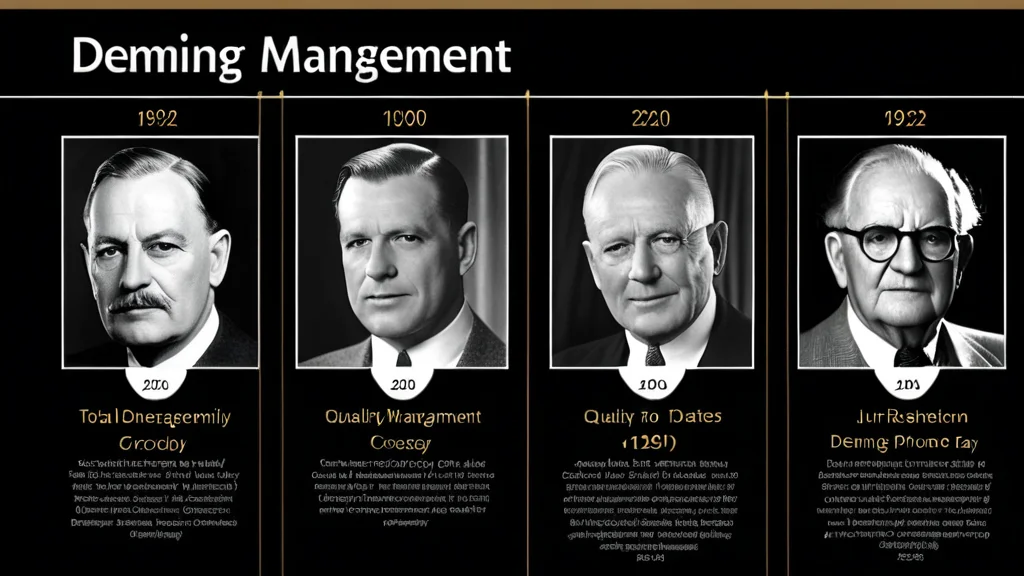
The story of TQM begins in the aftermath of World War II, when American statistician and management consultant W. Edwards Deming traveled to Japan to help rebuild its devastated industrial base. Deming taught Japanese engineers and executives that quality improvement was not just a technical matter but a management responsibility. His 14 Points for Management became a blueprint for organizational transformation, emphasizing constancy of purpose, driving out fear, breaking down departmental barriers, and ceasing dependence on mass inspection.
Joseph Juran contributed the concept of the quality trilogy — quality planning, quality control, and quality improvement — and emphasized that most quality failures are caused by management decisions, not worker errors. Philip Crosby later popularized the idea that quality is free, arguing that the cost of preventing defects is always lower than the cost of fixing them.
By the 1980s, Western companies facing intense competition from Japan began embracing TQM principles. The U.S. government introduced the Malcolm Baldrige National Quality Award in 1987 to recognize organizations that demonstrated excellence in quality management. The International Organization for Standardization developed the ISO 9000 series of quality management standards, which have since been adopted by hundreds of thousands of organizations worldwide.
| Quality Pioneer | Key Contribution | Core Philosophy |
|---|---|---|
| W. Edwards Deming | 14 Points for Management; PDCA Cycle | Quality is a management responsibility; drive out fear |
| Joseph Juran | Quality Trilogy; Cost of Quality | Most defects are caused by management systems, not workers |
| Philip Crosby | Zero Defects; Quality Is Free | Prevention is always cheaper than correction |
| Kaoru Ishikawa | Fishbone Diagram; Quality Circles | Quality is everyone’s responsibility; involve all employees |
| Genichi Taguchi | Taguchi Methods; Robust Design | Design products to be insensitive to variation |
3. Core Principles of Total Quality: Customer Focus and Process Thinking
The first and most fundamental principle of TQM is customer focus. In TQM, the customer is the ultimate judge of quality. This means organizations must deeply understand who their customers are, what they need, what they expect, and how their needs are changing over time. It also means recognizing that there are both external customers — the end users of products and services — and internal customers — the employees and departments within the organization who depend on each other’s work.
Process thinking is the second pillar of TQM. Every output — whether a product, a service, a report, or a decision — is the result of a process. By mapping, analyzing, and improving processes systematically, organizations can eliminate waste, reduce variation, and deliver consistent results. Process thinking shifts the focus from blaming individuals when things go wrong to understanding and improving the systems that produce outcomes.
Other core TQM principles include fact-based decision making, which requires organizations to collect and analyze data rather than relying on intuition or assumption; systems thinking, which recognizes that organizations are interconnected wholes rather than collections of independent parts; and a commitment to mutually beneficial supplier relationships, recognizing that quality extends beyond the organization’s boundaries into its supply chain.
🛒 Recommended Product
4. Leadership and Commitment: The Role of Management in TQM
One of the most consistent findings in TQM research and practice is that quality initiatives succeed or fail based on the commitment of top leadership. Deming placed management at the center of his quality philosophy, arguing that the vast majority of quality problems — some estimates put it at 85 to 94 percent — are caused by management systems, not by individual workers. This means that improving quality requires leaders to examine and redesign the systems, policies, and structures they control.
Effective TQM leadership involves several key behaviors. Leaders must articulate a clear and compelling vision for quality and communicate it consistently throughout the organization. They must allocate resources — time, money, and personnel — to quality improvement initiatives, signaling that quality is a genuine strategic priority rather than a slogan. They must model the values of continuous improvement themselves, demonstrating intellectual humility and a willingness to examine their own assumptions and practices.
Leaders in TQM organizations also create environments where employees feel safe to identify problems, suggest improvements, and challenge the status quo without fear of blame or punishment. Deming called this driving out fear, and it remains one of the most important and most difficult leadership tasks in building a quality culture.

5. Continuous Improvement Tools: PDCA, Six Sigma, and Kaizen
TQM is not merely a philosophy — it is supported by a powerful toolkit of practical methods for identifying, analyzing, and solving quality problems. Three of the most widely used frameworks are the PDCA cycle, Six Sigma, and Kaizen.
The Plan-Do-Check-Act (PDCA) cycle, also known as the Deming Wheel, is a four-stage iterative model for continuous improvement. In the Plan stage, the team identifies a problem, analyzes its root causes, and develops a solution. In the Do stage, the solution is implemented on a small scale. In the Check stage, results are measured and compared to expectations. In the Act stage, successful solutions are standardized and scaled, and the cycle begins again.
Six Sigma is a data-driven methodology that aims to reduce process variation and eliminate defects to a level of no more than 3.4 defects per million opportunities. The DMAIC framework — Define, Measure, Analyze, Improve, Control — provides a rigorous, structured approach to solving complex quality problems.
Kaizen, meaning change for the better, is a philosophy and practice of continuous small improvements involving all employees at all levels. Rather than waiting for breakthrough innovations, Kaizen encourages every worker to identify small inefficiencies and waste in their daily work and propose incremental improvements.
| Improvement Tool | Primary Focus | Best Used For |
|---|---|---|
| PDCA Cycle | Iterative problem-solving and learning | General continuous improvement projects |
| Six Sigma (DMAIC) | Reducing variation and eliminating defects | Complex, data-rich process improvement |
| Kaizen | Small, incremental daily improvements | Building a culture of ongoing improvement |
| Lean | Eliminating waste and maximizing flow | Streamlining processes and reducing lead times |
| Root Cause Analysis | Identifying underlying causes of problems | Solving recurring defects and failures |
6. Building a Quality Culture: Employee Involvement and Empowerment
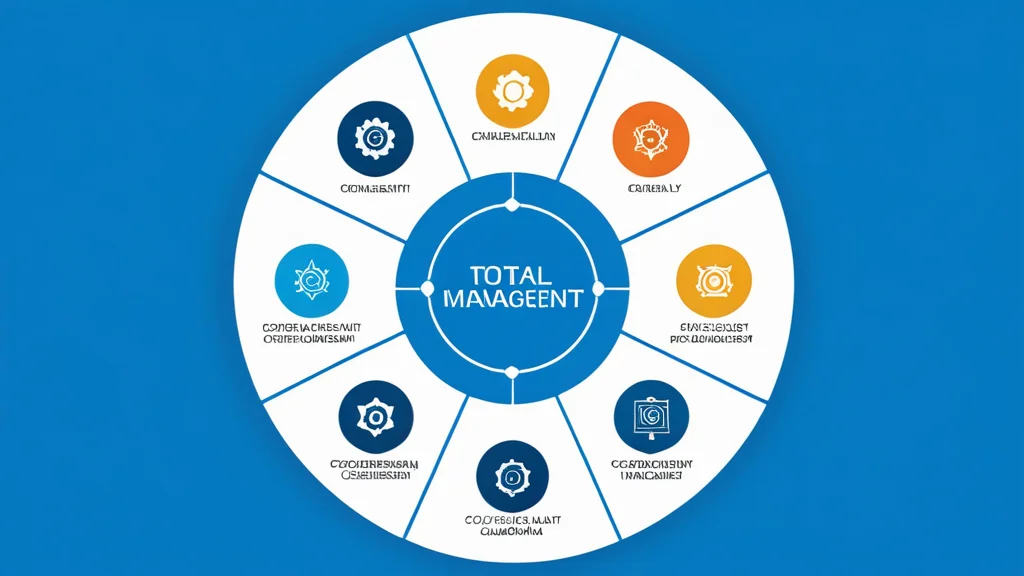
Tools and systems alone cannot sustain a quality organization. The most powerful driver of lasting quality improvement is culture — the shared values, beliefs, and behaviors that shape how people work together every day. Building a quality culture requires deliberate, sustained effort to engage every employee as an active participant in quality improvement, not merely a passive executor of instructions.
Employee involvement begins with education and training. Workers who understand quality principles and tools are far better equipped to identify problems, analyze causes, and implement improvements in their own areas of work. Quality circles — small groups of employees who meet regularly to discuss and solve quality problems in their work area — were pioneered in Japan and have since spread around the world as an effective vehicle for grassroots quality improvement.
Empowerment takes involvement a step further by giving employees the authority and resources to act on their improvement ideas without bureaucratic delays. Recognition and reward systems that celebrate quality contributions reinforce the behaviors that sustain a quality culture over time.
7. Measuring Quality: Key Performance Indicators and Benchmarking
The TQM principle that you cannot manage what you cannot measure underscores the importance of establishing robust systems for tracking quality performance. Key Performance Indicators (KPIs) are quantifiable measures that reflect the most important dimensions of quality for a given organization or process. Common quality KPIs include defect rates, customer satisfaction scores, first-pass yield, on-time delivery rates, and cost of poor quality.
Benchmarking is the practice of comparing an organization’s performance against external reference points — whether industry peers, best-in-class competitors, or recognized best practices. Together, KPIs and benchmarking create a feedback loop that keeps quality improvement focused, evidence-based, and externally oriented.
8. TQM in Practice: Real-World Applications and Case Studies
The principles of Total Quality Management have been successfully applied across virtually every industry and type of organization — from manufacturing and healthcare to education, government, and financial services.
In manufacturing, Toyota’s Production System remains the most celebrated example of TQM in action. Toyota’s relentless focus on eliminating waste, empowering workers to stop the production line when defects occur, and continuously improving every process has made it one of the most efficient and quality-focused manufacturers in the world.
In healthcare, TQM principles have been applied to reduce medical errors, improve patient outcomes, and increase operational efficiency. In education, schools and universities have adopted TQM to improve teaching and learning processes and better serve students as customers of educational services.
- Unwavering commitment from top leadership to quality as a strategic priority
- Deep focus on understanding and meeting customer needs at every level
- Systematic process thinking that replaces blame with analysis and improvement
- Active involvement and empowerment of every employee as a quality contributor
- Consistent use of data and measurement to guide decisions and track progress
- A culture of continuous improvement that never accepts the status quo as good enough
Total Quality Management represents one of the most powerful and enduring frameworks for organizational improvement ever developed. Organizations that embrace TQM not as a program but as a way of thinking and working are the ones best positioned to thrive in a world of increasing complexity, competition, and customer expectation.