⚠️ This page connects you to Atovia’s partners and affiliate markets. We may receive a commission from affiliate partners for activities made through these links. Discount offers may change at any time according to policy! Rest assured, there are no additional costs to you! We hope this saves you time in finding the right items!
A strong economic report comes out, you buy, and the stock drops. What happened? If you have ever traded a headline only to watch the price move against you, the missing piece may be a check between reading the news and placing the order.
News trading means using new information, such as economic reports or policy announcements, to decide whether to buy, hold, or sell an asset. The key is to consider three things together: what was announced, what the market expected, and how the price actually responded.
This five-step guide connects preparation, data interpretation, entry and exit rules, and order selection. The economic examples come from official U.S. statistics, and the order explanations apply to U.S. stocks. Available orders and trading conditions vary by market, product, and brokerage.
Why Do Stocks Fall on Good News?
Good economic news can still send prices lower if it falls short of expectations or supports more than one interpretation. A positive headline and a favorable buying opportunity are separate judgments.
Start with the gap between expectations and results. Knowing that employment increased is not enough. You also need to know how much growth was expected before the release.
This distinction also appears in central bank research. A 2004 Federal Reserve study examined the relationship between unexpected monetary policy changes and stock price reactions. For a trader, the practical takeaway is to separate the announcement itself from its unexpected component. Historical average relationships, however, do not guarantee the direction of any individual release. Federal Reserve, “What Explains the Stock Market’s Reaction to Federal Reserve Policy?” (2004).
Market expectations are not settled facts, either. A 2024 Federal Reserve research note describes cases in which the median professional forecast serves as the market expectation reported in the media. When recording a forecast from an economic calendar, save its source and the time you checked it. Federal Reserve, “The Current-Month Fed Information Effect” (2024).
Use a simple reading order: identify what was released, compare it with expectations, and then check the price reaction in the asset you intend to trade. A better-than-expected number alone does not settle the buying decision.
How to Prepare for an Economic Data Release
Before the announcement, record the official release time, the original source link, the forecast you will use for comparison, the asset you will watch, and the conditions that would make you skip the trade. Keeping these on one page gives you a clear checklist when the report arrives.
Check the Release Time and the Period Covered
The publication date and the period measured are different things. The Bureau of Labor Statistics’ 2026 release calendar specifies that its release times are in Eastern Time. If you follow the calendar from another time zone, convert the time for that date and check whether the calendar date changes. Bureau of Labor Statistics, “Schedule of Releases for 2026” (2026).
An economic calendar can help you organize upcoming events, but confirm the final time and any schedule changes with the agency publishing the report. If you plan to follow consumer inflation, locate the actual release page in advance.
Focus on One Release and One Asset
A narrower focus makes your decisions easier to review. Trading several stocks and currencies around the same inflation report can make it difficult to identify which judgment drove the outcome.
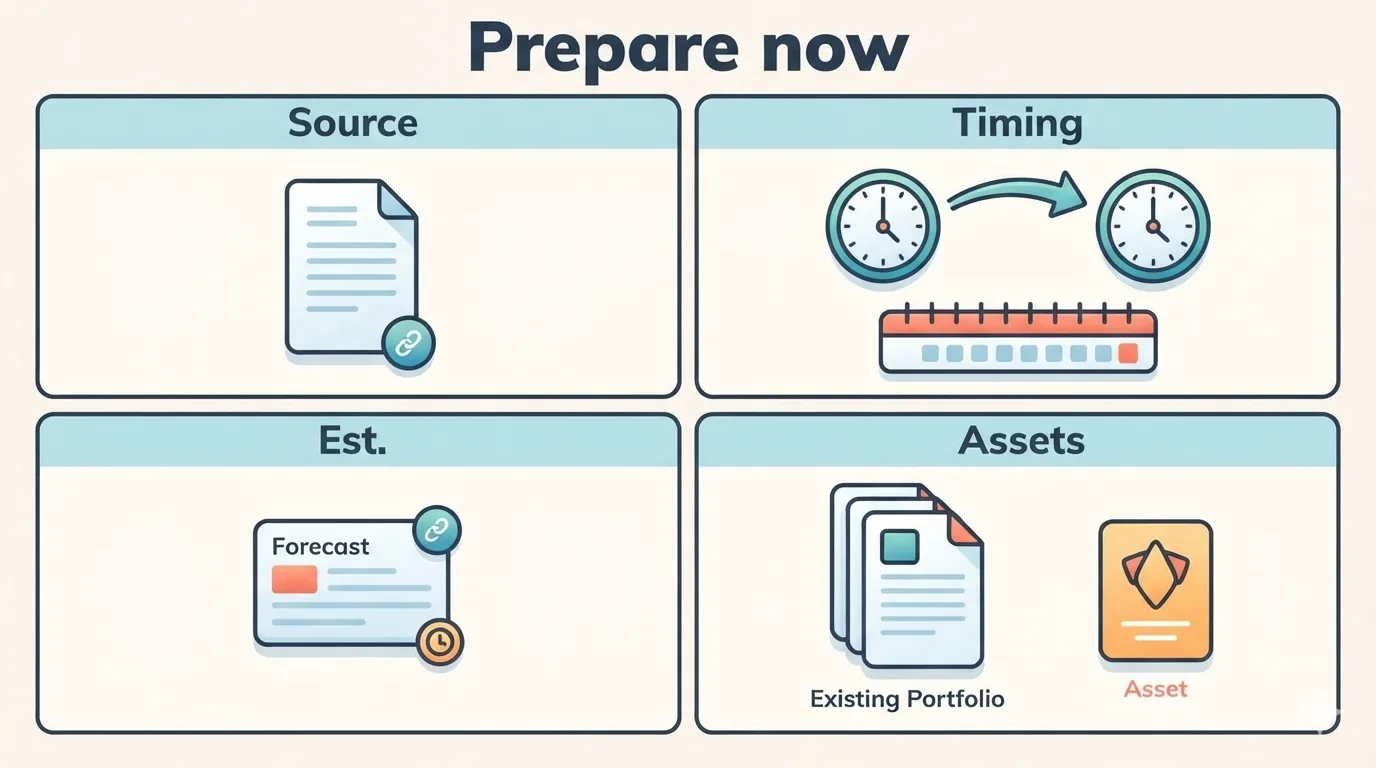
Include existing holdings in your preparation. A small new order can still add to substantial exposure if you already own assets that may move in the same direction.
- Save the official source link and confirm the release time.
- Record the forecast, previous reading, and revisions separately.
- Define what would invalidate the trade, as well as your entry conditions.
- Skip the trade if you cannot verify the data or order conditions.
How to Read Economic Data Releases
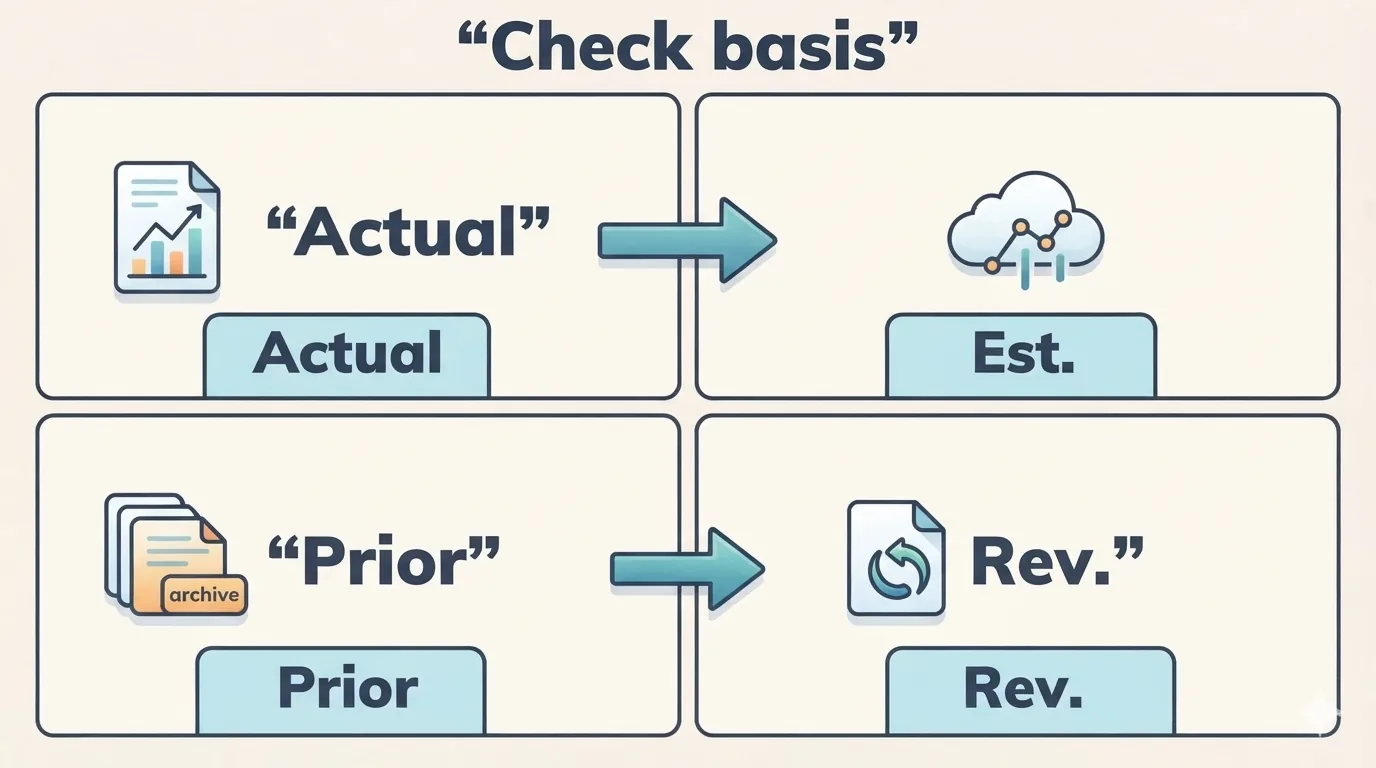
Compare the reported number with a forecast measured on the same basis. Then read the details and check for revisions to earlier figures. Before deciding whether a number is large or small, make sure the comparison is valid.
Month-over-Month vs. Year-over-Year Inflation
Month-over-month measures the change from the preceding month. Year-over-year measures the change from the same month a year earlier. Seasonal adjustment is a statistical process that accounts for recurring seasonal effects. The figures you compare need to cover matching periods and use matching adjustment methods.
In the July 2025 Consumer Price Index release, published on August 12, 2025, the all-items index rose 0.2% month-over-month on a seasonally adjusted basis. Its unadjusted year-over-year increase was 2.7%. Those numbers answer different questions; comparing them directly does not establish that inflation accelerated. Bureau of Labor Statistics, “Consumer Price Index — July 2025” (2025).
In the same release, the index excluding food and energy rose 0.3% month-over-month on a seasonally adjusted basis. That detail would be missed by reading only the headline figure. Check whether the overall number and its components support the same interpretation.
🛒 Recommended Product
Check Revisions to Previous Reports
The employment report published on August 1, 2025, initially put July’s increase in nonfarm payroll employment at 73,000. It also revised the combined May and June employment gains down by 258,000 from their previously reported levels. These were the figures available on that release date. Bureau of Labor Statistics, “The Employment Situation — July 2025” (2025).
The report explains that monthly revisions reflect additional reports received and recalculated seasonal factors. Reading the latest month’s gain alone therefore gives you a different information set from reading it alongside revisions to earlier months.
When reviewing an old news trade, use the data available at the time. Substituting later revisions makes it look as though you could have acted on information that had not yet been published. Save the original release and the time you checked it.
When to Buy or Sell After a News Release
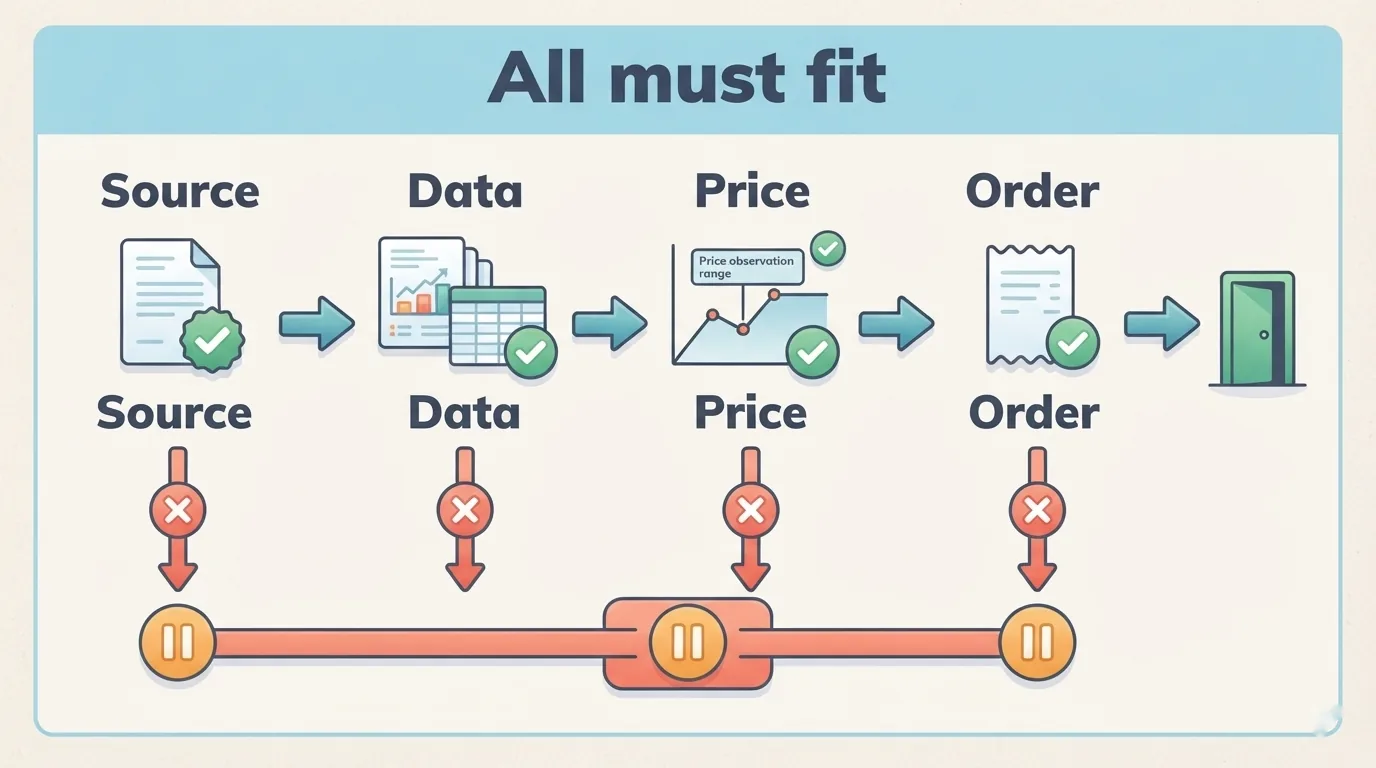
Consider an entry when your predefined information, price, and order conditions are all met. Decide exits using conditions that invalidate your reasoning or satisfy a planned stopping point. Simply waiting a certain amount of time after a release does not create a reason to trade.
Include Price Behavior in Your Entry Rules
For an educational example, a plan could require the headline and supporting details to point toward the same interpretation, followed by a price move outside the range observed before the announcement that holds in that direction. Define both the observation range and the time frame for judging that move before the release.
This is a way to make a decision recordable, not a claim that the approach has proven profitable. Your plan also needs a rule for skipping the trade if the price has already moved beyond your acceptable entry range.
Recheck the Evidence When Prices Move Against Your Interpretation
If you read the report as positive but the price falls, return to your checks before adding a rebound trade. Look for overlooked details, other announcements released at the same time, or a mismatch in the forecast you used.
A price increase also does not prove that a particular headline caused it. Keep observed facts separate from your explanation in your notes. A reaction you cannot explain can be a reason to sit out.
Set Exit Rules for Both Losses and Gains
For a planned purchase, identify the price or information that would invalidate your reason for entering. Write down when you will close the trade if the expected move does not happen. For a profitable trade, use observable exit conditions too, such as reaching a target range or the end of a planned holding period.
You can pass on a trade when the official release is unavailable, key figures conflict, or you cannot assess a suitable order price. Continuing to observe until the next release is also a valid part of the plan.
How to Manage Order Types and Position Size
Understand how your order can execute, then size the trade around the loss you are prepared to accept. Entering a stop price does not guarantee that the actual loss will be limited to that level.
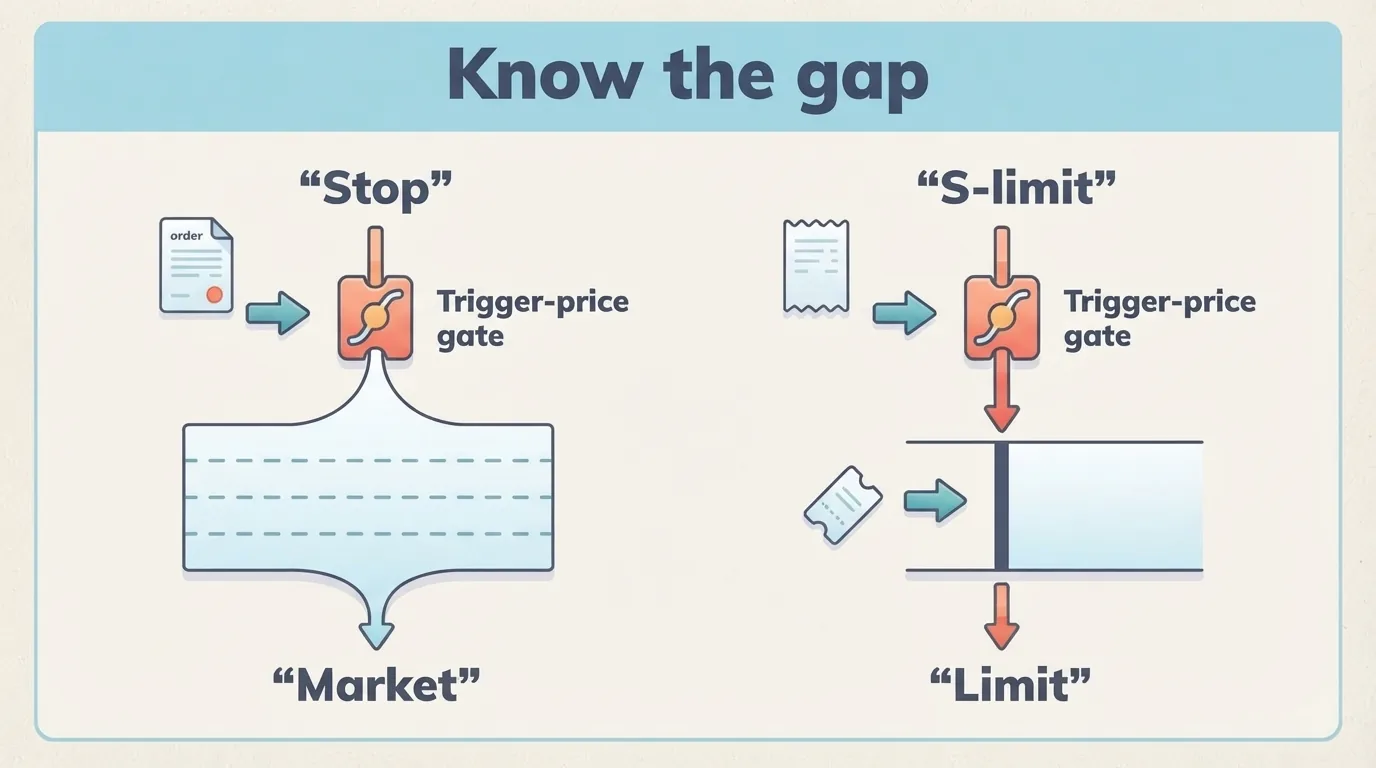
Execution is when an order becomes an actual trade. Slippage is the difference between the price you expected and the price you received. The Securities and Exchange Commission explains that, in fast-moving markets, a market order may execute at a price different from the most recent trade. The table below outlines common U.S. stock order types. SEC, “Investor Bulletin: Understanding Order Types” (published 2017; updated 2026).
| Order Type | How It Works | Limitation to Check Around News |
|---|---|---|
| Market | Seeks execution at the currently available price | Your intended execution price is not guaranteed |
| Limit | Executes at the specified price or better | May remain unfilled if the price condition is not met |
| Stop | Becomes a market order when the trigger price is reached | The execution price can differ from the trigger price |
| Stop-limit | Becomes a limit order when the trigger price is reached | A sell order may remain unfilled during a rapid move, leaving you holding the position |
The appropriate order depends on your objective. Decide how to prioritize price control and execution, and check your broker’s explanation of trigger rules and the hours when each order is supported.
Check the Rules for After-Hours Trading
A news release may arrive outside regular trading hours. The SEC’s 2022 guidance explains that fewer available trading counterparties during extended hours can make transactions harder to complete or more costly. Check which orders are allowed and whether unfilled orders carry over. SEC, “Investor Bulletin: After-Hours Trading” (2022).
Calculate Position Size From Your Planned Stop
For a simple stock purchase funded with cash, you can estimate share quantity by dividing your planned dollar loss by the difference between the intended entry price and the planned stop price. Account for fees and other costs. If the resulting potential loss is more than you can accept, reduce the quantity or skip the trade.
This calculation assumes you can exit at the planned stop price. A different execution price can make the loss larger. Futures, options, and trades using borrowed funds have additional conditions and different profit-and-loss structures, so this calculation should not be applied to them unchanged.
What to Track During Your Next News Release
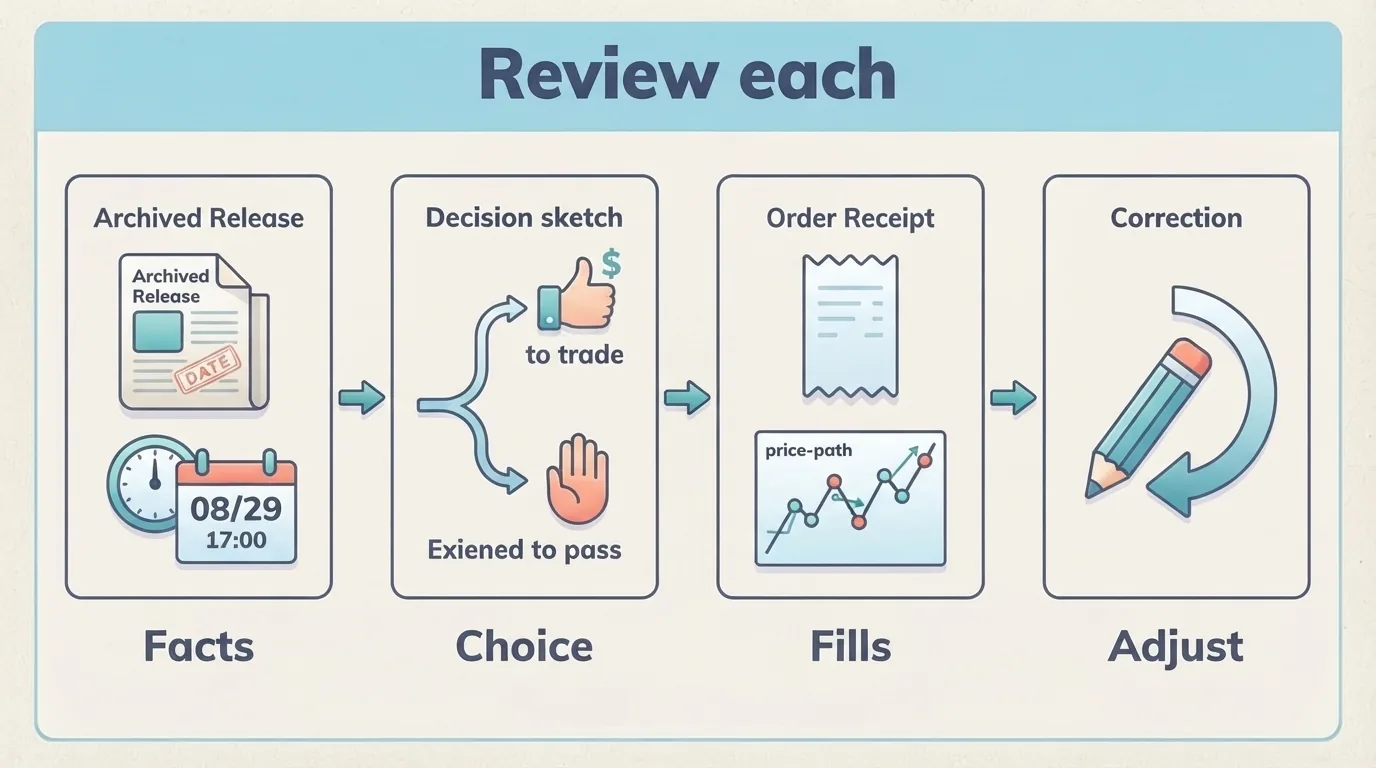
Choose one upcoming release and record the original source, forecast, reported result, price reaction, and your decision to trade or pass on the same sheet. You can start by reviewing your decision process without placing a real order.
Afterward, evaluate your interpretation, adherence to entry rules, and order execution separately. A profitable trade may still have broken your plan. A losing trade may still have followed the process you set beforehand.
Atovia’s approach to reading market news is to separate facts, interpretation, and action. Keeping verified information distinct from your assumptions—and recording how those assumptions led to an order—makes your judgment easier to review.
Before the next economic release, save the official source link and write down your reasons to skip the trade. As you review your process, consider where the toughest decision usually comes: interpreting the numbers or placing the order.
Looking for more ways to make sense of economic news and markets?
Source review date: October 6, 2026. Historical data examples use the figures available when each cited release was published.
- Federal Reserve, “What Explains the Stock Market’s Reaction to Federal Reserve Policy?”, 2004 — Research on unexpected monetary policy changes and stock price reactions.
- Federal Reserve, “The Current-Month Fed Information Effect”, 2024 — Examples of median professional forecasts being used as market expectations.
- Bureau of Labor Statistics, “Schedule of Releases for 2026”, 2026 — Official release dates and the use of Eastern Time.
- Bureau of Labor Statistics, “Consumer Price Index — July 2025”, 2025 — All-items inflation, inflation excluding food and energy, and monthly versus annual comparison bases.
- Bureau of Labor Statistics, “The Employment Situation — July 2025”, 2025 — Payroll figures available at release, revisions to earlier months, and explanations of those revisions.
- Securities and Exchange Commission, “Investor Bulletin: Understanding Order Types”, published 2017; updated 2026 — How market, limit, stop, and stop-limit orders work and their limitations.
- Securities and Exchange Commission, “Investor Bulletin: After-Hours Trading”, 2022 — Extended-hours liquidity, permitted order types, and order duration considerations.