
⚠️ This page connects you to Atovia’s partners and affiliate markets. We may receive a commission from affiliate partners for activities made through these links. Discount offers may change at any time according to policy! Rest assured, there are no additional costs to you! We hope this saves you time in finding the right items!
Maybe you are a curious beginner, a home gardener, or a career-changer thinking about herbalism. Plant medicine is easy to start and just as easy to get wrong. This guide shows you how to study it step by step: set a goal, compare learning routes, choose a course or books, practice hands-on, and stay safe. It is education, not medical advice, and studying plants does not qualify you to diagnose or treat anyone.
As an Amazon Associate I earn from qualifying purchases.
🛒 Recommended Product
- What “Plant Medicine” Means and What You Can Realistically Learn
- Set Your Goal Before You Buy Anything
- Learning Routes Compared
- Core Topics Every Curriculum Should Cover
- How to Choose a Course or Program
- Books and Reference Types to Build Your Shelf
- Hands-On Learning: Gardens, Walks, and Mentors
- Tools and Starter Supplies for Practice
- Safety, Ethics, and Legal Basics
- A Sample 90-Day Study Plan
- Common Beginner Mistakes to Avoid
- Frequently Asked Questions
- Decide your goal first. A hobby, a home apothecary, and a professional practice need very different training.
- Herbalist credentials in the US are voluntary. The American Herbalists Guild (AHG) offers one peer-reviewed credential, the Registered Herbalist (RH), which involves 1,200+ hours of study.
- Any good curriculum includes safety, herb-drug interactions, and contraindications, not only plant profiles.
- Avoid courses and sellers that promise cures. In the US, supplements cannot legally claim to treat or cure disease.
- Combine study methods: books or courses for knowledge, plus gardens, plant walks, and mentors for real skill.
What “Plant Medicine” Means and What You Can Realistically Learn
“Plant medicine” is a broad phrase, so start by knowing which field you are actually entering.
- Herbalism: the traditional and modern use of plants for wellness, taught in many styles.
- Ethnobotany: the study of how people and cultures use plants.
- Pharmacognosy: the science of drugs and active compounds that come from natural sources.
- Traditional systems: whole frameworks such as Traditional Chinese Medicine, Ayurveda, and Western herbalism, each with its own theory and vocabulary.
Study can give you real knowledge and skill. It does not make you a licensed clinician. Rules about who may practice, and what they may say, differ by state and country, so check the rules where you live before offering services to others.
Set Your Goal Before You Buy Anything
Your goal decides how much time, money, and depth you need. Common goals include:
- Personal wellness and curiosity
- A home apothecary for your own household
- Becoming a professional or clinical herbalist
- A research or science path
- A plant-based product business
Before choosing a route, answer four questions in writing:
- What do I want to be able to do in a year?
- How many hours per week can I realistically give?
- What budget am I comfortable with, including books and supplies?
- Do I learn best from reading, video, or hands-on work?
Learning Routes Compared
There is no single best route. This table gives a general comparison. Costs and time vary widely by provider, so always confirm details with the school or teacher.
| Route | Typical cost | Time commitment | Hands-on practice | Credential value | Best for |
|---|---|---|---|---|---|
| Self-study | Usually lowest; varies widely | Flexible, self-paced | Only what you arrange yourself | None on its own | Curious beginners testing their interest |
| Online course | Varies widely by provider | Weeks to months | Limited unless it includes projects | Depends on the school | Structured learning on a schedule you control |
| Certificate program | Varies widely by provider | Months to a few years | Often included | Not standardized; check the school’s reputation | Career-minded learners who want structure |
| Degree program | Generally the highest | Multiple years | Varies by program | Recognized academically | Research, science, or clinical-adjacent paths |
| Apprenticeship or mentorship | Varies; may be paid or by arrangement | Ongoing, often long-term | High | Depends on the mentor’s standing | Learning practical skills and real-world judgment |
One useful benchmark: the AHG says its Associate membership expects roughly two years of training or experience, averaging five or more hours a week, or about 500 hours. The AHG also lists independent study as one way to build knowledge, so a mix of routes is normal.
Core Topics Every Curriculum Should Cover
Whatever route you pick, check that the curriculum covers these basics:
- Botany basics and plant identification
- Plant constituents and how plants are traditionally described
- Preparation methods such as teas, tinctures, and salves
- Human anatomy and physiology
- Safety principles, including how strength and preparation type affect use
- Herb-drug interactions and contraindications
- Ethical and sustainable harvesting
If a program is all plant profiles and no safety or physiology, treat that as a gap.
How to Choose a Course or Program
Use this checklist on any course or school before you pay:
- Instructor background: Are their training and experience clearly stated?
- Syllabus depth: Are there clear learning outcomes and a full topic list?
- Safety content: Does it include interactions, contraindications, and when to refer to a clinician?
- Trial materials: Can you preview sample lessons?
- Policies and reviews: Is there a clear refund policy, and are reviews available from independent sources?
Warning signs: promises to cure or treat diseases, no safety module, and high-pressure sales tactics such as countdown discounts.
Ready to build your learning kit? Browse beginner-friendly courses, reference guides, and practice supplies, and use the checklist above to compare them.
Books and Reference Types to Build Your Shelf
A good shelf mixes several types of books rather than duplicating one kind:
- A field guide for your region
- A materia medica, which describes individual plants
- A safety and interactions reference
- A botany text
- A regional flora for accurate identification
When choosing, look for author credentials, cited evidence, a recent edition, and relevance to the plants where you live. Use more than one source, because authors disagree.
Hands-On Learning: Gardens, Walks, and Mentors
Reading only gets you so far, so add real plants to your routine:
- Practice garden: Grow a few plants and watch them through the seasons.
- Guided plant walks: Learn identification from someone local.
- Herbal societies and classes: Meet people who already practice.
- Mentors and apprenticeships: Learn judgment that books cannot teach.
If you forage, follow local, state, and land-manager rules, and never harvest a plant you cannot identify with certainty.
🛒 Recommended Product
Tools and Starter Supplies for Practice
You do not need much to begin. A simple starter kit includes:
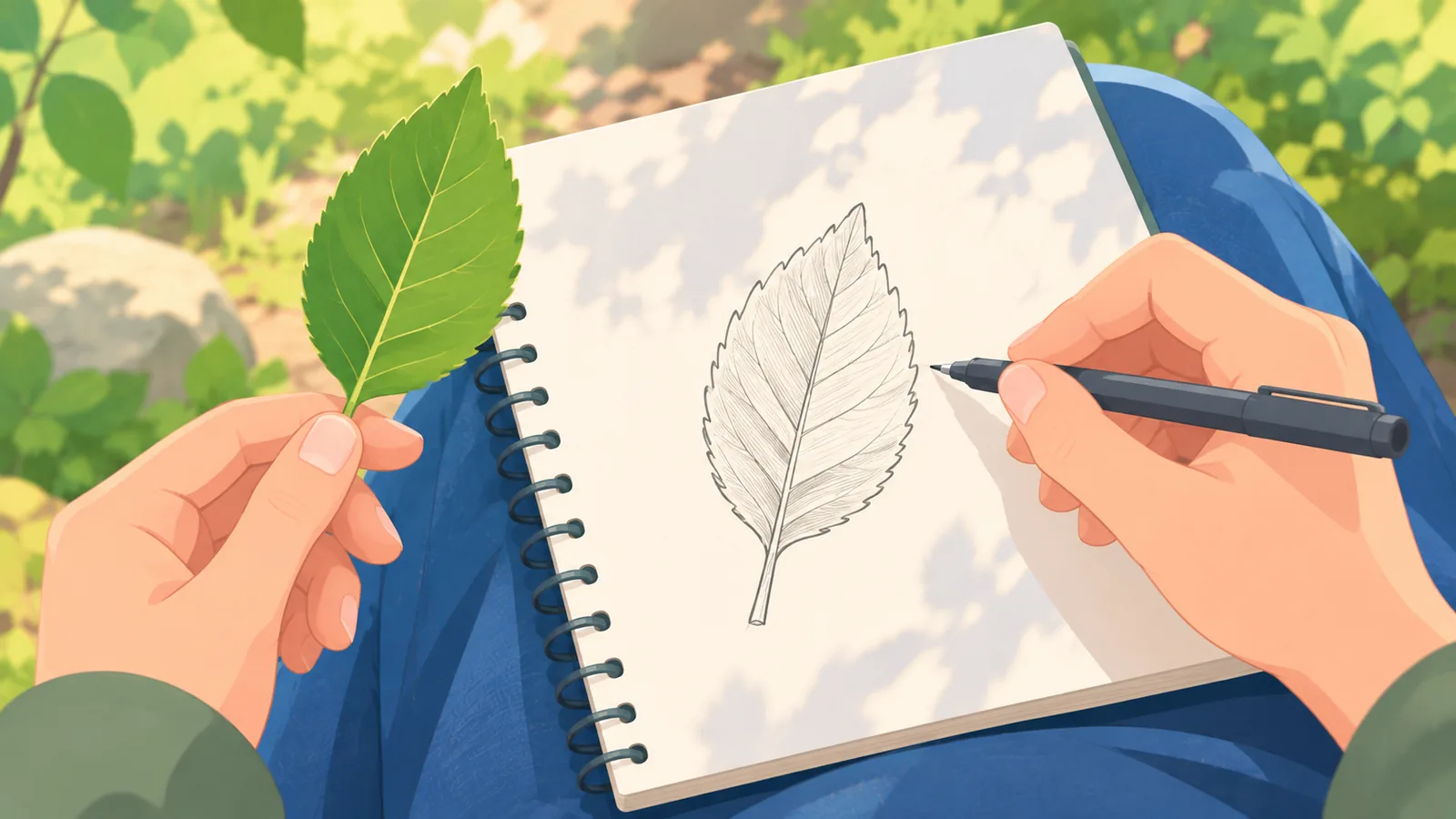
- A field notebook and pencil
- A hand lens for looking at plant features
- Pressing supplies for specimens
- Clean glass jars and a labeling system
- A kitchen scale
- Dry, dark storage space
Match spending to your goal. A wellness hobbyist can start with the notebook, lens, and a few jars. Someone planning a product business will eventually need more equipment and should learn the labeling rules first. Buy in stages rather than all at once.
Safety, Ethics, and Legal Basics
Plants can interact with medications, and some are unsafe during pregnancy or with certain health conditions. People with allergies also need extra care. Learn these topics early, and send anyone with a health concern to a qualified clinician rather than advising them yourself.
Claims matter. In the US, dietary supplements may make limited structure or function claims, but the label must state that the FDA has not evaluated the claim and that the product is not intended to diagnose, treat, cure, or prevent any disease. Claims naming a specific disease generally do not qualify, and implied disease claims can also be a problem.
Sustainability matters too. United Plant Savers keeps an At-Risk List of medicinal plants under harvest pressure, with three tiers: In Review, At-Risk, and Critical. It recommends cultivated sources of at-risk plants whenever possible, with wild harvesting kept very limited and in line with federal, state, and local rules.
Credentials: In the US, herbalist credentials are voluntary. The AHG Registered Herbalist credential is committee-reviewed and involves 1,200+ hours of study. The AHG posted in January 2026 that RH applications were paused, so check its website for the current status.
A Sample 90-Day Study Plan
This is an example, not a standard. It assumes about five hours a week and is a starting phase, not a credential.
- Month 1, foundations and safety: Learn key terms, basic botany, and safety principles. Milestone: explain interactions and contraindications in your own words.
- Month 2, identification and preparations: Identify a handful of common local plants and learn how basic preparations are made. Milestone: keep a field notebook entry for each plant.
- Month 3, practice and review: Join a plant walk, review your notes, and choose your next learning route. Milestone: write a short plan for the next year.
Common Beginner Mistakes to Avoid
- Skipping safety to get to the “fun” plant profiles
- Relying on a single book, teacher, or website
- Buying too many supplies and courses too fast
- Ignoring local rules on foraging, selling, and claims
- Treating tradition as proof, or assuming “natural” means safe
Frequently Asked Questions
Do I need a degree to study plant medicine?
No. Many people learn through courses, books, and mentors. A degree mainly helps for research or science-focused paths.
How long does it take?
It depends on your goal. The AHG’s Associate level expects about two years and roughly 500 hours, and its Registered Herbalist credential involves 1,200+ hours. Many beginners start with a few months of foundations.
Is it safe to self-study?
Studying is fine. Using plants on other people or making health claims without proper training is where risk begins. Learn safety first and refer health concerns to clinicians.
Can I make a living from it?
Some people earn through teaching, products, consulting, or clinical settings, but results vary and I cannot give income figures. Check local rules before offering services.
Are certificates regulated?
Not in a standardized way in the US. The AHG’s peer-reviewed RH credential is voluntary and not a government license, so judge each program on its own quality.
How much does it cost?
Costs vary widely by route and provider. Start with library books and free local events, then invest in a course once you know your goal.
References
- American Herbalists Guild, Registered Herbalist and Associate Member pages (americanherbalistsguild.com)
- U.S. Food and Drug Administration, Structure/Function Claims (fda.gov)
- United Plant Savers, At-Risk List information (unitedplantsavers.org)
Want more comparisons and buying guides?