⚠️ This page connects you to Atovia’s partners and affiliate markets. We may receive a commission from affiliate partners for activities made through these links. Discount offers may change at any time according to policy! Rest assured, there are no additional costs to you! We hope this saves you time in finding the right items!
Most candidates do not fail because they lack effort. They fail because the plan they chose does not fit the time they have. This guide helps you match a study plan to your timeline, starting level, and budget, and then choose the planners, prep books, and mock-test platforms that support it. You will find three plan lengths, two comparison tables, selection criteria, and a start-ready checklist. Before you commit to anything, confirm your exam date, syllabus, and format on the official exam website.
As an Amazon Associate I earn from qualifying purchases.
🛒 Recommended Product
- What Makes a Study Plan the Best One for Competitive Exams
- How to Choose a Plan Based on Your Timeline and Starting Level
- 12-Week Sprint Plan
- 6-Month Balanced Plan
- 12-Month Foundation Plan
- Comparison of Plan Types
- Self-Study vs. Coaching vs. Hybrid
- How to Build Your Daily and Weekly Schedule
- How to Use Mock Tests and Error Logs
- What to Buy: Selection Criteria for Planners, Prep Books, and Test Platforms
- Pre-Purchase and Pre-Start Checklist
- Common Mistakes That Derail a Study Plan
- Frequently Asked Questions
- Choose your plan based on the time you actually have, not the time you wish you had.
- Cover the syllabus first, then revise it in repeated cycles.
- Put mock tests on a fixed schedule instead of taking them when you feel ready.
- Review your errors once a week and turn them into next-week priorities.
- Buy planners, books, and platforms only after your plan is set.
What Makes a Study Plan the Best One for Competitive Exams
The best study plan is not the one with the most hours or the fanciest schedule. It is the one you can follow for the whole preparation period while still covering everything the exam tests. A common approach is to judge any plan against four criteria.
- Syllabus coverage: Every topic in the official syllabus has a slot in the calendar, including your weakest areas.
- Revision cycles: Topics come back at increasing intervals instead of being studied once and left behind.
- Mock-test frequency: Timed practice tests are scheduled in advance and grow more frequent as the exam approaches.
- Flexibility: The plan includes buffer time for missed days, illness, and topics that take longer than expected.
Score any plan you are considering from 1 to 5 on each criterion. A plan that scores low on even one of them has a gap worth fixing before you begin.
The best plan also differs by exam type and starting level. An exam with a broad syllabus rewards longer concept building, while an exam with a narrow syllabus and heavy time pressure rewards more timed practice. Numbers in this guide are examples only. Adjust them to your exam, your starting level, and your schedule, and check the exam’s official guidance.
How to Choose a Plan Based on Your Timeline and Starting Level
Choosing a plan takes three quick checks. Do them before you buy any materials.
- Take a baseline diagnostic test. Use a practice paper or a sample test in the official format, under timed conditions. The goal is not a good score. The goal is an honest starting point.
- List your weak topics. Sort the topics you missed or guessed on into three groups: not learned, learned but shaky, and careless errors.
- Count your real daily hours. Subtract work, classes, commuting, and rest. Use the hours that remain, not the hours you hope to find.
Then use this simple decision guide, keeping in mind that it is a framing device and not an official standard.

- About 12 weeks or less, and a strong base in most topics: consider the 12-week sprint plan.
- About 4 to 8 months, with a mix of strong and weak areas: consider the 6-month balanced plan.
- About 9 to 12 months or more, or a beginner facing a heavy syllabus: consider the 12-month foundation plan.
If your timeline and your baseline point to different plans, choose the longer plan and compress it later if needed. Compressing a plan is easier than stretching one.
12-Week Sprint Plan
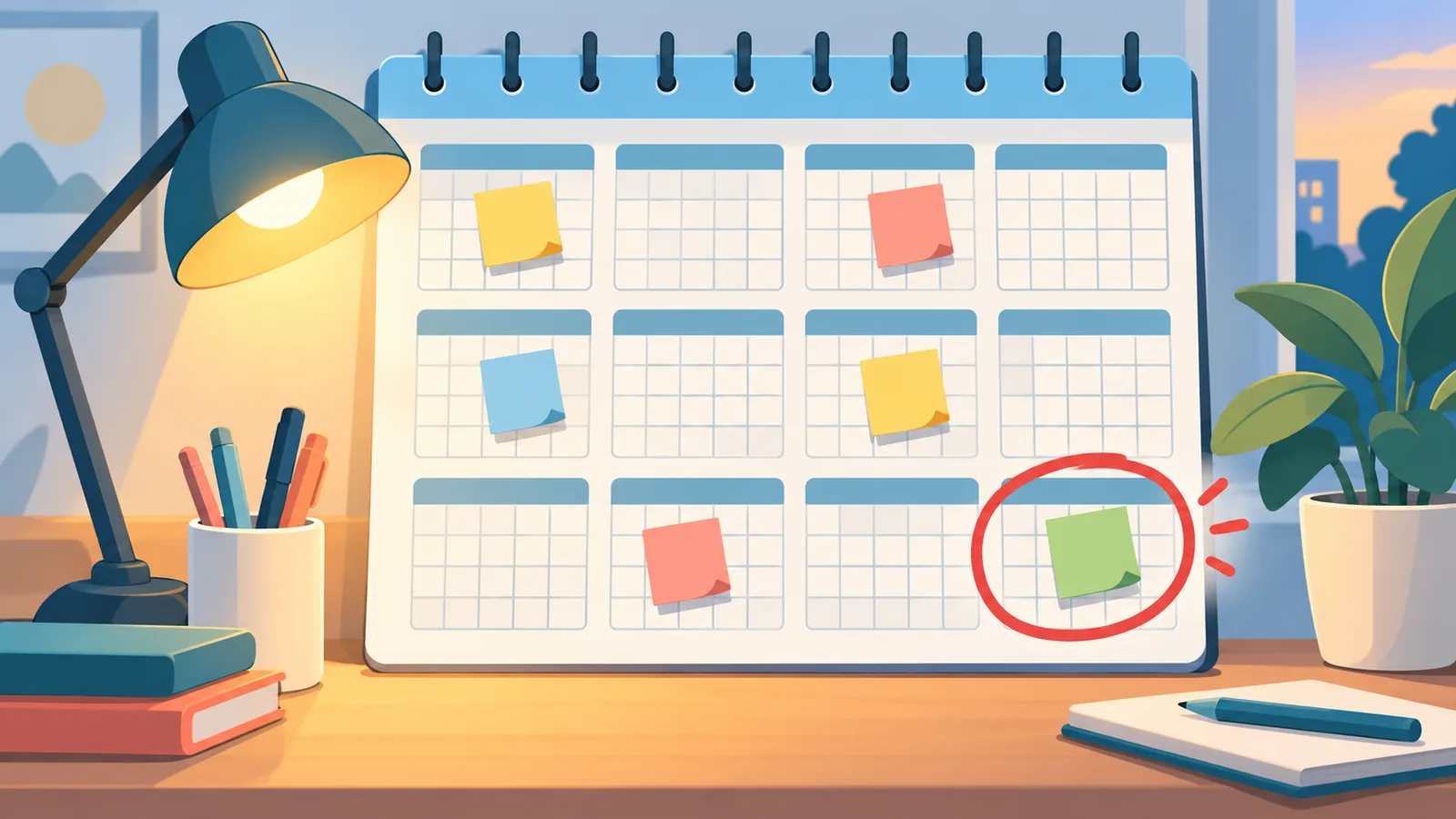
The sprint plan is built for candidates who already know most of the material or who face a short deadline. It leaves little room for error, so it works best when your baseline test shows only a few weak areas.
| Phase | Example Timing | Focus |
|---|---|---|
| Core topics | Weeks 1 to 4 | Close gaps in weak topics and skim strong ones |
| Practice | Weeks 5 to 8 | Topic-wise questions and the first full mocks |
| Mocks | Weeks 9 to 11 | Regular full-length timed tests with error review |
| Final revision | Week 12 | Error log, formula or fact sheets, light practice, rest |
Risks: There is almost no buffer, and one lost week can break the schedule. Revision cycles are short, so retention depends on disciplined review.
Who should avoid it: Beginners, candidates with a heavy work schedule, and anyone whose baseline test shows large gaps across many topics. A longer plan is the safer choice for them.
6-Month Balanced Plan
The 6-month plan suits many working students and career changers because it leaves room for a job, a class schedule, and a few off days. It builds revision into every month instead of saving it for the end.

- Month 1: Diagnostic test, syllabus map, and first pass through the highest-priority topics.
- Months 2 and 3: Finish the first pass, then start the first revision cycle. Add short weekly quizzes.
- Month 4: Second revision cycle and topic-wise practice. Take the first full-length mock.
- Month 5: Increase mocks to a steady rhythm and target the weak topics shown in your error log.
- Month 6: Final revision, timed practice under exam conditions, and a lighter last week.
Sample weekly schedule (example): Monday to Thursday for learning and practice, Friday for review, Saturday for a timed test or long practice block, and Sunday for rest or a light error-log review. Adjust the days to fit your work or class hours.
12-Month Foundation Plan
The foundation plan is designed for beginners and for exams with a heavy syllabus. It spends the first phase on real understanding, so later practice stands on solid concepts rather than memorized shortcuts.

- Months 1 to 5, concept building: Learn topics in a logical order, make short notes, and do small practice sets after each topic.
- Months 6 to 9, practice: Move to mixed question sets, start regular quizzes, and complete two revision cycles.
- Months 10 to 12, exam simulation: Full-length mocks, strict timing, and focused repair of weak areas.
Burnout prevention: Schedule one full rest day each week and a lighter week after each major phase. Protect sleep, because memory consolidation depends on it.
Checkpoint reviews: At the end of every second month, repeat a short diagnostic test, compare it with your baseline, and adjust the plan. A year is long enough for a plan to drift, so regular checkpoints keep it honest.

Comparison of Plan Types
The table below places the three plans side by side. All figures are examples. Adjust them to your exam and check the official guidance.
| Factor | 12-Week Sprint | 6-Month Balanced | 12-Month Foundation |
|---|---|---|---|
| Total duration | About 12 weeks | About 6 months | About 12 months |
| Daily study hours (example range) | Higher, about 5 to 7 | Moderate, about 3 to 5 | Lower to moderate, about 2 to 4 |
| Best for | Strong base or short deadline | Working students and career changers | Beginners and heavy syllabi |
| Mock-test pattern | Frequent, starting early | Steady, increasing from month 4 | Few early, many in the last three months |
| Revision cycles | One to two short cycles | Two to three cycles | Three or more cycles |
| Main risk | No buffer for setbacks | Mid-plan drift | Burnout and slow start |
Self-Study vs. Coaching vs. Hybrid
Your plan also needs a delivery method. There is no single right answer, and the comparison below stays qualitative because costs vary widely by exam and region.
🛒 Recommended Product

| Factor | Self-Study | Coaching | Hybrid |
|---|---|---|---|
| Cost level | Lower | Higher | Moderate |
| Accountability | Depends on you | Built in through classes and deadlines | Partial, through selected sessions |
| Flexibility | High | Lower, fixed timetable | Moderate to high |
| Personalization | Full control, no outside feedback | Varies by class size | Targeted help where you need it |
Who benefits: Self-study suits disciplined candidates with a clear syllabus and good materials. Coaching suits those who need structure and external deadlines. Hybrid suits candidates who can study alone but want expert help on a few difficult topics or regular feedback on mock tests.
How to Build Your Daily and Weekly Schedule
A schedule turns a plan into habits. Start with a time-block template and adjust it to your energy levels.

- Morning block: New or difficult topics, when concentration is usually highest.
- Afternoon block: Practice questions and applied problems.
- Evening block: Revision, error-log review, and short notes for the next day.
Weekly rhythm: Learn early in the week, practice in the middle, review at the end, and rest fully on one day. Keep the review day fixed so it does not get pushed aside.
If you work full-time or attend classes: Use two shorter blocks on weekdays, such as one before work and one in the evening, and place longer sessions and mocks on weekends. A realistic schedule you keep is better than an ambitious one you abandon in week three.
How to Use Mock Tests and Error Logs
Mock-test cadence (suggested pattern, not a required count): Take fewer mocks early, when you are still learning, and more in the final phase. In a 12-week plan, mocks start early and become weekly. In a 6-month plan, they usually start around month 4. In a 12-month plan, they concentrate in the last three months.
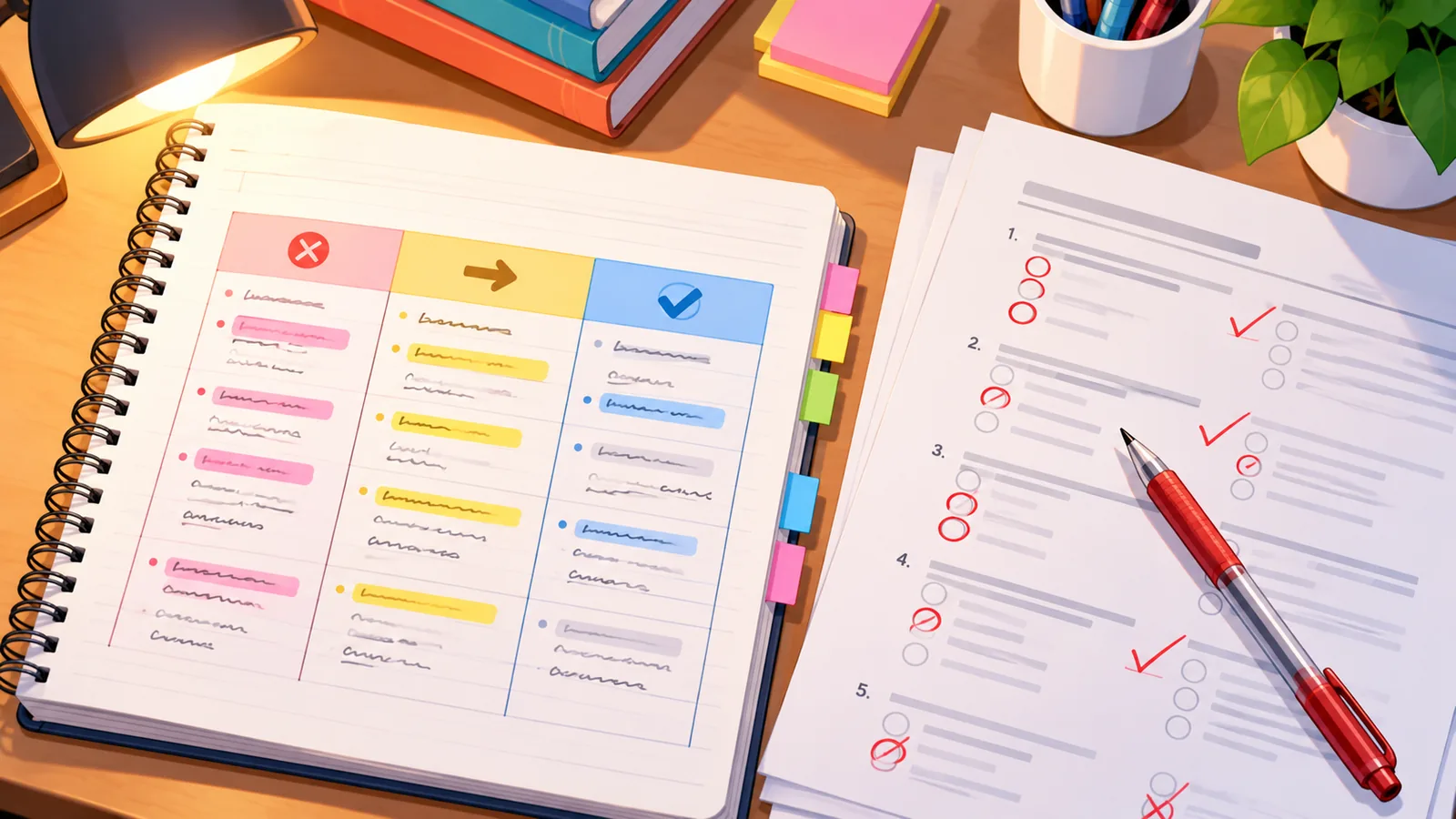
Error-log method: After every mock or practice set, record each mistake in a simple table with the topic, the question, and the cause. Sort each cause into one of three categories.
- Concept errors: You did not know or misunderstood the idea. Fix by relearning the topic.
- Careless errors: You knew it but slipped. Fix by slowing down on checks and reading questions fully.
- Time-management errors: You ran out of time or spent too long on one item. Fix with timed drills and skip-and-return rules.
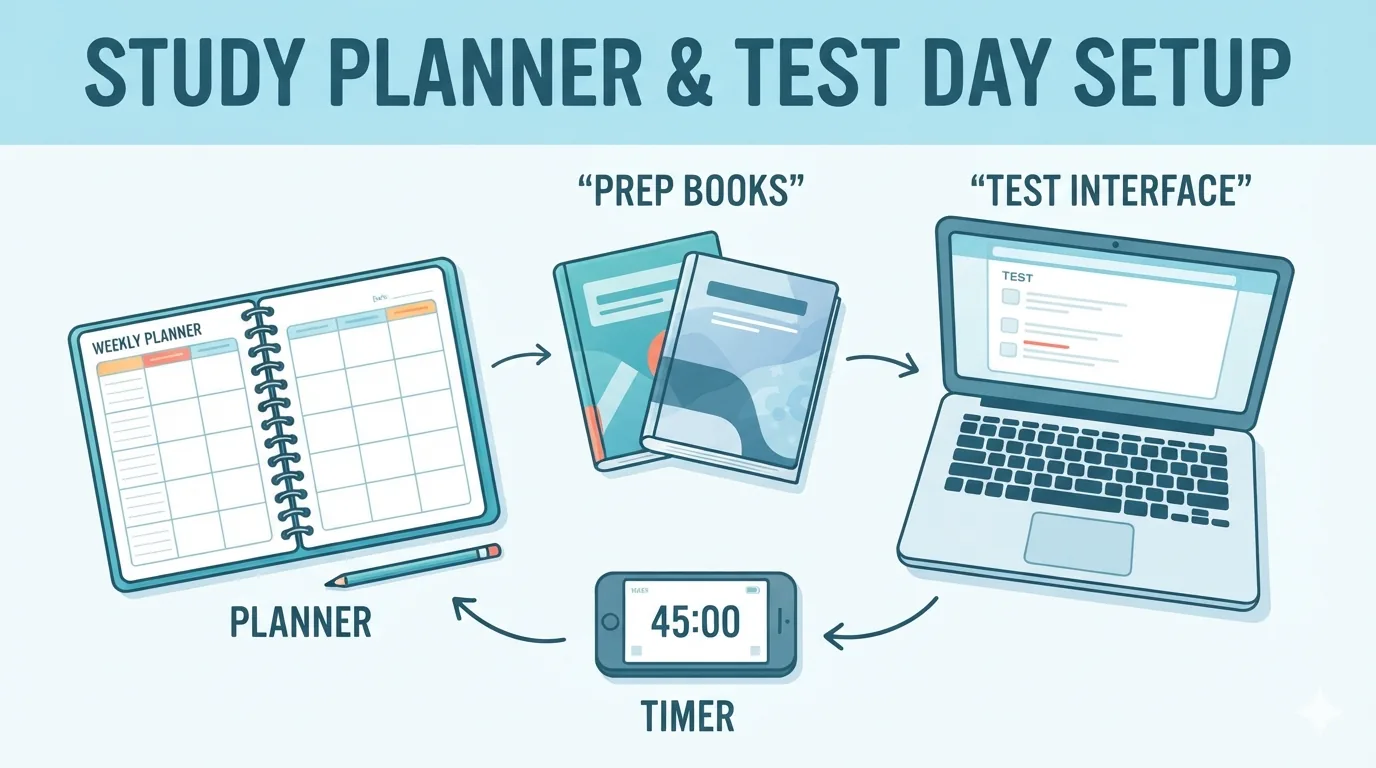
Next-week priorities: On your weekly review day, count the errors in each category and choose the top two or three topics to repair. Those become the first blocks of the following week.
What to Buy: Selection Criteria for Planners, Prep Books, and Test Platforms
Buy tools after you have chosen a plan, not before. The criteria below describe what to look for, and each one includes a check you can perform. No brands are recommended here, and you should be cautious of any product that promises a guaranteed score.
Planners
- Layout: Look for weekly and monthly views. Check that the daily space fits your time blocks.
- Weekly review space: Confirm there is room to write a short summary and next-week priorities.
- Durability: Check binding and paper thickness if you will carry it every day.
Prep Books
- Syllabus alignment: Compare the book’s table of contents with the official syllabus.
- Edition currency: Check the publication year and confirm it reflects the current exam format.
- Explanation quality: Read the solution to a sample question. Good explanations show the reasoning, not only the answer.

Mock-Test Platforms
- Question quality: Try a free sample test and compare difficulty and style with the official format.
- Analytics: Look for topic-wise breakdowns and time-per-question data that feed your error log.
- Timing realism: Confirm the timer, section structure, and interface resemble the real exam.
- Pricing model: Compare one-time and subscription options, and check the refund and renewal terms before paying.
Avoid buying many resources at once. One book per subject and one mock-test source are enough to start, and you can add more if your error log shows a clear gap.
Pre-Purchase and Pre-Start Checklist
- Confirm your exam date, syllabus, and format on the official exam website.
- Take a baseline diagnostic test under timed conditions.
- Choose one plan length and write your phase dates on a calendar.
- Set one fixed weekly review day.
- Set a budget cap for books, planners, and platforms.
- Book your mock-test dates in advance.
- Prepare a simple error-log template.
- Plan buffer days for illness and unexpected events.

Common Mistakes That Derail a Study Plan
| Mistake | Fix |
|---|---|
| Over-planning with a schedule too dense to follow | Cut the daily plan by about a quarter and add buffer time. |
| Skipping revision to finish new topics | Reserve fixed revision blocks that cannot be replaced by new learning. |
| Delaying mock tests until you feel ready | Book mock dates in advance and treat them like appointments. |
| Collecting too many resources | Limit yourself to one main source per subject and finish it. |
| Ignoring sleep and breaks | Protect a consistent sleep schedule and one weekly rest day. |
Start with a baseline diagnostic test, choose the plan that fits your timeline, and then pick your tools using the selection criteria above.
Frequently Asked Questions
How many hours should I study daily?
It depends on your exam, starting level, and available time. Many candidates work within an example range of about 3 to 6 hours on regular days, and less when they also work full-time. Check the exam’s official guidance and adjust based on your results.
Is coaching necessary?
Not always. Coaching can add structure and feedback, but a disciplined candidate with current materials and a clear plan can prepare without it. A hybrid approach, with help on only the hardest topics, is another option.

How many mock tests are enough?
There is no universal number. A useful approach is to take enough tests to build a steady rhythm in the final phase and to review every test thoroughly. A reviewed test teaches more than several rushed ones.
What if I fall behind schedule?
Use your buffer days first. If you are still behind, drop low-priority topics before you drop revision or mocks, and consider moving to a longer plan if your exam date allows.
Can I prepare while working full-time?
Yes, many candidates do. A 6-month or 12-month plan with two short weekday blocks and longer weekend sessions is a common approach. Consistency matters more than long single sessions.
- Official exam website for your specific exam: confirm dates, syllabus, and format before starting your plan.
- General learning-science principles on spaced revision and retrieval practice, applied here as broad study guidance rather than exam-specific claims.
Want more comparisons and buying guides?