⚠️ This page connects you to Atovia’s partners and affiliate markets. We may receive a commission from affiliate partners for activities made through these links. Discount offers may change at any time according to policy! Rest assured, there are no additional costs to you! We hope this saves you time in finding the right items!
- 1. What Defines the Best Lawyer in World History?
- 2. Abraham Lincoln: The Self-Made Legal Legend
- 3. Clarence Darrow: The Great Defender of the Underdog
- 4. Thurgood Marshall: The Attorney Who Ended School Segregation
- 5. Nelson Mandela: Lawyer, Prisoner, and President
- 6. Ruth Bader Ginsburg: The Strategic Architect of Gender Equality
- 7. Comparing the Greatest Lawyers in History
- 8. Key Lessons Every Lawyer and Client Should Learn
- 9. How to Find a World-Class Lawyer for Your Case Today
Across centuries and continents, a handful of extraordinary attorneys have risen above the rest — not merely by winning cases, but by transforming the very fabric of society through the force of legal argument, moral courage, and relentless advocacy. The best lawyers in world history were not defined by wealth or fame alone. They were defined by their willingness to stand in the most difficult courtrooms, face the most powerful opponents, and fight for the most vulnerable clients. Their legacies endure in constitutional amendments, landmark Supreme Court rulings, and the liberation of entire peoples. This guide explores who they were, what made them great, and what their stories mean for anyone seeking exceptional legal representation today.
- The greatest lawyers in history combined intellectual brilliance with unshakable moral conviction.
- Abraham Lincoln, Clarence Darrow, Thurgood Marshall, Nelson Mandela, and Ruth Bader Ginsburg each reshaped law and society through their advocacy.
- Common traits among history’s best lawyers include strategic thinking, powerful communication, ethical clarity, and long-term vision.
- When hiring a top attorney today, look for verified track records, peer recognition, clear communication, and specialization in your legal area.
- Online directories, bar association referrals, and lawyer-ranking platforms can connect you with world-class legal talent right now.
1. What Defines the Best Lawyer in World History?
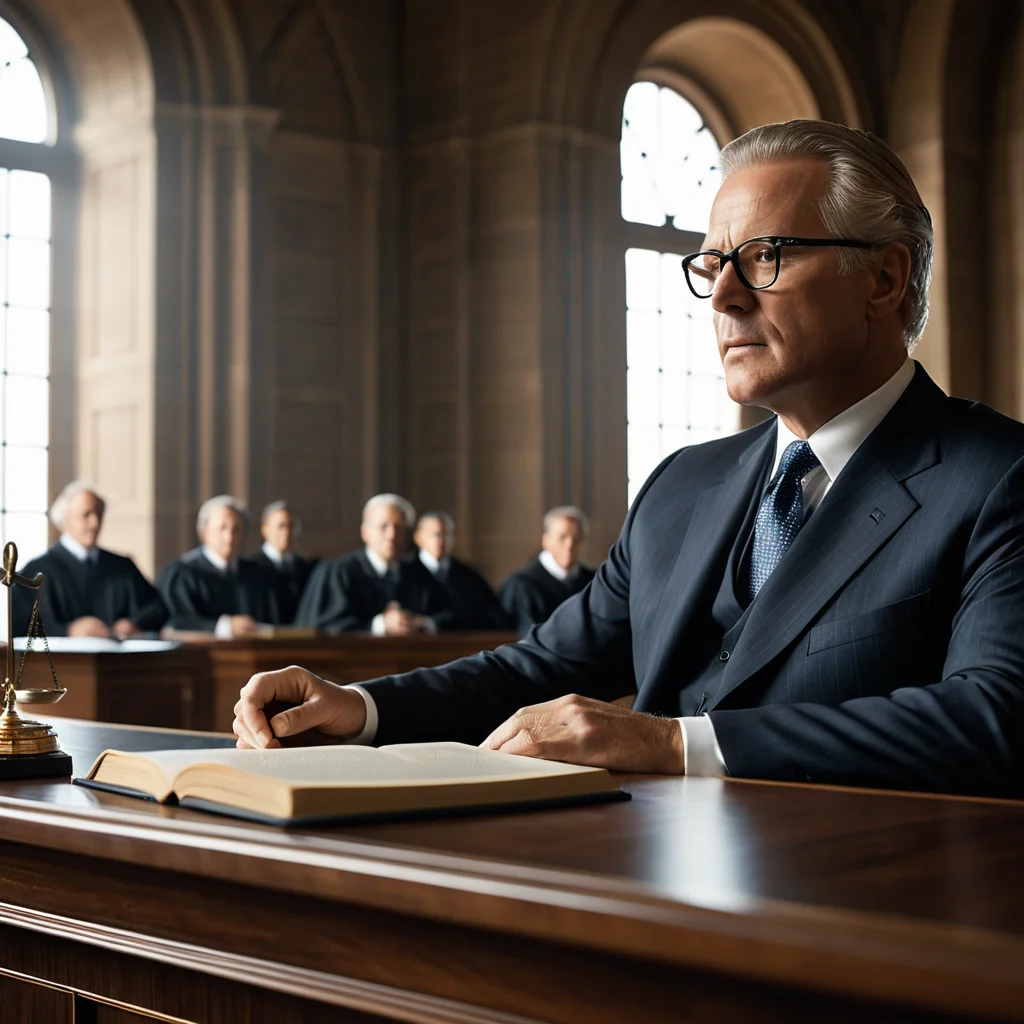
The question of who deserves the title of “best lawyer in world history” is not answered by win-loss records alone. Legal greatness, when viewed across the sweep of history, is measured by a much richer set of criteria. It encompasses the difficulty of the cases undertaken, the stakes involved, the originality of the legal arguments advanced, and — perhaps most importantly — the lasting impact on law, justice, and human rights.
Scholars and legal historians consistently identify four pillars of legal greatness. The first is intellectual mastery: an encyclopedic command of law, precedent, logic, and strategy. The greatest lawyers see arguments and angles that others cannot, and they construct legal frameworks that hold up not just before a single judge but across decades of judicial review. The second pillar is moral courage. Many of history’s finest attorneys took on cases that were politically dangerous, socially unpopular, or personally costly. They chose principle over comfort, client over convenience, and justice over expedience.
The third pillar is oratorical power and persuasion. Law is, at its core, a discipline of language. The best lawyers in history were also masters of rhetoric — capable of moving juries, swaying appellate courts, and speaking to the conscience of entire nations. Their words did not merely argue points of law; they defined moral epochs. The fourth pillar is transformative legacy. The lawyers remembered as the greatest did not merely close cases; they opened new eras. Their arguments became precedents, their strategies became doctrines, and their careers became blueprints for generations of attorneys who followed.
With these four pillars in mind, the lawyers profiled below stand as the clearest examples of what it truly means to be the best lawyer in world history.
2. Abraham Lincoln: The Self-Made Legal Legend
Long before Abraham Lincoln became the 16th President of the United States and led the nation through its most devastating conflict, he was a lawyer — and a remarkably gifted one. Born into poverty on the Kentucky frontier in 1809, Lincoln had no formal legal education. He taught himself law by borrowing and reading Blackstone’s Commentaries on the Laws of England by firelight, a discipline of self-education that shaped both his legal mind and his famous plain-spoken clarity.
Lincoln was admitted to the Illinois bar in 1836 and went on to handle more than 5,000 cases over the course of a 24-year legal career. He practiced across an extraordinarily wide range of areas — criminal defense, civil litigation, debt collection, land disputes, and railroad law — and became known as one of the most effective trial lawyers in the state. His genius lay not in complexity but in simplicity: Lincoln had a rare gift for stripping a case down to its moral and logical essentials and presenting it in language that any juror could understand and feel.
His most celebrated legal triumph came in the 1858 Almanac Trial, in which he defended Duff Armstrong against a murder charge. The prosecution’s key witness claimed to have seen the killing by the light of the moon. Lincoln produced a Farmer’s Almanac showing that on the night in question, the moon was at a low angle and would not have provided sufficient light — a masterstroke of factual investigation and courtroom strategy that secured an acquittal. The case illustrated Lincoln’s core approach to law: careful preparation, creative thinking, and complete command of the facts.
Lincoln’s legal career forged the habits of mind and moral reasoning that he brought to the presidency. His ability to analyze competing legal claims, understand the interests of all parties, and articulate a principled resolution made him not only a great lawyer but one of history’s most consequential leaders. His legacy in law is inseparable from his legacy in history.
3. Clarence Darrow: The Great Defender of the Underdog
If Abraham Lincoln represents the lawyer as statesman, Clarence Darrow represents the lawyer as crusader. Born in Ohio in 1857, Darrow became the most famous criminal defense attorney in American history — a fierce champion of the poor, the persecuted, and the condemned at a time when the legal system showed little mercy to any of them.
Darrow’s career was defined by the cases he chose to take. He defended labor organizers at a time when corporations wielded enormous political and judicial power. He represented African American clients in a deeply segregated legal system. He fought capital punishment with a passion that was both philosophical and deeply personal, arguing in courtroom after courtroom that no state had the moral authority to take a human life. By the end of his career, he had reportedly never lost a client to execution — a record that is as much a testament to his advocacy as it is to his ability to humanize those whom society had written off.
His two most celebrated trials cemented his place in legal history. In the 1924 Leopold and Loeb case, Darrow represented two wealthy University of Chicago students who had committed a calculated murder. Facing overwhelming evidence and a prosecution seeking the death penalty, Darrow delivered a 12-hour closing argument — considered one of the greatest pieces of courtroom oratory ever recorded — in which he appealed not to the facts of the case but to the conscience of the judge, arguing against the morality of execution itself. Both defendants received life sentences instead of death.
The following year, in the famous Scopes “Monkey Trial” in Dayton, Tennessee, Darrow defended a schoolteacher charged with teaching evolution in violation of state law. Though he technically lost the case, his cross-examination of prosecutor William Jennings Bryan — a former presidential candidate and celebrated orator — was a tour de force of intellectual demolition that transformed public opinion on science, religion, and the freedom of thought. Darrow did not just win or lose cases; he used the courtroom as a forum for the great moral debates of his age.
🛒 Recommended Product
4. Thurgood Marshall: The Attorney Who Ended School Segregation
Of all the lawyers in American history, Thurgood Marshall may have won the single most consequential case ever argued before the United States Supreme Court. As the lead attorney for the NAACP Legal Defense and Educational Fund, Marshall spent years systematically building the legal architecture that would eventually dismantle government-sanctioned racial segregation — and in 1954, he delivered the killing blow in Brown v. Board of Education.
Marshall was born in Baltimore in 1908, the great-grandson of a slave. He was denied admission to the University of Maryland School of Law because of his race — a personal injustice that became professional fuel. He graduated first in his class from Howard University School of Law and went on to argue 32 cases before the Supreme Court, winning 29 of them, a win rate that has never been equaled in the Court’s history.
His approach to civil rights litigation was not improvised or reactive — it was strategic, methodical, and long-range. Marshall and his team at the NAACP understood that Plessy v. Ferguson (1896), which had enshrined the “separate but equal” doctrine, could not be overturned in a single case. Instead, they constructed a decade-long campaign of litigation, winning case after case that chipped away at the foundations of segregation in graduate schools, law schools, and professional institutions. By the time Brown v. Board of Education reached the Supreme Court, Marshall had built an airtight legal and social scientific case that the Court could not ignore. On May 17, 1954, the Court unanimously ruled that racial segregation in public schools was unconstitutional. It was the most important legal victory of the 20th century.
Marshall later became the first African American Justice of the United States Supreme Court, appointed by President Lyndon B. Johnson in 1967. His career — from civil rights litigator to the nation’s highest court — remains the most complete arc in American legal history.
5. Nelson Mandela: Lawyer, Prisoner, and President
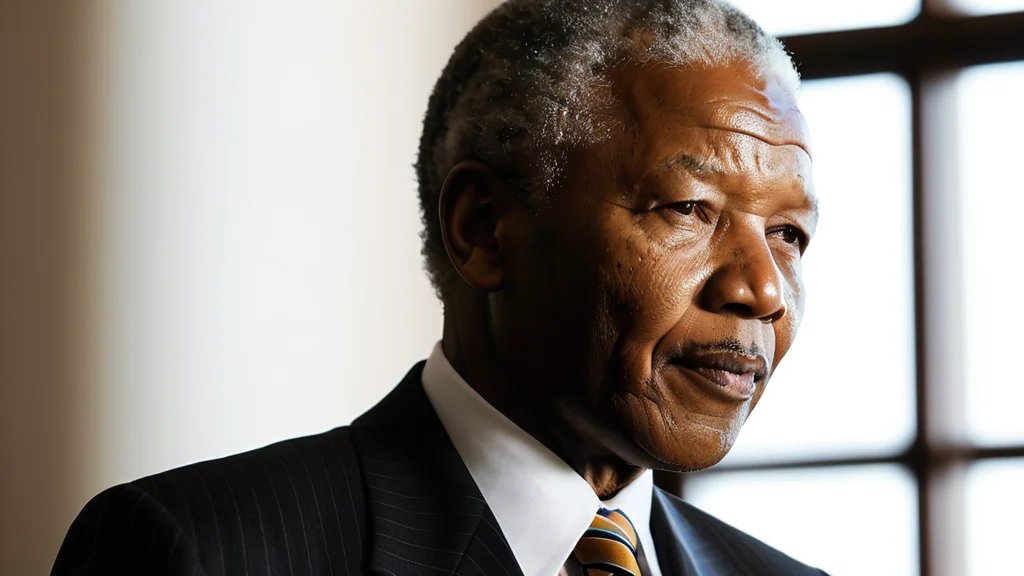
Nelson Mandela’s legal career is inseparable from one of the 20th century’s greatest moral struggles. Born in 1918 in the Transkei region of South Africa, Mandela studied law at the University of Fort Hare and later at the University of Witwatersrand, becoming one of the very few Black attorneys in a country whose apartheid system was designed to exclude and subjugate its Black majority population.
In 1952, Mandela and his law partner Oliver Tambo founded Mandela & Tambo, the first Black law firm in South Africa. Operating in Johannesburg, the firm provided legal representation to Black South Africans who had no other access to counsel — a practical act of resistance that also underscored Mandela’s belief that the law, properly used, was a tool of liberation. The apartheid government made their work as difficult as possible, requiring special permits for Mandela simply to enter the Johannesburg courthouse, but he persisted.
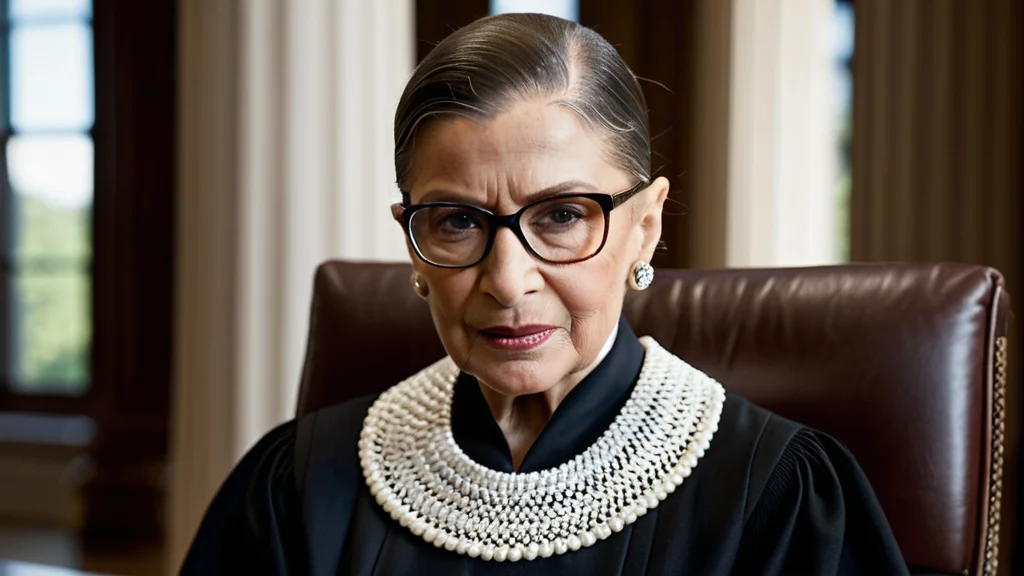
Mandela’s most dramatic legal moment came not when he was defending others, but when he was defending himself. At the Rivonia Trial in 1963–1964, Mandela and several co-defendants faced charges of sabotage and conspiracy that carried the death penalty. Rather than pleading for mercy, Mandela delivered from the dock one of the most powerful statements ever made in a court of law. He acknowledged the actions he had taken, explained why he had taken them, and declared his commitment to a democratic and free South Africa — concluding with words that reverberated around the world: “It is an ideal which I hope to live for and to achieve. But if needs be, it is an ideal for which I am prepared to die.” The death penalty was not imposed. Mandela served 27 years in prison, was released in 1990, and became South Africa’s first democratically elected president in 1994.
His legal training never left him. As president, Mandela oversaw the drafting of one of the most progressive constitutions in the world. His understanding of law as both a weapon of oppression and a vehicle for justice shaped his entire vision of post-apartheid South Africa.
6. Ruth Bader Ginsburg: The Strategic Architect of Gender Equality
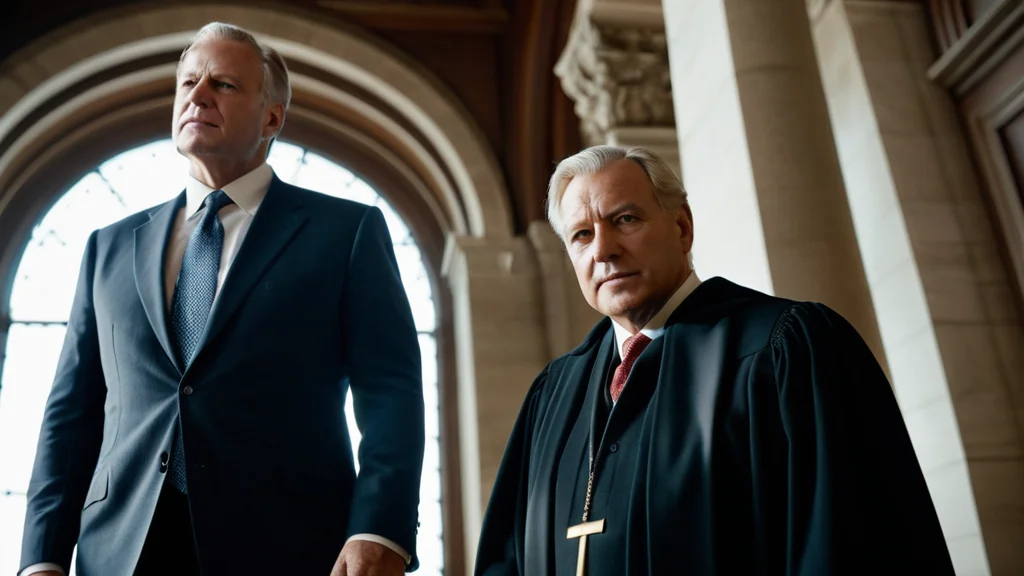
Long before Ruth Bader Ginsburg became an iconic Supreme Court Justice and a cultural phenomenon known as “The Notorious RBG,” she was one of the most strategically brilliant litigators in American history. Her work as an advocate in the 1970s systematically dismantled the legal framework of sex discrimination in the United States — and she did it with a precision and patience that Thurgood Marshall himself would have recognized and admired.
Ginsburg graduated at the top of her class from Columbia Law School in 1959, yet was unable to obtain a position at a major New York law firm because she was a woman — and a mother. The discrimination she experienced personally became the engine of her professional mission. In 1972, she co-founded the ACLU’s Women’s Rights Project and began assembling a deliberate campaign to bring gender equality cases before the Supreme Court, using exactly the same incremental, precedent-building strategy that Marshall had used to attack racial segregation two decades earlier.
Between 1973 and 1976, Ginsburg argued six landmark gender discrimination cases before the Supreme Court, winning five of them. Her tactical brilliance was evident in her choice of plaintiffs: she frequently selected male plaintiffs in cases where men were disadvantaged by gender-based laws, reasoning that an all-male Supreme Court bench would more readily empathize with male victims of sex discrimination — and in doing so, would be forced to establish precedents that protected women equally. It was a strategy of extraordinary psychological and legal intelligence.
Appointed to the Supreme Court by President Bill Clinton in 1993, Ginsburg served for 27 years until her death in 2020. Her opinions and dissents on gender equality, voting rights, and reproductive freedom are studied in law schools worldwide. Her pre-judicial litigation career alone would qualify her as one of the greatest lawyers in American history; her Supreme Court legacy makes her one of the most influential jurists of the modern era.
7. Comparing the Greatest Lawyers in History
| Lawyer | Era | Primary Field | Greatest Case or Achievement | Lasting Impact |
|---|---|---|---|---|
| Abraham Lincoln | 19th Century | Civil and Criminal Law | 5,000+ cases; Almanac Trial acquittal | Legal reasoning that shaped presidential leadership and abolition |
| Clarence Darrow | Early 20th Century | Criminal Defense | Leopold and Loeb; Scopes Trial | Pioneered anti-death penalty advocacy and civil liberties defense |
| Thurgood Marshall | Mid 20th Century | Civil Rights / Constitutional | Brown v. Board of Education (1954) | Ended legal school segregation; 29/32 Supreme Court wins |
| Nelson Mandela | 20th Century | Human Rights / Political | Rivonia Trial defense statement | Anti-apartheid liberation; South African constitutional democracy |
| Ruth Bader Ginsburg | Late 20th Century | Gender Equality / Constitutional | 5 of 6 landmark gender cases won at Supreme Court | Dismantled legal sex discrimination in the United States |
| Sir Edward Marshall Hall | Late 19th–Early 20th C. | Criminal Defense | Dozens of capital cases; “The Great Defender” | Defined dramatic advocacy in British criminal law |
8. Key Lessons Every Lawyer and Client Should Learn
The careers of history’s greatest lawyers are not merely inspiring stories — they are practical instruction manuals for anyone involved in the legal profession, whether as an attorney, a law student, or a client seeking representation. Several lessons emerge with striking consistency across these very different lives and eras.
Preparation wins cases. Abraham Lincoln’s Almanac Trial victory was not a stroke of luck — it was the product of meticulous factual investigation. Thurgood Marshall’s victory in Brown v. Board of Education was not a single brilliant argument but the culmination of years of carefully constructed legal strategy. The greatest lawyers in history were not improvisers; they were architects. Every argument was built on a foundation of thorough research and deliberate planning.
Choose your battles — and your clients — with purpose. Darrow, Marshall, Ginsburg, and Mandela all made deliberate choices about which cases to take and in what order, understanding that a well-chosen case at the right moment could move the law forward by decades. They understood that litigation is not just about the client in front of them — it is about the precedent that will be established and the society that will be shaped by the ruling.
Communication is as important as knowledge. Every lawyer on this list was a master communicator — not in the same style, but with the same effectiveness. Lincoln spoke plainly; Darrow spoke emotionally; Marshall spoke analytically; Mandela spoke with moral authority. Each found the register that resonated with their audience and used it with complete command. For clients, this is a reminder to seek lawyers who can explain their situation clearly and argue their case compellingly — not just lawyers who know the law, but lawyers who can make others feel it.
Ethical clarity is a competitive advantage. Counterintuitively, history’s most effective lawyers were often its most principled ones. Their reputations for integrity gave their arguments credibility that no amount of tactical cleverness could manufacture. Clients trusted them. Judges respected them. Juries believed them. In a profession where trust is the ultimate currency, these lawyers understood that their greatest asset was their word.
9. How to Find a World-Class Lawyer for Your Case Today
Understanding what made history’s greatest lawyers exceptional can serve as a practical guide when you need to find exceptional legal representation today. The qualities that defined Lincoln, Marshall, Ginsburg, and Darrow — thorough preparation, strategic vision, ethical clarity, and powerful communication — are the same qualities you should seek in any attorney you hire.
Begin by identifying your specific legal need. The legal profession is highly specialized, and a brilliant criminal defense attorney may have limited expertise in intellectual property law, immigration, or estate planning. The first step is to match the lawyer’s area of specialization to your case. Once you have identified the right field, look for verifiable indicators of excellence: courtroom win rates, published decisions, peer recognition through platforms such as Super Lawyers, Chambers and Partners, Martindale-Hubbell, or Best Lawyers in America.
Conduct initial consultations with at least two or three attorneys before making a decision. Pay close attention to how they communicate. Do they explain your situation clearly and honestly? Do they set realistic expectations rather than promising guaranteed outcomes? Do they listen as well as they speak? An attorney who cannot communicate effectively with you in a consultation will not communicate effectively on your behalf in a courtroom.
Consider also their availability and responsiveness. History’s great lawyers were deeply engaged with their clients’ situations. You deserve an attorney who treats your case with the same seriousness. Ask about their current caseload and how they manage client communication. Online legal directories such as Avvo, FindLaw, LegalMatch, and Justia can help you search by practice area, location, and client reviews, giving you a strong starting point for finding attorneys with proven reputations in your jurisdiction.
Finally, trust your judgment. After reviewing credentials and conducting consultations, the lawyer who inspires genuine confidence — who combines demonstrated expertise with clear communication and evident commitment to your case — is likely the right choice. The legacy of history’s greatest lawyers reminds us that legal excellence is not an abstraction. It is a living standard, and attorneys who meet it exist in every city and every practice area today.
Connect With a Top-Rated Lawyer Today
Inspired by history’s finest legal minds? Get matched with a highly qualified attorney who brings that same dedication and expertise to your case. Don’t face your legal challenge alone — find the representation you deserve.