⚠️ This page connects you to Atovia’s partners and affiliate markets. We may receive a commission from affiliate partners for activities made through these links. Discount offers may change at any time according to policy! Rest assured, there are no additional costs to you! We hope this saves you time in finding the right items!
- The greatest lawyers in world history are defined not just by courtroom victories but by their lasting impact on justice, civil rights, and legal philosophy.
- Figures such as Thurgood Marshall, Cicero, Clarence Darrow, Abraham Lincoln, and Nelson Mandela each transformed the legal landscape of their era.
- Landmark cases like Brown v. Board of Education and the Nuremberg Trials established principles that govern international and constitutional law to this day.
- Modern legal professionals can honor this legacy by investing in top-quality legal books, research tools, and continuing education resources.
1. What Defines the Greatest Lawyers in World History?
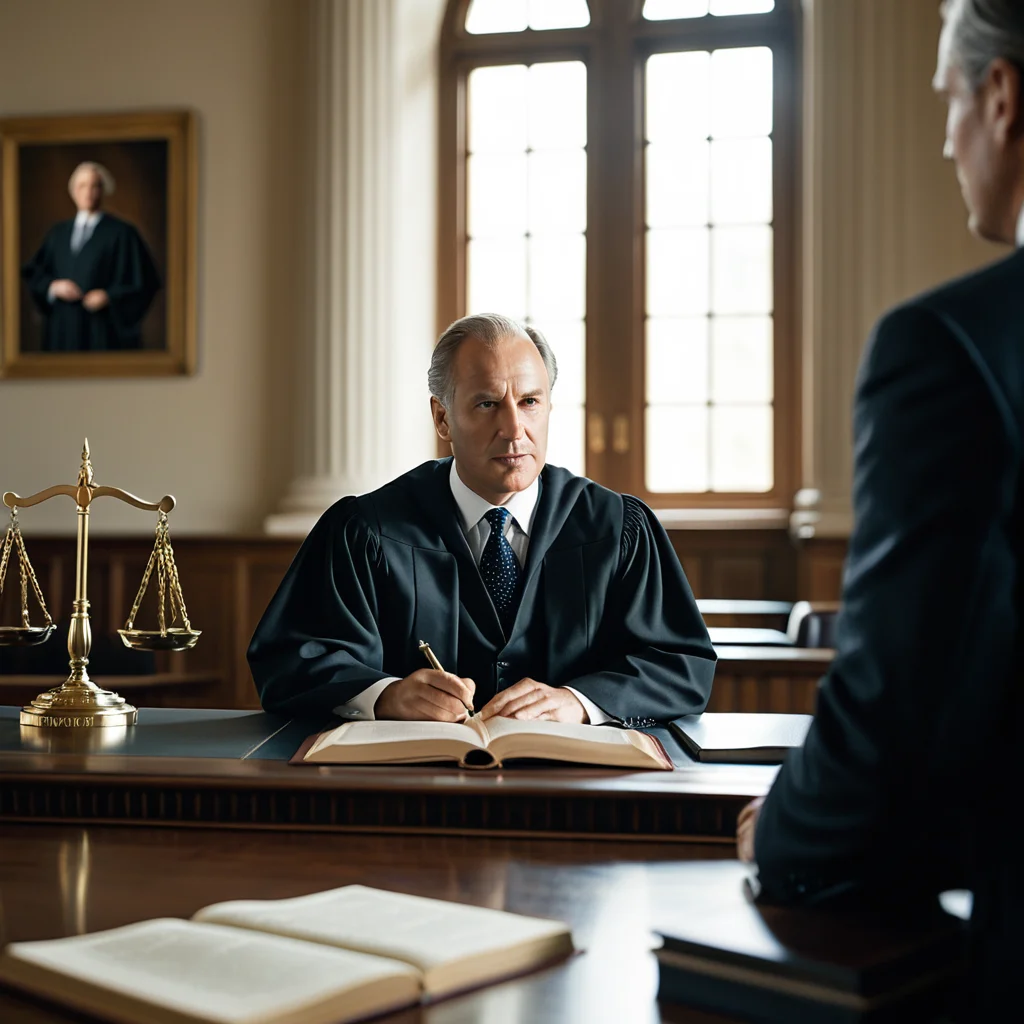
Across thousands of years of recorded legal history, only a select few attorneys, advocates, and legal scholars have earned the distinction of being called truly the best. But what separates a merely excellent lawyer from one who earns a permanent place in history? The answer lies not in a single quality but in a rare convergence of intellect, moral courage, persuasive power, and historical timing.
The greatest lawyers in world history consistently demonstrate mastery of several core competencies. They possess an extraordinary command of legal doctrine — the ability to navigate complex statutes, constitutional provisions, and judicial precedents with precision and speed. They combine this technical mastery with the rhetorical skill to make those arguments accessible and compelling to judges, juries, legislators, and the broader public. And they apply both gifts in service of causes larger than themselves, using the courtroom as a stage for social transformation.
It is also significant that legal greatness has emerged across vastly different cultures, time periods, and legal traditions. Ancient Rome produced Cicero, whose oratorical genius still influences how lawyers are trained to argue today. Nineteenth-century America produced Abraham Lincoln, a self-taught prairie lawyer whose precise understanding of constitutional principles guided a nation through its most devastating crisis. The twentieth century produced Thurgood Marshall, who dismantled an entire system of institutionalized racial inequality using nothing but briefs, oral arguments, and an unshakeable belief in equal protection under the law.
What unites all of these figures is the conviction that law is not merely a profession but a calling — a mechanism through which civilizations can be made more just, more equitable, and more humane. That conviction, expressed through decades of relentless work and intellectual rigor, is the true hallmark of the best lawyer in world history.

2. The Most Legendary Lawyers of All Time
The following figures represent the pinnacle of legal achievement across centuries and continents. Each one changed not only the law of their time but the trajectory of human history itself.
Cicero (106–43 BC) was the Roman Republic’s most celebrated orator and advocate. His courtroom speeches — particularly the Verrine Orations, in which he prosecuted the corrupt governor Gaius Verres — are still studied in law schools as models of evidence marshaling and rhetorical construction. Cicero also developed foundational theories of natural law, arguing that justice exists independently of any particular statute and that unjust laws carry no moral authority. This principle would later underpin everything from the American Declaration of Independence to the Nuremberg Tribunal’s legal framework.
Abraham Lincoln (1809–1865) practiced law in Illinois for more than twenty years before entering national politics. He was a tireless circuit-riding attorney who argued over three hundred cases before the Illinois Supreme Court and handled complex corporate litigation for some of the largest railroad companies of his era. Lincoln’s legal career instilled in him a disciplined respect for evidence, a talent for clear reasoning under pressure, and the ability to reduce complex legal arguments to their essential moral core — qualities that defined his presidency and his approach to the constitutional crisis of slavery.
Thurgood Marshall (1908–1993) represents perhaps the single most impactful legal career in American history. As special counsel and later director of the NAACP Legal Defense Fund, Marshall architected a decades-long litigation strategy designed to dismantle the “separate but equal” doctrine established by Plessy v. Ferguson in 1896. His crowning achievement, the Supreme Court’s unanimous ruling in Brown v. Board of Education (1954), declared racial segregation in public schools unconstitutional and catalyzed the modern civil rights movement. Marshall later served as the first African American Justice on the U.S. Supreme Court, continuing his transformative legal work from the bench.
Clarence Darrow (1857–1938) was the most famous defense attorney of the early twentieth century and one of the most passionate advocates for civil liberties the American legal system has ever produced. Darrow represented labor organizers at a time when doing so was professionally and physically dangerous. He opposed capital punishment decades before it became a mainstream legal debate, saving more than one hundred clients from the death penalty through impassioned closing arguments that combined legal precision with profound moral philosophy. His performance in the 1925 Scopes Trial, where he cross-examined fundamentalist leader William Jennings Bryan on the witness stand, remains one of the most dramatic moments in American courtroom history.
Nelson Mandela (1918–2013) co-founded South Africa’s first Black law firm, Mandela and Tambo, at a time when apartheid laws made it nearly impossible for Black South Africans to access legal representation. His firm provided legal services to thousands of people who had no other recourse against the injustices of the apartheid state. During his own 1964 treason trial — in which he faced the death penalty — Mandela delivered the “I Am Prepared to Die” speech from the dock, a statement so powerful that it became a defining document of the anti-apartheid movement and of human rights advocacy worldwide.
| Lawyer | Period & Jurisdiction | Defining Achievement |
|---|---|---|
| Cicero | Ancient Rome, 1st century BC | Foundations of Western legal rhetoric and natural law theory |
| Abraham Lincoln | 19th-century United States | Constitutional leadership; over 300 Illinois Supreme Court arguments |
| Thurgood Marshall | 20th-century United States | Won Brown v. Board of Education; first Black Supreme Court Justice |
| Clarence Darrow | Early 20th-century United States | Labor rights advocacy; 100+ death penalty cases won; Scopes Trial |
| Nelson Mandela | 20th-century South Africa | Founded first Black law firm in South Africa; anti-apartheid legal leadership |
🛒 Recommended Product
3. Landmark Cases That Shaped Legal History Forever
The greatest lawyers in world history are inseparable from the landmark cases that defined their careers. These cases did not merely resolve disputes between parties — they established principles, overturned injustices, and set precedents that continue to govern legal systems around the world today.
Brown v. Board of Education (1954) stands as the most consequential civil rights ruling in American legal history. Thurgood Marshall and his team at the NAACP Legal Defense Fund built a case that combined constitutional arguments under the Fourteenth Amendment’s Equal Protection Clause with social science evidence demonstrating the psychological harm of segregation on Black children. The Supreme Court’s unanimous decision, delivered by Chief Justice Earl Warren, overturned the 1896 Plessy v. Ferguson ruling and declared that racially segregated public schools were inherently unequal. The case became the legal foundation for the entire civil rights movement of the following two decades.
The Nuremberg Trials (1945–1946) created the framework for modern international criminal law. American Supreme Court Justice Robert H. Jackson, serving as chief prosecutor, constructed legal arguments for prosecuting Nazi leaders for crimes against humanity and war crimes — offenses that had never before been formally codified under international law. Jackson’s opening statement, delivered on November 21, 1945, established the principle that aggressive war is itself a crime and that individuals — including heads of state — bear personal criminal responsibility for atrocities committed under their authority. The legal architecture built at Nuremberg directly gave rise to the International Criminal Court and the entire body of international humanitarian law.
Marbury v. Madison (1803) established the doctrine of judicial review — the foundational principle that courts have the authority to strike down legislation that conflicts with the Constitution. This ruling, written by Chief Justice John Marshall, transformed the American judiciary from a relatively weak institution into the co-equal branch of government that it remains today. The principle of judicial review has since been adopted by constitutional democracies across the world, making Marbury v. Madison one of the most globally influential legal decisions ever rendered.
The Scopes Trial (1925), formally State of Tennessee v. John Thomas Scopes, became a defining cultural and legal battleground over the relationship between science, religion, and state authority. Clarence Darrow’s defense of biology teacher John Scopes — charged under Tennessee’s Butler Act for teaching evolution — was a masterclass in using a narrow criminal case to expose broader unconstitutional overreach. While Scopes was convicted and fined, Darrow’s devastating cross-examination of William Jennings Bryan demolished the anti-evolution argument in the court of public opinion and accelerated the legal and cultural evolution toward separation of church and state in public education.

4. How to Find and Hire a World-Class Lawyer Today
The standard set by history’s greatest lawyers is demanding — but the principles they embodied can serve as a practical guide for anyone seeking exceptional legal representation today. Whether you are navigating a high-stakes commercial dispute, a complex criminal defense, or a landmark civil rights matter, finding the right attorney requires a systematic approach grounded in the same rigor that defined the legends.
Define your legal need with precision. The era of the generalist attorney who handles every type of case has given way to deep specialization. The best modern attorneys typically focus on a narrow area of law — securities litigation, immigration, patent law, criminal defense, constitutional appeals — and develop extraordinary depth within that specialty. Before beginning your search, identify the precise legal discipline your matter requires. A mismatch between attorney specialty and case type is one of the most common and costly mistakes clients make.
Research credentials and appellate experience. The highest-caliber attorneys leave a verifiable record of their work. Legal directories such as Martindale-Hubbell, Chambers & Partners, and Super Lawyers publish peer-reviewed ratings that reflect how an attorney is regarded by colleagues and judges. Pay particular attention to appellate court experience — attorneys who regularly argue before courts of appeal or supreme courts have demonstrated a level of legal craftsmanship that goes well beyond routine trial work.
Evaluate communication quality during the consultation. Great lawyers, from Cicero to Thurgood Marshall, shared one defining trait: the ability to make complex legal concepts clear and accessible to non-specialists. In your initial consultation, assess whether the attorney listens carefully to the specific facts of your situation, explains legal concepts without condescension or unnecessary jargon, and provides candid assessments of both the strengths and weaknesses of your case. An attorney who only tells you what you want to hear is not serving your best interests.
Assess the full resources of the practice. Major legal matters require not just a brilliant lead attorney but a fully resourced team. Ask about the paralegals, associate attorneys, legal researchers, and expert witness networks that would support your case. The great lawyers of history understood that even the most brilliant individual argument must be supported by meticulous preparation, and that preparation requires people, time, and organizational capacity.
Understand fee structures completely before signing. Legal fees vary enormously by practice area, geographic market, and case complexity. Hourly rates, flat fees, contingency arrangements, and retainer agreements each carry different implications for your total cost exposure. Before engaging any attorney, ensure you have a written engagement letter that clearly defines the scope of representation, the fee structure, billing practices, and the process for resolving fee disputes.

5. Best Legal Books, Tools, and Resources to Shop Now
The legacy of history’s greatest lawyers lives on not only in courtroom decisions and constitutional amendments but in a rich body of literature, educational resources, and professional tools that modern attorneys and law students can access today. Building a strong professional library and investing in the right research and advocacy tools is one of the most tangible ways to honor that legacy — and to sharpen your own legal practice.
Essential books on legal history and advocacy form the foundation of any serious legal education. Richard Kluger’s Simple Justice remains the definitive account of the thirty-year legal campaign that led to Brown v. Board of Education, offering unparalleled insight into how Thurgood Marshall and his colleagues constructed their historic litigation strategy. Anthony Lewis’s Gideon’s Trumpet chronicles the Supreme Court case that established the right to appointed counsel for criminal defendants, a landmark ruling rooted in the same commitment to equal justice that defined Marshall’s career. For those interested in ancient legal rhetoric, modern translations of Cicero’s Verrine Orations and Pro Milone provide direct access to the speeches that established the Western tradition of legal argumentation.
Legal research platforms are the equivalent of the vast physical archives that Lincoln and Darrow navigated by hand. Westlaw and LexisNexis remain the industry-standard platforms for comprehensive case law, statutory, and regulatory research, offering AI-assisted research tools that dramatically accelerate the process of finding relevant precedent. Fastcase, now integrated with the American Bar Association, provides a more cost-accessible alternative that has gained significant traction among solo practitioners and small firms. Bloomberg Law combines legal research with business intelligence tools particularly valued by corporate attorneys. Investing in the right research subscription for your practice area is among the most cost-effective professional decisions any attorney can make.
Trial advocacy and courtroom performance resources address the skills that separated the legends from their peers. The National Institute for Trial Advocacy (NITA) offers intensive hands-on training programs in cross-examination, opening statements, closing arguments, and witness preparation — the precise skills that made Clarence Darrow’s courtroom performances legendary. The American Bar Association’s litigation section publishes an extensive catalog of practice guides, treatises, and continuing legal education programs focused specifically on courtroom performance. For attorneys who want to study the masters directly, recordings and transcripts of landmark oral arguments before the Supreme Court — including Marshall’s arguments in the Brown litigation — are available through the Oyez Project and the Supreme Court’s own audio archive.
Bar exam preparation and early-career resources remain essential for the next generation of legal professionals. Barbri and Themis continue to dominate the bar preparation market, offering comprehensive multistate and jurisdiction-specific study programs. For law students seeking to understand the broader intellectual tradition they are entering, supplementing bar prep with legal history and philosophy — works by Oliver Wendell Holmes, Benjamin Cardozo, and Ronald Dworkin — provides the contextual framework that separates technically competent attorneys from genuinely great ones.
Professional organization memberships provide networking, continuing education, and advocacy resources that support career-long development. The American Bar Association, state and local bar associations, and specialty organizations such as the National Association of Criminal Defense Lawyers, the American Civil Liberties Union, and the NAACP Legal Defense Fund all offer resources, mentorship programs, and advocacy opportunities that connect modern attorneys to the traditions of legal excellence that history’s greatest lawyers established.
Ready to build the legal library and professional toolkit that the world’s greatest lawyers would respect? Explore our curated selection of essential law books, research tools, and attorney resources — everything you need to elevate your legal practice.