
⚠️ This page connects you to Atovia’s partners and affiliate markets. We may receive a commission from affiliate partners for activities made through these links. Discount offers may change at any time according to policy! Rest assured, there are no additional costs to you! We hope this saves you time in finding the right items!
You have a finished story and a blank space above it. The headline is the first thing readers see, so it has to do real work in very few words.
In short, a good news headline states the story’s central fact in plain words, with a clear subject and an active verb, and then holds up against the article beneath it.
- What Makes a News Headline Work?
- How Do You Build a Headline Sentence?
- How Do You Keep Readers Curious Without Exaggerating?
- How Do You Write for Search and Readers at the Same Time?
- How Do You Check That Headline and Article Match?
- Which Style Rules Are Universal and Which Are House Rules?
- What Does a Weak Headline Look Like Next to a Strong One?
- A 7-Step Headline Checklist
- Quick Answers to Common Headline Questions
- Your Next Step Today
- Accuracy beats wit. Columbia’s headline guidance puts getting the news right ahead of wordplay.
- A clear subject plus an active verb is the usual shape of a news headline.
- Word counts, sentence case and tense are house rules that vary by outlet, so check which style applies.
- Reread the finished headline for typos and double meanings before it goes live.
What Makes a News Headline Work?
A news headline works when it presents the story’s central idea briefly and gives readers a reason to keep going. That is how Aalto University’s news-writing guide describes its job.
What should a headline capture from the story?
It should capture the one fact the story hangs on. It does not need to hold every detail, and Aalto notes that the article body should not simply repeat the headline’s exact wording.
Think of the headline as a signpost, not a summary. The details belong underneath it.

Why do clear, specific words beat clever ones?
Because readers should never have to decode a headline. St. Petersburg College’s guide asks for headlines that are clear and specific, and warns against unidentified pronouns, needless repetition and cleverness with no purpose.
Here’s the catch: a witty headline that confuses someone has failed, however good the joke.
How Do You Build a Headline Sentence?
Build it like a short, complete sentence: a subject, an active verb, and usually an object. Michigan State University’s School of Journalism describes subject-verb or subject-verb-object as the common shape.
Why use a subject and an active verb?
They tell readers who did what in the fewest words. The University of Houston-Downtown’s student newsroom guide asks for a complete thought with a subject and an active verb.
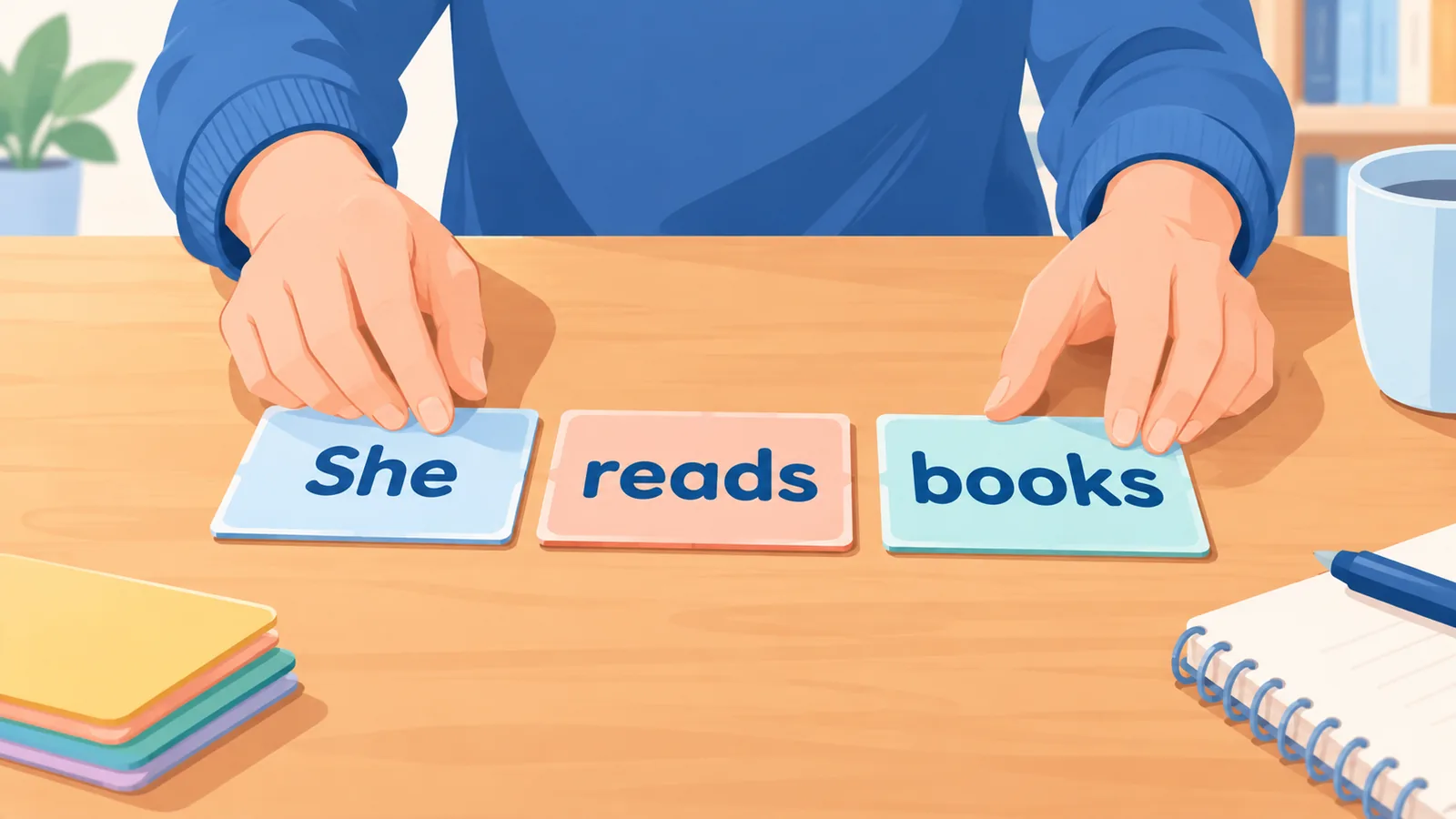
Compare “Council approves new bus routes” with “New bus routes approved after discussion.” The first one puts the actor up front and moves faster. (Both are invented examples.)
When does present tense make sense?
For most news headlines, it is the convention. Aalto recommends active voice and present tense for English news headlines, and Michigan State also favors present tense and short verbs.
Keep in mind that this is editorial guidance, not a law. Houston-Downtown adds one detail for future events: put “to” before the verb, as in “Council to vote on bus routes.”
How long should a headline be?
There is no universal number. One college guide, St. Petersburg College, suggests 5 to 10 words, but other outlets set their own limits.
Use that range as a starting point, then follow whatever your publication’s style guide says. Army.mil’s content guidance also stresses brevity, though without a fixed count.
How Do You Keep Readers Curious Without Exaggerating?
Earn curiosity with a specific, true fact rather than a teaser. The headline should give readers a reason to continue reading without promising more than the article delivers.

What does an accurate headline imply, not just state?
A headline has to be accurate in what it suggests as well as what it says outright. Columbia University’s journalism guidance makes this point directly.
Here is an invented example. Say a town council discussed closing a library but took no vote. “Council closes library” is false. “Council weighs library closure” is true, and it implies the right thing.
Where does a pun or a question go wrong?
It goes wrong when the wordplay hides the news or creates a second, unintended meaning. Columbia’s guidance ranks accuracy above wit and suggests a final check for double meanings.
🛒 Recommended Product
A related caution comes from research. In two online experiments with US adults (N=629 and N=1,674), the strongest recognition and comprehension appeared when an accurate headline was paired with the full article. The setting was limited, and the study did not measure clicks, so treat it as support for accuracy, not as a promise about traffic.
How Do You Write for Search and Readers at the Same Time?
Put the words a reader would actually type into the headline, and make sure it still reads naturally. Michigan State’s guidance asks for keywords that both readers and search engines understand.
Which keywords belong in the headline?
The ones that name the subject of the story: the place, the organization, the action. If you rebalance your thinking around what a curious reader would search, those terms are usually obvious.
Army.mil’s guidance adds a related point about limiting acronyms. If a reader would not recognize an abbreviation, spell it out or leave it off.

How much keyword use is too much?
Too much is anything that makes the headline harder to read. Michigan State warns against stuffing keywords in this way.
One clear, natural mention beats three awkward ones. No source in our research shows how search engines weigh headline length or keyword position, so we make no claims about that.
How Do You Check That Headline and Article Match?
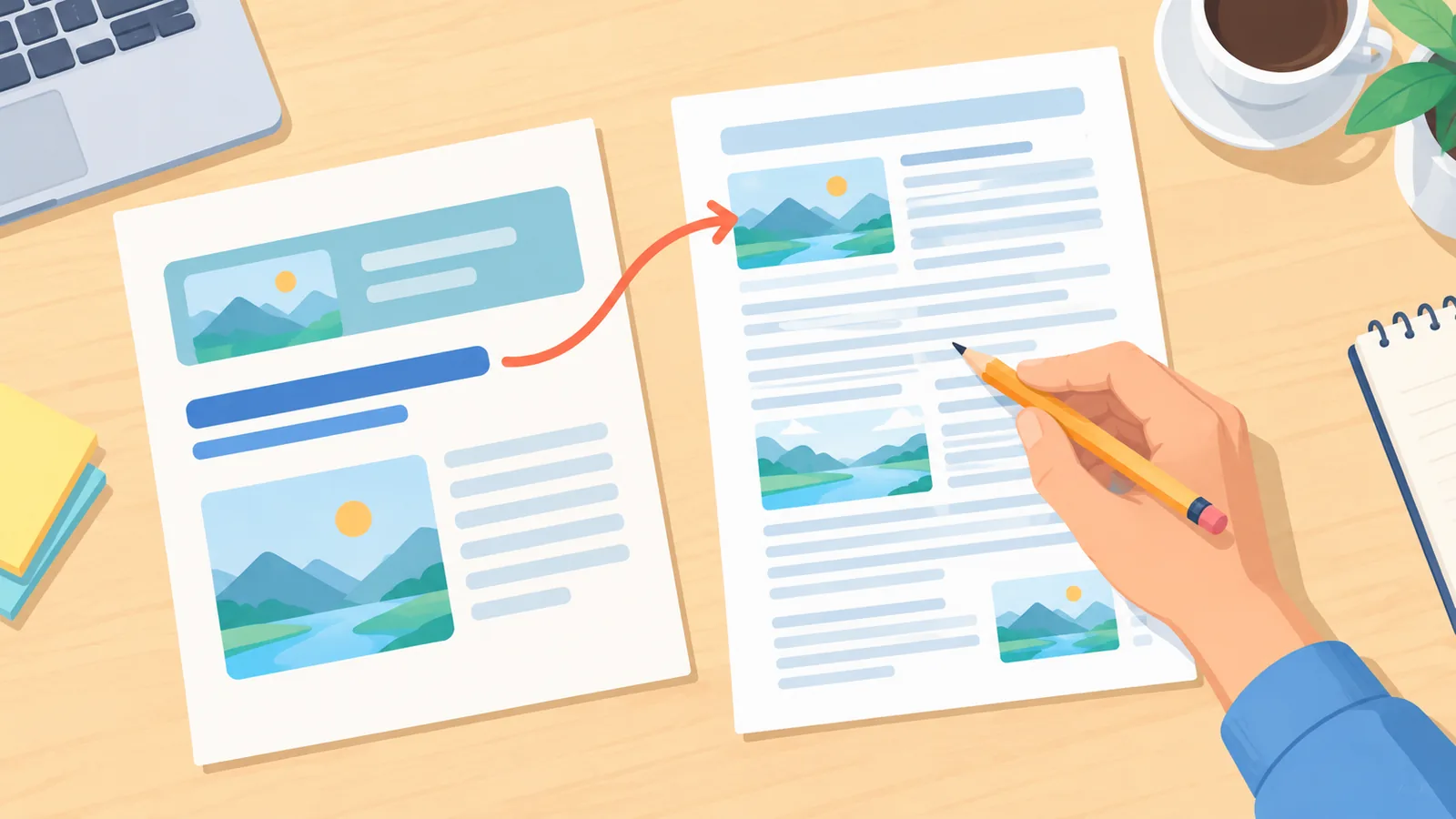
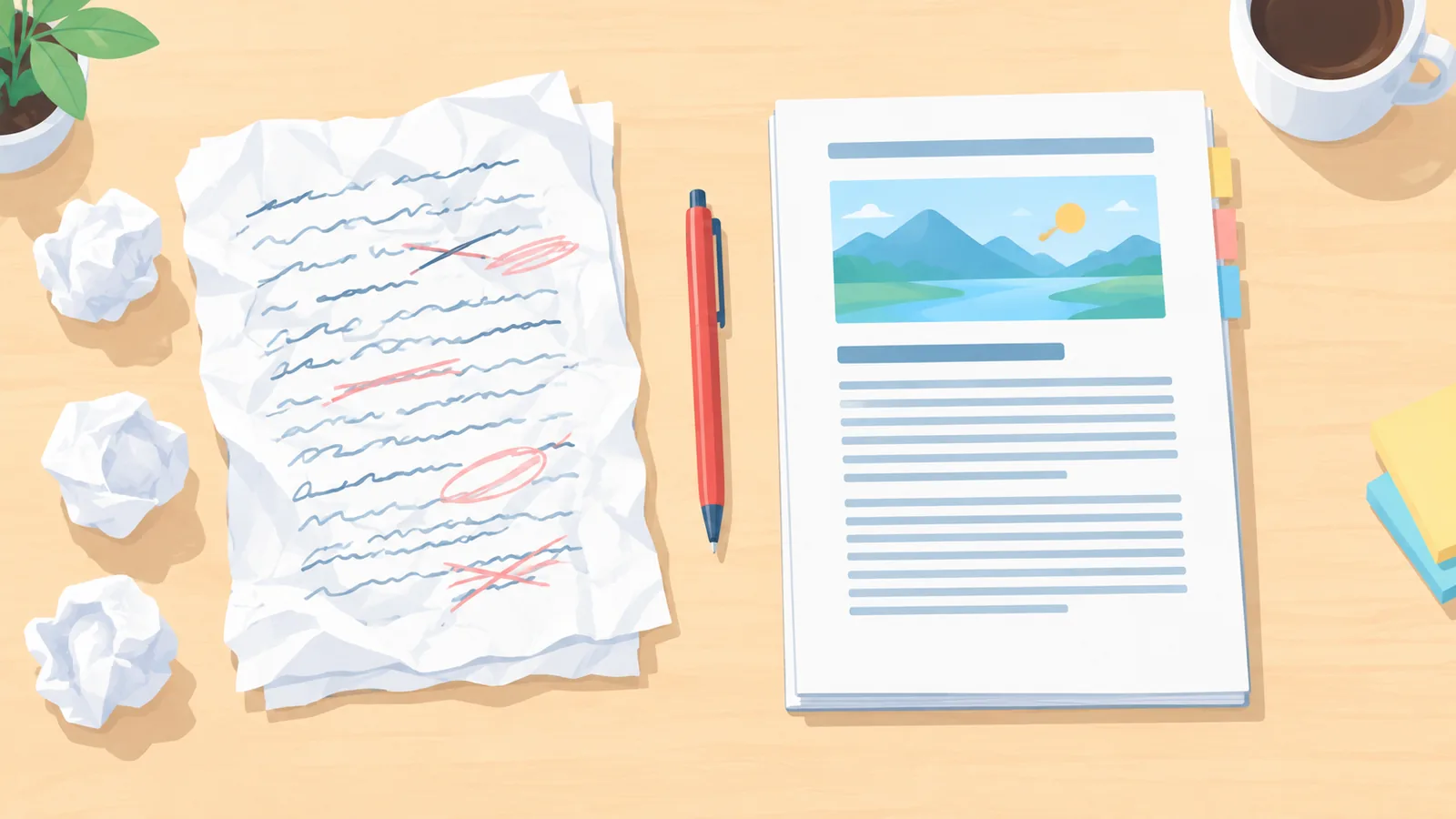
Reread the headline against the finished story and ask whether a reader would feel the article kept its promise. Both Columbia’s guidance and Michigan State’s advise revising rather than settling for a first draft.
What should you verify in the final pass?
- Every fact in the headline appears in the article.
- The implied meaning matches what the story supports.
- The tone fits the story. A light tone on a serious story is a mismatch.
- No typos, and no phrase that can be read two ways.
- Any pronoun or abbreviation is clear to a general reader.
Which Style Rules Are Universal and Which Are House Rules?
Clarity, accuracy and revision show up in every guide we reviewed. Mechanical details such as word counts and capitalization are house rules.
Several institutions agree on active, present-tense phrasing, so it is fair to call it a common convention. Even so, Aalto presents it as its own editorial guidance, not a rule for every outlet.
Other specifics belong to the organizations that set them. Sentence case and the “to” construction for future events come from Houston-Downtown. The 5 to 10 word range comes from St. Petersburg College. Army.mil’s principles of clarity, relevance, brevity and limited acronyms cover Army.mil content.
So before you apply any of these, find out whose style guide you are writing under.
What Does a Weak Headline Look Like Next to a Strong One?
A weak headline is vague, inaccurate in what it implies, or clever at the reader’s expense. The pairs below are invented illustrations, not real headlines.
| Weak version (example) | Strong version (example) | What changed |
|---|---|---|
| Big news at city hall | City council approves new bus routes | Names the actor and the action |
| Council closes library | Council weighs library closure | Matches what the story supports |
| It happened again | Water main breaks on Oak Street for second time | Replaces an unidentified pronoun with specifics |
| Council gets a lot of bus-ted | Council hears complaints about bus delays | Drops the pun that hides the news |
A 7-Step Headline Checklist
Run any draft through these seven steps. This checklist is our own summary of the guidance above, not a published standard.
- Pick the story’s central fact.
- Name a clear subject and use an active verb.
- Choose plain, specific words.
- Add a keyword readers would search for, without stuffing.
- Check that the headline’s implied meaning matches the article.
- Reread for typos and double meanings.
- Confirm which house style applies.
Quick Answers to Common Headline Questions
Do I need to fit the whole story into the headline?
No. Aalto explains that a headline does not have to contain everything. It should present the central idea and give readers a reason to read on.

Is sentence case required?
Not universally. Sentence case is the instruction in the University of Houston-Downtown’s guide, so follow it if you write under that style, and follow your own outlet’s rule otherwise.
Does shorter always win?
No. Brevity is a common principle, but our sources do not show that shorter headlines perform better, and they give no universal word count. Clarity comes first, and a headline should be as short as it can be while staying clear and accurate.
Your Next Step Today
Pick one headline you wrote recently and run it through the seven steps above. Rewrite it once, then compare the two versions side by side.
References
- Aalto University, “How to write a news article”
- University of Houston-Downtown, “Creating News Article Headlines”
- Columbia University Journalism, “Headlines”
- St. Petersburg College, “How to Write a News Article: Headlines”
- Michigan State University School of Journalism, “Writing great headlines”
- Carcioppolo, Lun and McFarlane (2021), “Exaggerated and Questioning Clickbait Headlines and Their Influence on Media Learning”
- U.S. Army CORE Support, “Importance of quality headlines”
Want more comparisons and buying guides?