⚠️ This page connects you to Atovia’s partners and affiliate markets. We may receive a commission from affiliate partners for activities made through these links. Discount offers may change at any time according to policy! Rest assured, there are no additional costs to you! We hope this saves you time in finding the right items!
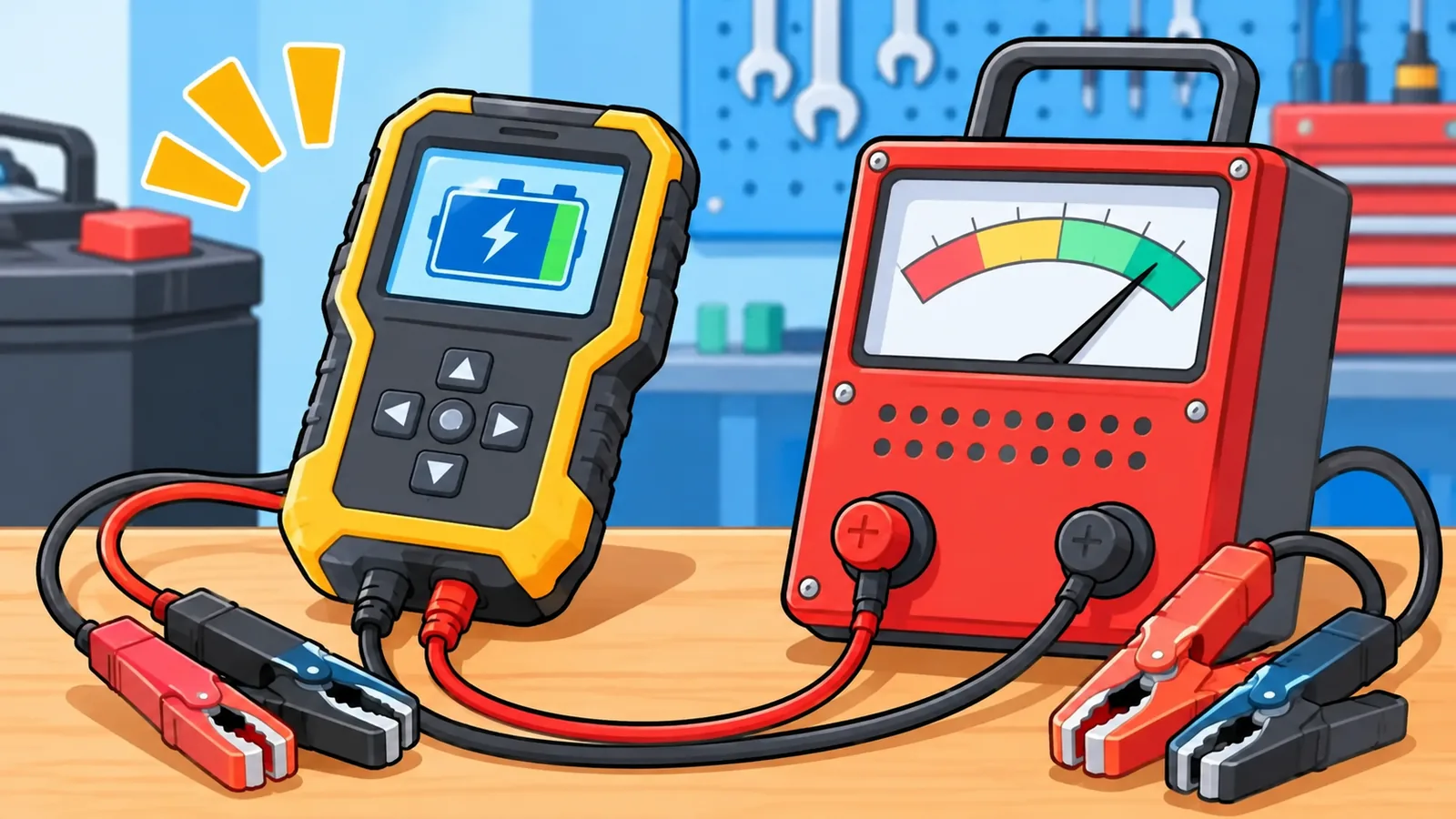
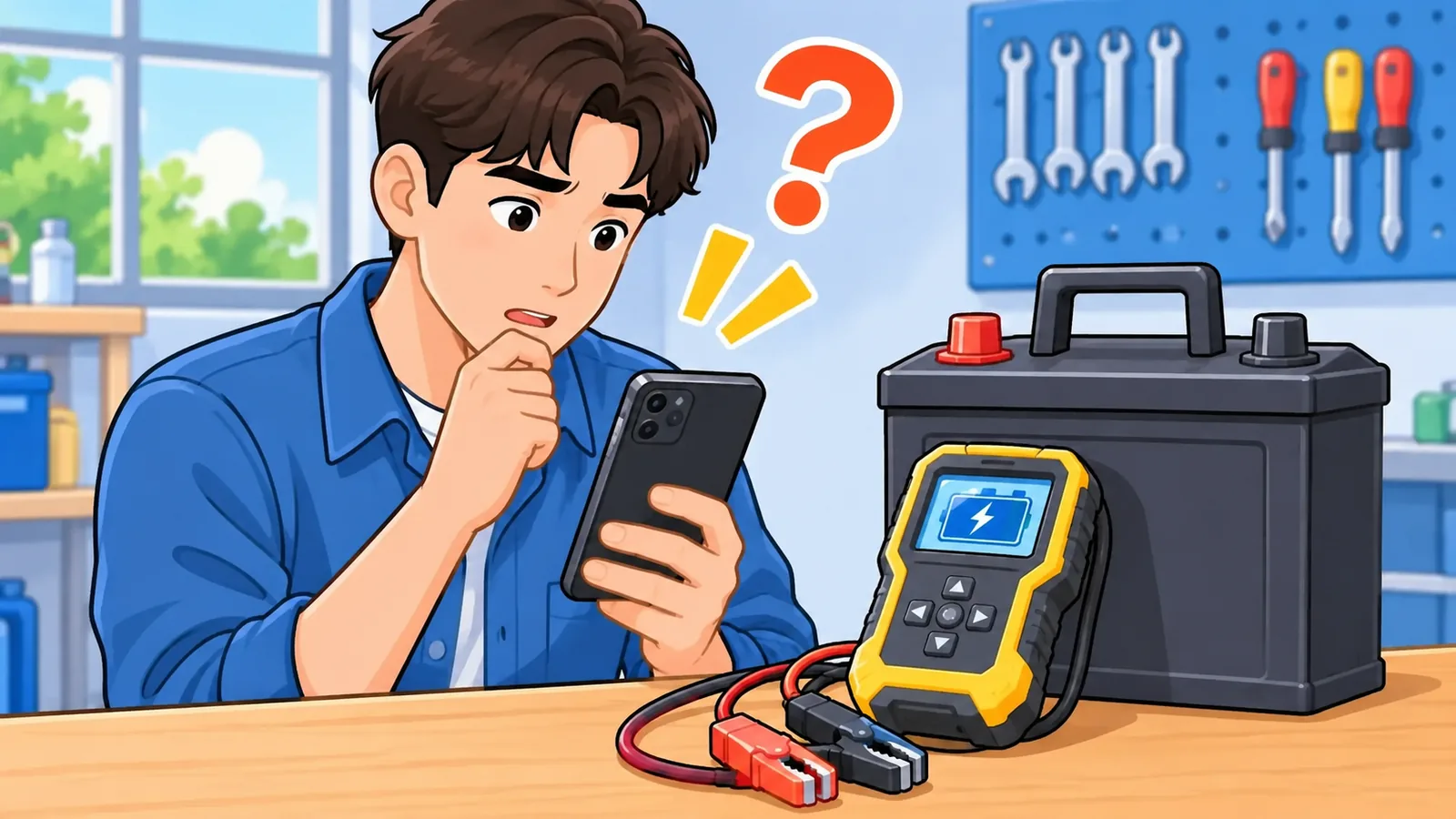
The engine cranks slowly on a cold morning, and you want to know whether the battery or the charging system is to blame. A good tester can help you narrow that down in a few minutes. This guide compares testers by what they actually check, and every spec is labeled as the maker’s claim.
As an Amazon Associate I earn from qualifying purchases.
[IMAGE_1]
- Quick Answer: Which Car Battery Tester Should You Buy?
- Battery Tester vs. Multimeter
- Conductance Testers vs. Load Testers
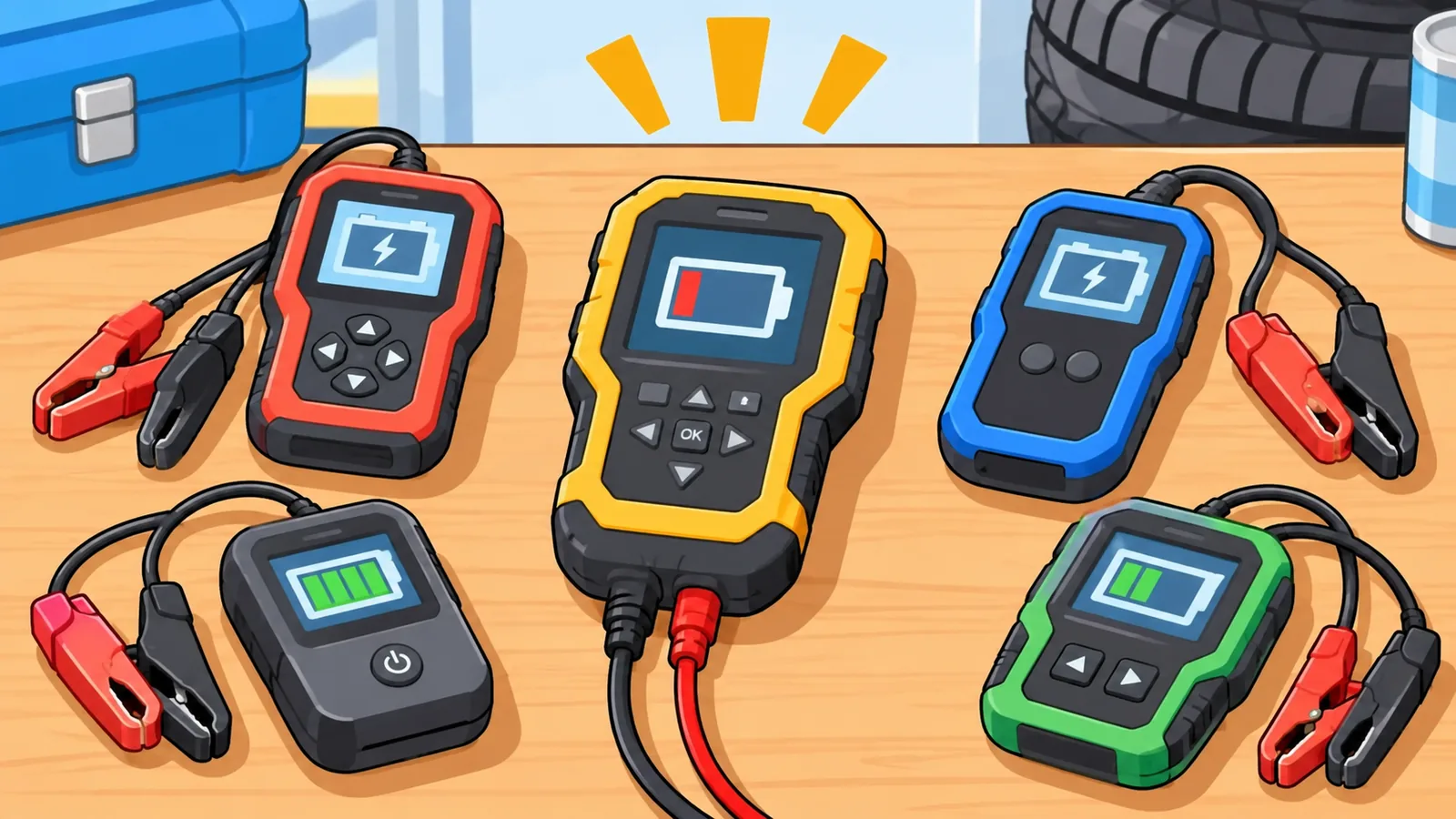
- Comparison Table: Five Testers Side by Side
- How to Choose: Five Checks Before You Buy
- Best Pick by Use Case
- How to Get a Reliable Reading
- Frequently Asked Questions
- Final Thoughts and Next Step
Quick Answer: Which Car Battery Tester Should You Buy?
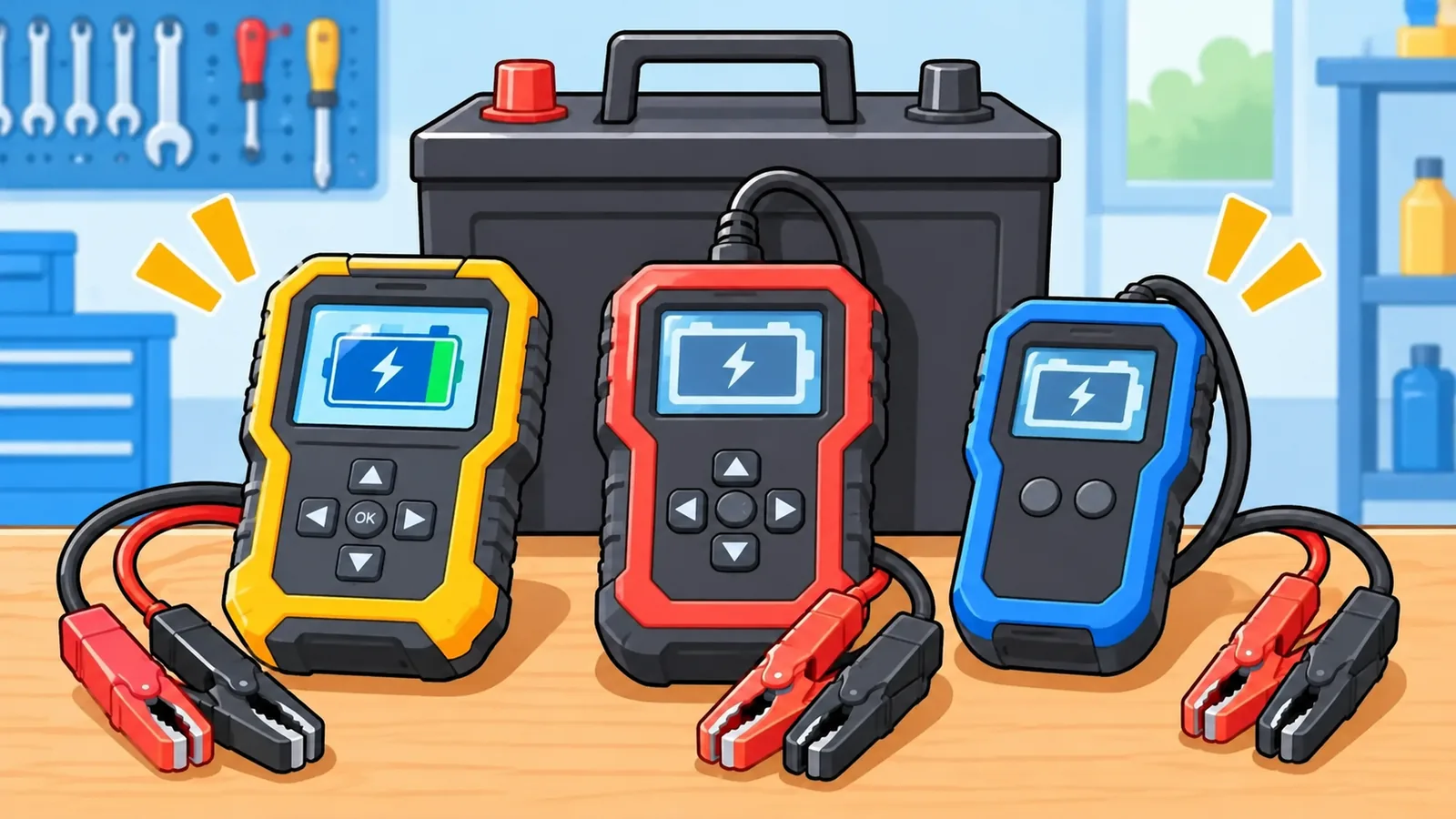
Pick by two things: the voltage you need to test, and whether you want the battery only or the starting and charging systems too. For most 12V drivers, a TOPDON model is a simple place to start.
- TOPDON BT200: the all-round pick, with a color screen and a 100–2000 CCA range.
- TOPDON BT100: a basic 12V option for battery, starting, and charging checks.
- TOPDON BT600: adds a built-in printer, which suits shops.
- FOXWELL BT-705: 12V battery tests plus 12V/24V starting and charging checks.
- Schumacher BT-100: a manual load tester for 6V and 12V batteries.
One caveat. Roundup rankings are editorial picks, not independent lab results. The Redline Car Garage guide, for example, says it compared specs and features rather than bench-testing each unit.
[IMAGE_2]
Battery Tester vs. Multimeter: What’s the Difference?
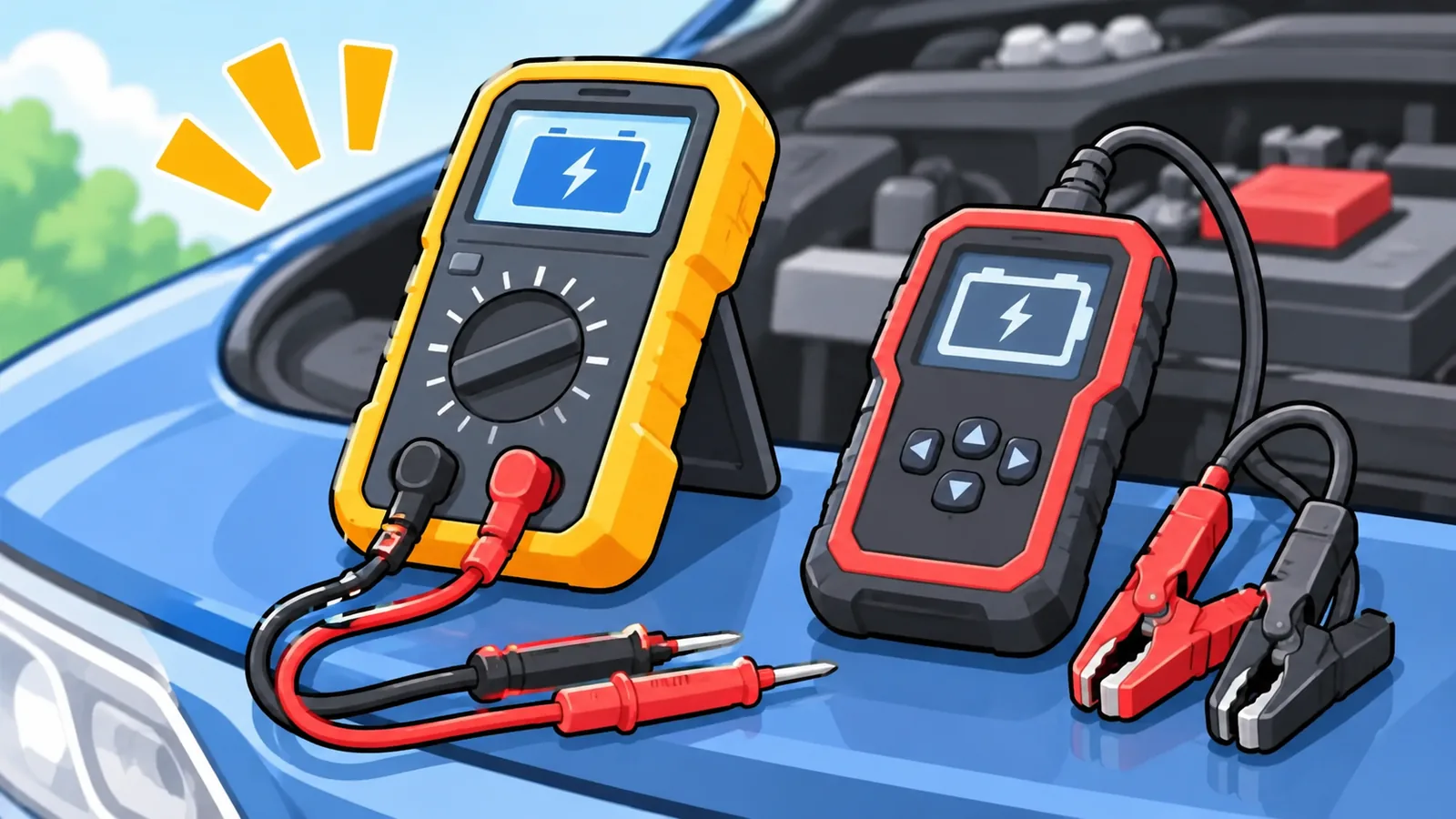
A multimeter reads voltage, and voltage alone cannot tell you a battery’s starting power or overall health. A dedicated tester is built to go further.
Why can voltage alone mislead?
Voltage is one clue, not the whole story. A multimeter is handy for a quick look, but it is not a verdict on starting ability. If you want a real answer, use a tester designed for the job.
[IMAGE_3]
Conductance Testers vs. Load Testers
Conductance testers estimate battery condition from its electrical properties. Load testers draw real current and watch whether the voltage holds.
Handheld digital units like the TOPDON models are the quick, screen-based kind. Traditional load testers are more hands-on and take more care to use.
Which method suits a home garage?
For occasional checks, a digital tester is usually easier to live with. A load tester like the Schumacher BT-100 suits people comfortable with manual testing. Its maker lists 6V and 12V support, up to 1,000 CA, and 50A (6V) or 100A (12V) load tests, read on an analog meter.
[IMAGE_4]
Comparison Table: Five Testers Side by Side
Here is how the five models line up on the specs that matter most. Pay attention to the split between battery-test voltage and starting/charging-test voltage.
| Model | Battery test | Starting/charging test | CCA range or limit | Display / extras | Best for |
|---|---|---|---|---|---|
| TOPDON BT200 | 12V | 12V and 24V | 100–2000 CCA | 2.4-inch color LCD; flooded, AGM, GEL, EFB, VRLA | All-round use |
| TOPDON BT100 | 12V | 12V | Not confirmed here | 2-inch backlit LCD; shows SOH, SOC, internal resistance | Basic 12V checks |
| TOPDON BT600 | 12V | 12V and 24V | 100–2000 CCA | Built-in printer (paper is a consumable) | Shops |
| FOXWELL BT-705 | 12V lead-acid | 12V and 24V | Not confirmed on official page text | Not confirmed here | Mixed 12V/24V system checks |
| Schumacher BT-100 | 6V and 12V | Manual load test | Up to 1,000 CA | Analog meter; 50A / 100A loads | Manual load testing |
All specs are manufacturer claims, not independent test results.
[IMAGE_5]
🛒 Recommended Product
How to Choose: Five Checks Before You Buy
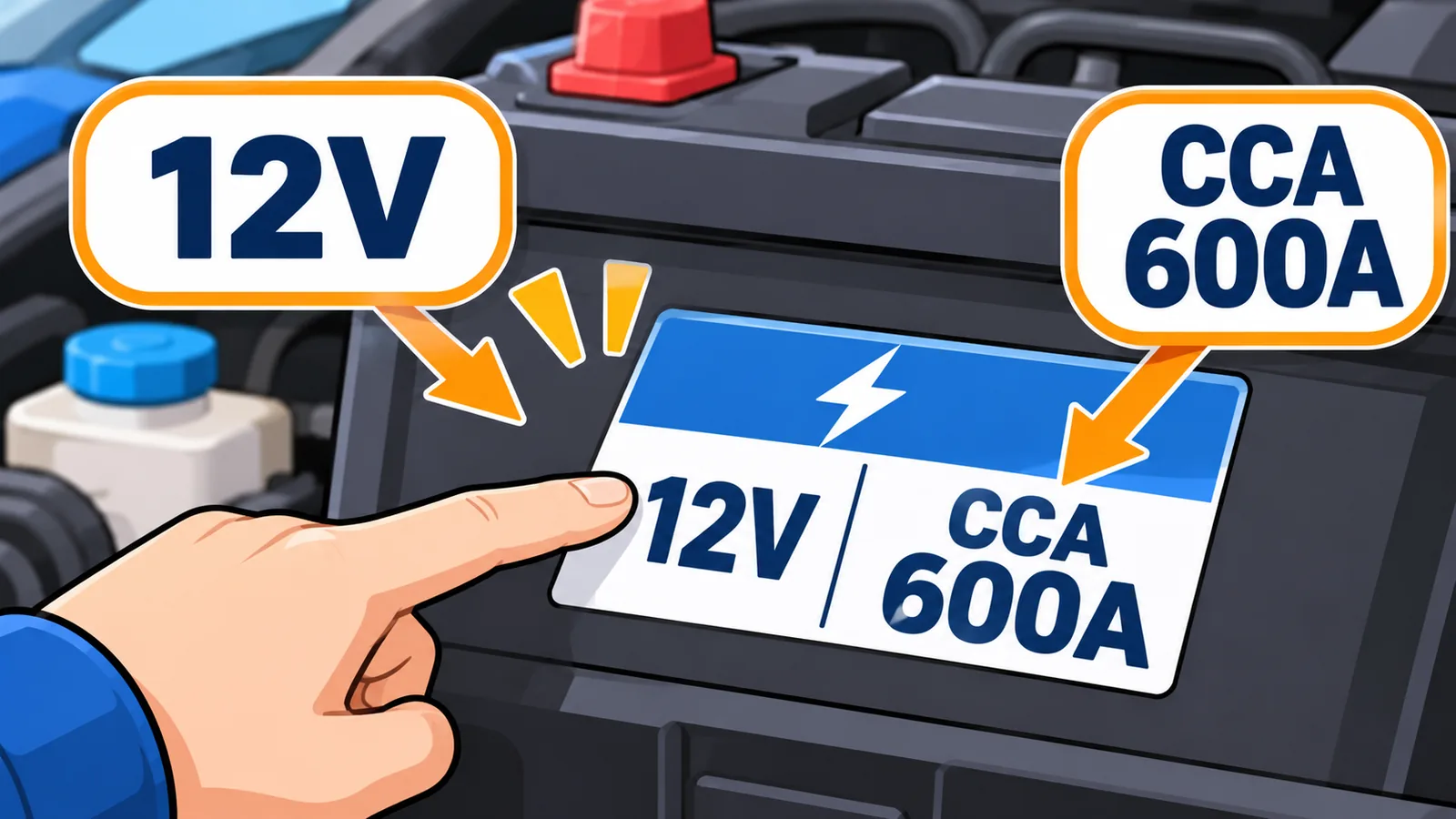
Match the tester to your battery label and to what you actually want to test. Start with the label on top of your battery.
- Chemistry: confirm support for AGM, EFB, or GEL if your battery is one of those.
- Voltage: check which voltage the battery test supports, not just the box headline.
- CCA range: make sure your battery’s rating falls inside the tester’s range.
- System tests: decide whether you want starting and charging checks too.
- Display and extras: consider screen size, printing, and how easy the results are to read.
Here’s the catch: “12V/24V” on the box may apply only to starting and charging tests. The TOPDON BT200, for instance, checks batteries at 12V but supports 12V and 24V for starting and charging.
🛒 Recommended Product
- Battery-test voltage and system-test voltage can differ on the same tester.
- Your battery’s CCA must fall inside the tester’s stated range.
- Check chemistry support (AGM, EFB, GEL) before buying.
- Retest borderline results after a full charge.
[IMAGE_6]
Best Pick by Use Case
The right tester depends on who is holding it and what they drive.
- Everyday driver: TOPDON BT100 or BT200.
- Mixed 12V and 24V fleet: FOXWELL BT-705 or TOPDON BT600 for system checks, keeping in mind the battery test itself is 12V.
- Shop that prints reports: TOPDON BT600.
- Older vehicle with a 6V battery: Schumacher BT-100.

[IMAGE_7]
How to Get a Reliable Reading
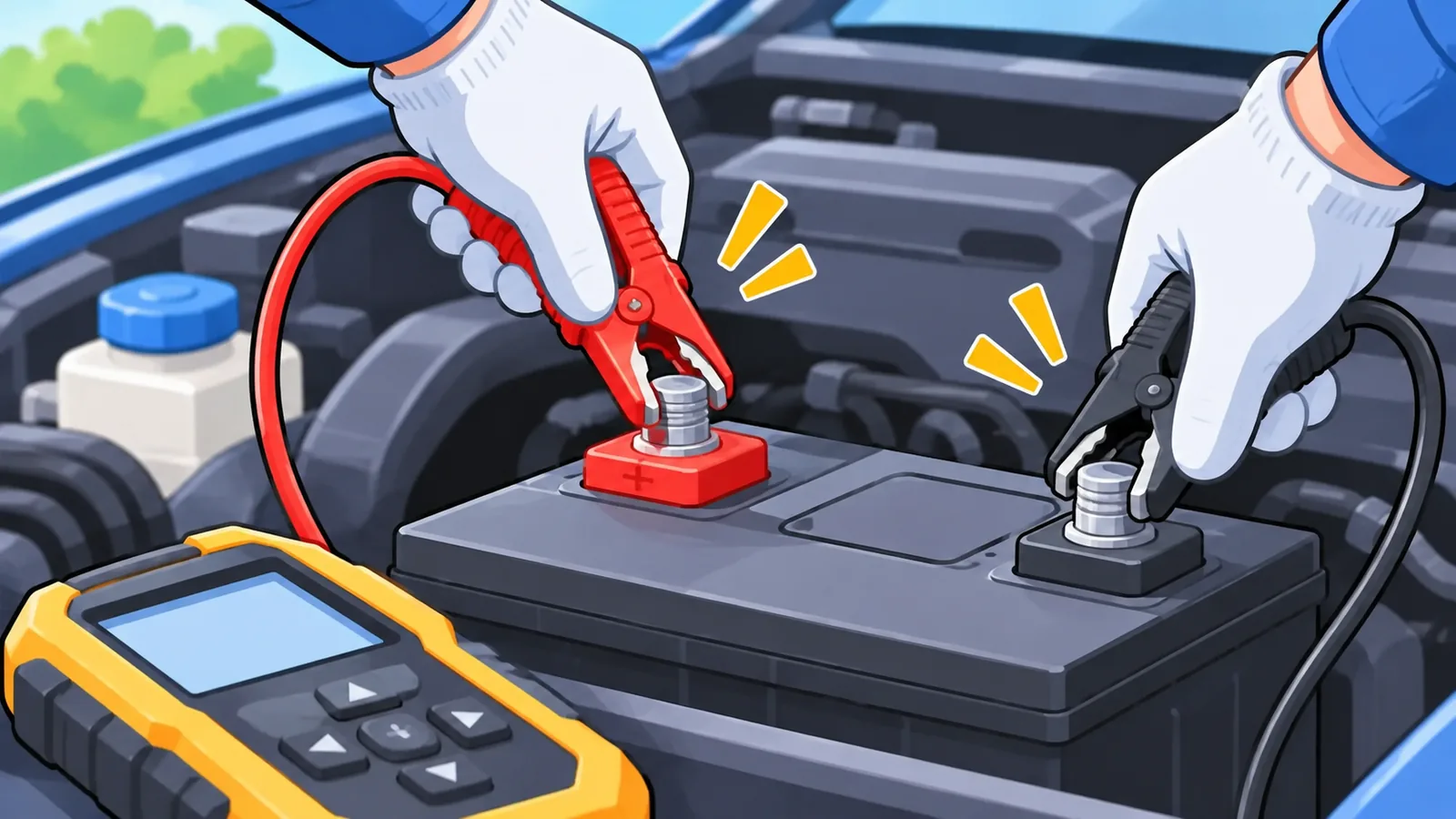
A clean, charged, properly connected battery gives the most trustworthy result. Wrong settings or loose clamps can skew the number.
- Read the battery label for type, voltage, and CCA.
- Clean the terminals.
- Make firm clamp contact.
- Enter the correct battery type and CCA.
- Follow the manufacturer’s test sequence.
What if the result is borderline or the battery is discharged?
Recharge the battery and test again. If the result is still unclear, have a shop confirm it.
Safety note: load testers draw large current, so follow the manual’s connection order and time limits.
[IMAGE_8]
Frequently Asked Questions
Can a tester check AGM and EFB batteries?
Many can. The TOPDON BT200 lists flooded, AGM, GEL, EFB, and VRLA support. For any other model, confirm the supported types in the manual before buying.
Does one tool test the starter and alternator too?
Some do. The TOPDON BT100, BT200, and BT600 and the FOXWELL BT-705 all list starting and charging system checks.
Is a cheap tester accurate enough?
It can be fine for a quick check. Accuracy claims on product pages are the maker’s own, so treat them as claims. Borderline results are worth a retest or a shop opinion.

Can I test a 24V battery with a 12V tester?
Not if the tester’s battery test is 12V only. The BT200 and BT600, for example, support 24V only for starting and charging checks.
[IMAGE_9]
Final Thoughts and Next Step
In short, the best car battery tester is the one that supports your battery’s voltage, chemistry, and CCA, and covers the checks you care about. Today, read your battery label and write down the voltage, chemistry, and CCA before you shop.
Ready to compare? Check each manufacturer’s official spec page against your battery label before you buy.
[IMAGE_10]
References
Want more comparisons and buying guides?