
⚠️ This page connects you to Atovia’s partners and affiliate markets. We may receive a commission from affiliate partners for activities made through these links. Discount offers may change at any time according to policy! Rest assured, there are no additional costs to you! We hope this saves you time in finding the right items!
It’s a few weeks into your first semester, your notes are piling up, and everyone keeps telling you to “start your outline.” Here is what an outline is, when to begin, and how to build one around rules instead of long case summaries.
In short, build your outline from your syllabus and class notes, organize it by rules, and test it with practice questions. This guide covers U.S. law school study methods, drawn from the ABA, UC Berkeley, UC Davis, Suffolk, and LSAC. Timing and detail advice varies by school and course, so treat the suggestions below as starting points.
- What Is a Law School Outline?
- When Should You Start Your Outline?
- Step 1: Gather Your Materials
- Step 2: Build the Skeleton From the Syllabus
- Step 3: Fill In the Rules, Elements, and Exceptions
- Step 4: Add Cases as Examples, Not Summaries
- Which Outline Format Should You Use?
- How Detailed Should Your Outline Be?
- Test and Refine Your Outline With Practice Questions
- Can You Use Someone Else’s Outline?
- Frequently Asked Questions
- Conclusion and Your Next Step
- References
- Start within the first few weeks of the semester and build the outline up over time (ABA, Suffolk).
- Organize by rules, elements, and exceptions rather than long case summaries (ABA, UC Davis).
- Use the syllabus for structure and your professor’s class notes as the main source (ABA, LSAC).
- Work practice questions to find the rules and exceptions your outline is missing (ABA).
What Is a Law School Outline?
A law school outline is a condensed, course-specific study guide that organizes the rules, elements, exceptions, and key cases you will need to apply on an exam. It is built from your own course materials, not copied from a textbook.
The ABA’s guidance treats outlining as part of the learning itself. Suffolk makes a similar point: the work of building the outline is where much of the studying happens.
Here’s the catch: no source promises that an outline alone produces a good grade. Think of it as a study tool that works best alongside practice and real understanding.

When Should You Start Your Outline?
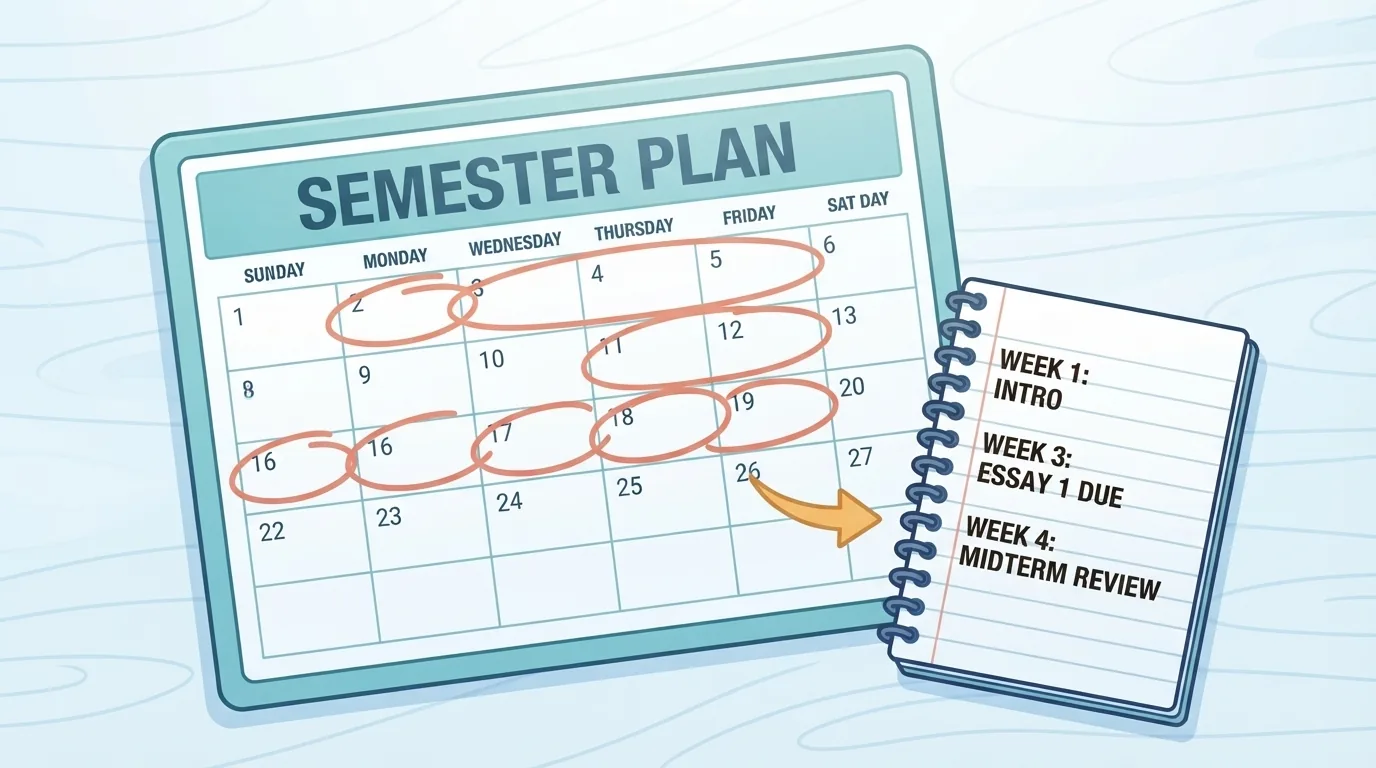
The ABA recommends starting within the first few weeks of the semester. That leaves time after classes end for review, memorization, and practice.
These timelines are recommendations from school guidance, not rules for every course. Your school or professor may suggest something different.
Why not wait until the end of the semester?
Suffolk’s guidance explains that putting it off leaves less time to learn from the process and to review. Building the outline a little at a time spreads that work out.
How often should you update it?
Add material as the course moves along, and review the outline on a regular schedule. LSAC’s study strategies also encourage regular review rather than a single read-through at the end.
Step 1: Gather Your Materials
Start with your professor’s lecture notes and class content, then add supplements where you need them. The ABA and LSAC both put class material first and treat the casebook and study aids as backup for understanding.
UC Berkeley’s guide lists the usual sources:
- The course syllabus
- Your class notes
- Case briefs
- In-class hypotheticals
- Professor handouts and materials
- The casebook, plus study aids for clarification
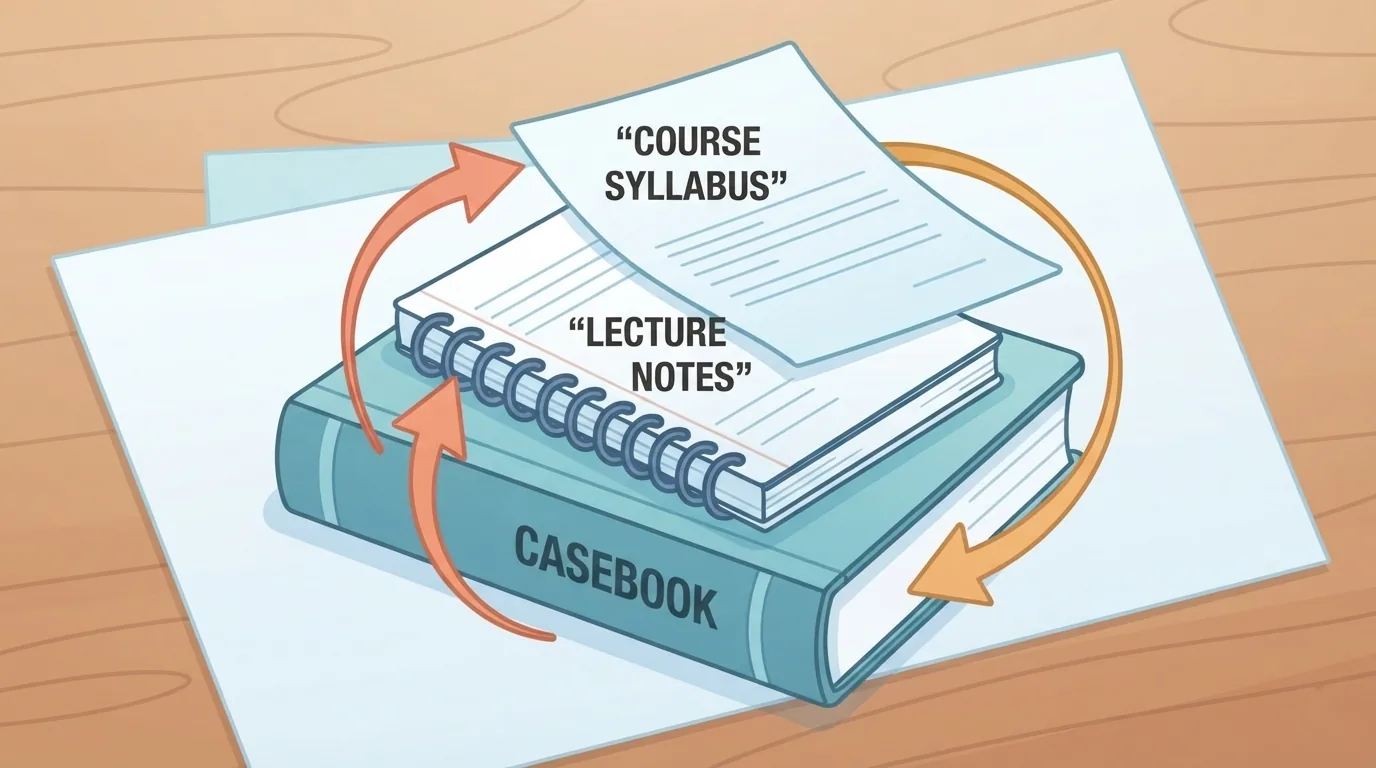
So if a supplement ever conflicts with what your professor emphasized in class, follow the class.
Step 2: Build the Skeleton From the Syllabus
Use the syllabus topic list as your top-level headings. The ABA and UC Berkeley both suggest building the basic structure this way.
A simple hierarchy can look like this (generic placeholders, not a real doctrine):
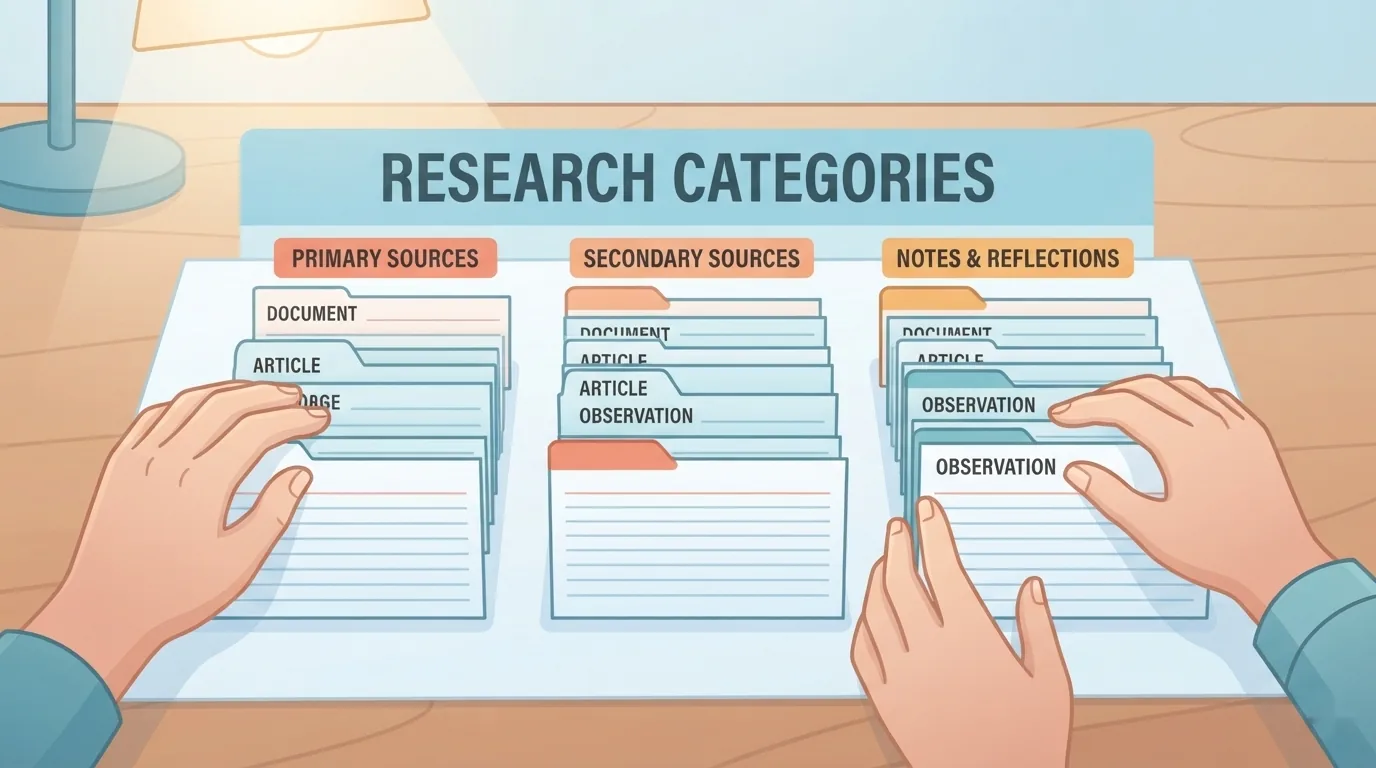
- Topic (from the syllabus)
- Sub-topic
- Rule
- Element 1, Element 2, Element 3
- Exception
Let your professor’s emphasis decide how much space each topic gets. If a topic took three weeks of class, it probably deserves more room than one covered in an afternoon.
Step 3: Fill In the Rules, Elements, and Exceptions
Organize around rules, not cases. UC Davis and the ABA both advise this, because the rule is what you will apply to new facts on an exam.
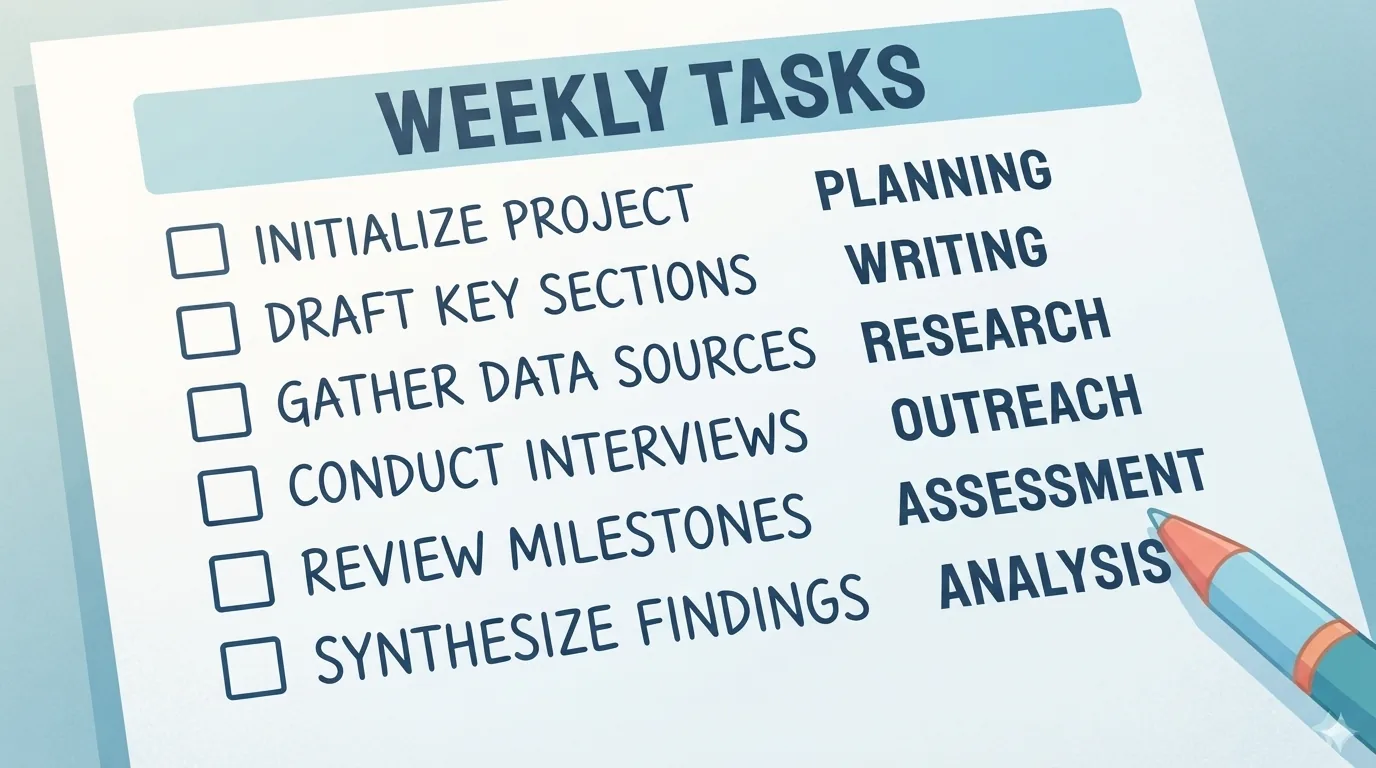
UC Davis suggests checking each topic for these items:
- Definitions
- Elements
- Factors
- Exceptions
- Defenses
Include rules from statutes and case law where they apply, as UC Berkeley’s guide suggests.
What is an “Attack Sheet“?
UC Davis describes an “Attack Sheet” as a one-page summary or exam checklist placed in front of the full outline. It is optional, but it can give you a quick way to check that you have covered each issue before you start writing an answer.
Step 4: Add Cases as Examples, Not Summaries
Keep each case to its key facts, rule, holding, and reasoning, and scale the detail to how much class time it received. That is the approach UC Berkeley’s guide suggests.
The ABA’s in-depth guide warns against long case summaries and favors the rule you will apply on the exam. It also suggests tying in-class hypotheticals and examples to the rule they illustrate.
🛒 Recommended Product
A generic pattern might look like this:
- Rule: [state the rule in one line]
- Example case: [key fact and result, in one line]
If a case only repeats a rule you already have, a short pointer is usually enough.
Which Outline Format Should You Use?
There is no single correct format. UC Berkeley’s guide says lists, checklists, tables, and flowcharts can all work, depending on the course and how you learn.
| Format | Best for | Strength | Watch out for |
|---|---|---|---|
| Hierarchical list | Most courses | Clear topic structure | Can grow too long |
| Checklist | Rules with many elements | Easy exam-day check | Skips nuance |
| Table | Comparing similar rules | Side-by-side view | Cells get crowded |
| Flowchart | Multi-step analysis | Shows decision order | Hard to edit later |
Many students mix formats, for example a list for most topics and a flowchart for one tricky area. Pick what you will actually use when you review.
How Detailed Should Your Outline Be?
Make it detailed enough to hold every rule you need, but short enough that you can review it more than once. Length expectations vary by school and professor.
The sources in this guide give no page counts, so ask your professor or your academic support office what they recommend.
The ABA’s tips also encourage writing the outline yourself, since the process is part of the learning.
Test and Refine Your Outline With Practice Questions
Work practice problems, then add any rule or exception you missed. The ABA’s in-depth guide suggests this as a way to find gaps.
- Attempt a practice question using only your outline.
- Note every rule, element, or exception you needed but did not have.
- Update the outline.
- Repeat with another question.
Review the outline regularly instead of rereading it once, as LSAC advises.
Can You Use Someone Else’s Outline?
Treat another student’s outline as a comparison tool, not a replacement for building your own. The ABA encourages writing your own, and LSAC says to put your professor’s class content first.
Older student outlines or commercial summaries may not match your professor’s emphasis. That is a possibility, not a certainty, so compare them against your own notes.
Also check your school’s rules and your professor’s instructions on exam materials and shared resources before you rely on anything outside your own work.
Frequently Asked Questions
What is a law school outline?
It is a condensed study guide for one course, organized around the rules, elements, exceptions, and key cases you will apply on an exam.
When should I start outlining?
The ABA recommends the first few weeks of the semester, and Suffolk recommends building it up over the term. Your school or professor may advise differently.
Should I outline cases or rules?
Focus on rules. Include cases briefly as examples, with key facts, the rule, the holding, and the reasoning.
How long should an outline be?
There is no universal length. Ask your professor or academic support office, and aim for something you can review more than once.
Do I need a one-page summary?
No, but UC Davis describes an optional “Attack Sheet” that can work as a quick exam checklist.

Does a good outline guarantee a good grade?
No. An outline is a study tool, and exam performance also depends on practice and understanding of the material.
Conclusion and Your Next Step
In short, start early, build from your syllabus and class notes, organize around rules, and test the outline with practice questions. Timing and detail advice varies by school and course, so confirm your school’s exam-material rules and your professor’s instructions.
Today, open your syllabus and turn its topic list into the top-level headings of your outline.
References
- American Bar Association, “5 Tips to Get You Started on Writing Law School Outlines”
- American Bar Association, “An In-Depth Guide to Outlining in Law School”
- UC Berkeley School of Law, “A Quick Guide to Outlining”
- UC Davis School of Law, “Outlining Law School Courses”
- Suffolk University Law School, “Chapter VI – Creating A Course Outline”
- Law School Admission Council (LSAC), “Strategies for Success in Law School”
Want more comparisons and buying guides?