
⚠️ This page connects you to Atovia’s partners and affiliate markets. We may receive a commission from affiliate partners for activities made through these links. Discount offers may change at any time according to policy! Rest assured, there are no additional costs to you! We hope this saves you time in finding the right items!
Quick answer: Dry brush the record first. Then wet clean it with a record-safe solution and a microfiber cloth. Dry it fully and store it in a fresh inner sleeve.
Dust and oils in the grooves cause surface noise and add wear to your stylus, so a few minutes of care goes a long way.
- Why Cleaning Vinyl Records Matters
- What You Need Before You Start
- Step 1: Dry Brushing
- Step 2: Wet Cleaning by Hand
- Step 3: Rinse, Dry, and Store
- Cleaning Methods Compared
- How to Deal With Stubborn Dirt, Fingerprints, and Used Records
- What Not to Use
- How to Choose Cleaning Supplies
- Cleaning Routine Checklist
- Frequently Asked Questions
- Dry brush your records before playing them.
- Use a record-safe cleaning solution, not household cleaners.
- Rinse with distilled water, since tap water can leave mineral residue.
- Wipe along the grooves, never in circles.
- Keep liquid off the paper label.
- Let the record dry completely before it goes back into a sleeve.
- Replace worn, torn, or dusty inner sleeves.
Why Cleaning Vinyl Records Matters
Every time a record is handled, pulled from a sleeve, or left out on a turntable, it picks up dust, skin oils, and fine debris. That material settles into the grooves, where it shows up as pops, crackle, and surface noise during playback.
The same debris adds wear to your stylus, which is one more reason to keep records clean. Cleaning removes dirt, but it cannot repair physical scratches or groove damage, so the earlier you start, the better.
What You Need Before You Start
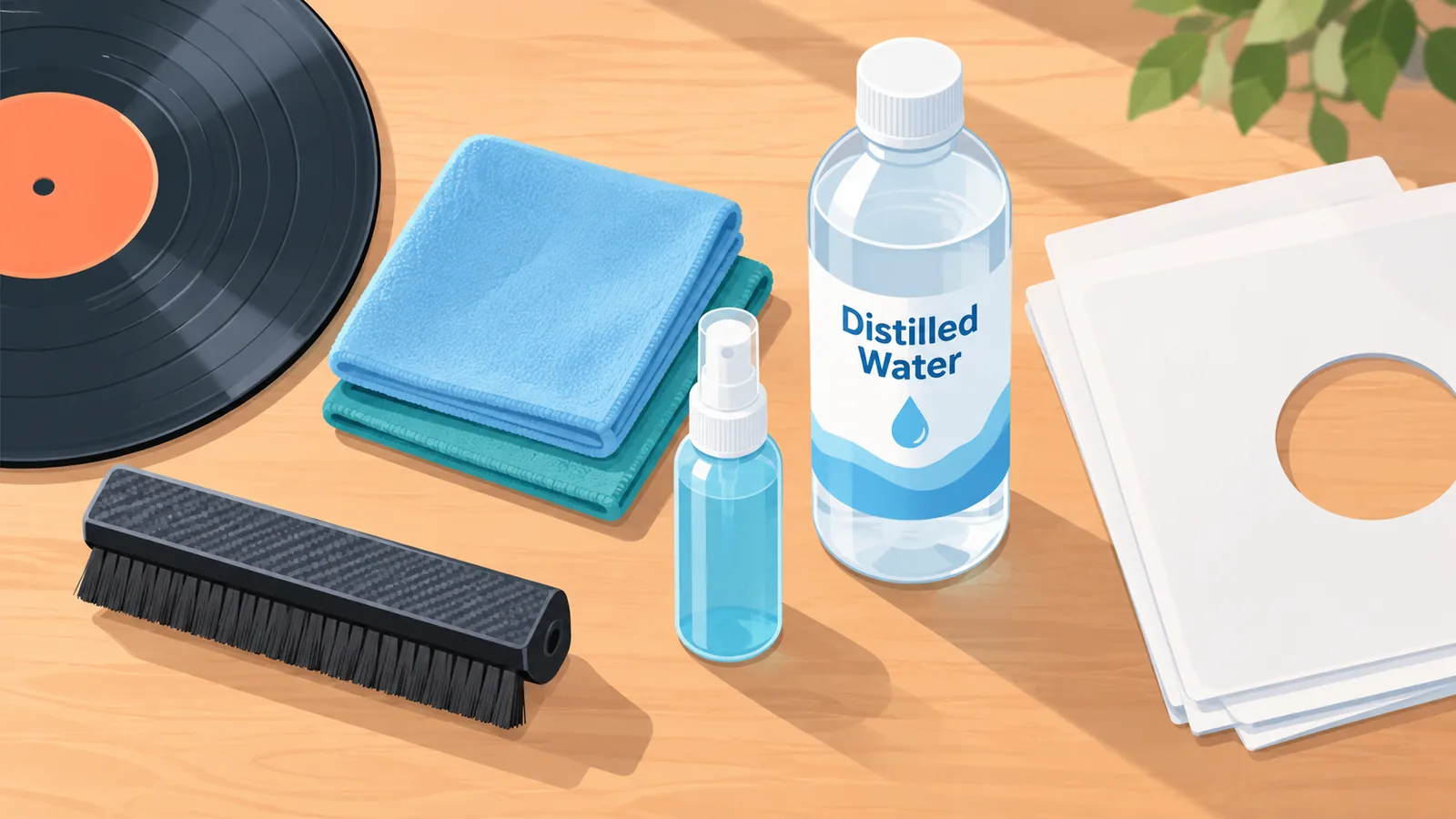
Gather everything first so you are not hunting for supplies with a wet record in your hand. Here is a simple supplies checklist:

- Carbon fiber brush: Removes loose surface dust.
- Two or more microfiber cloths: One for applying solution, one for drying or buffing. Keep them clean and lint-free.
- Record-safe cleaning solution: Made for vinyl, not a general household product.
- Distilled water: For rinsing and for lightly dampening cloths.
- A clean, flat surface with a soft mat: A microfiber towel or turntable mat works well.
- Fresh anti-static inner sleeves: Poly-lined or rice-paper styles are commonly recommended over plain paper sleeves, which tend to shed paper dust.
Check before you begin: Your hands should be clean and dry, and your work surface free of crumbs and grit.
Step 1: Dry Brushing
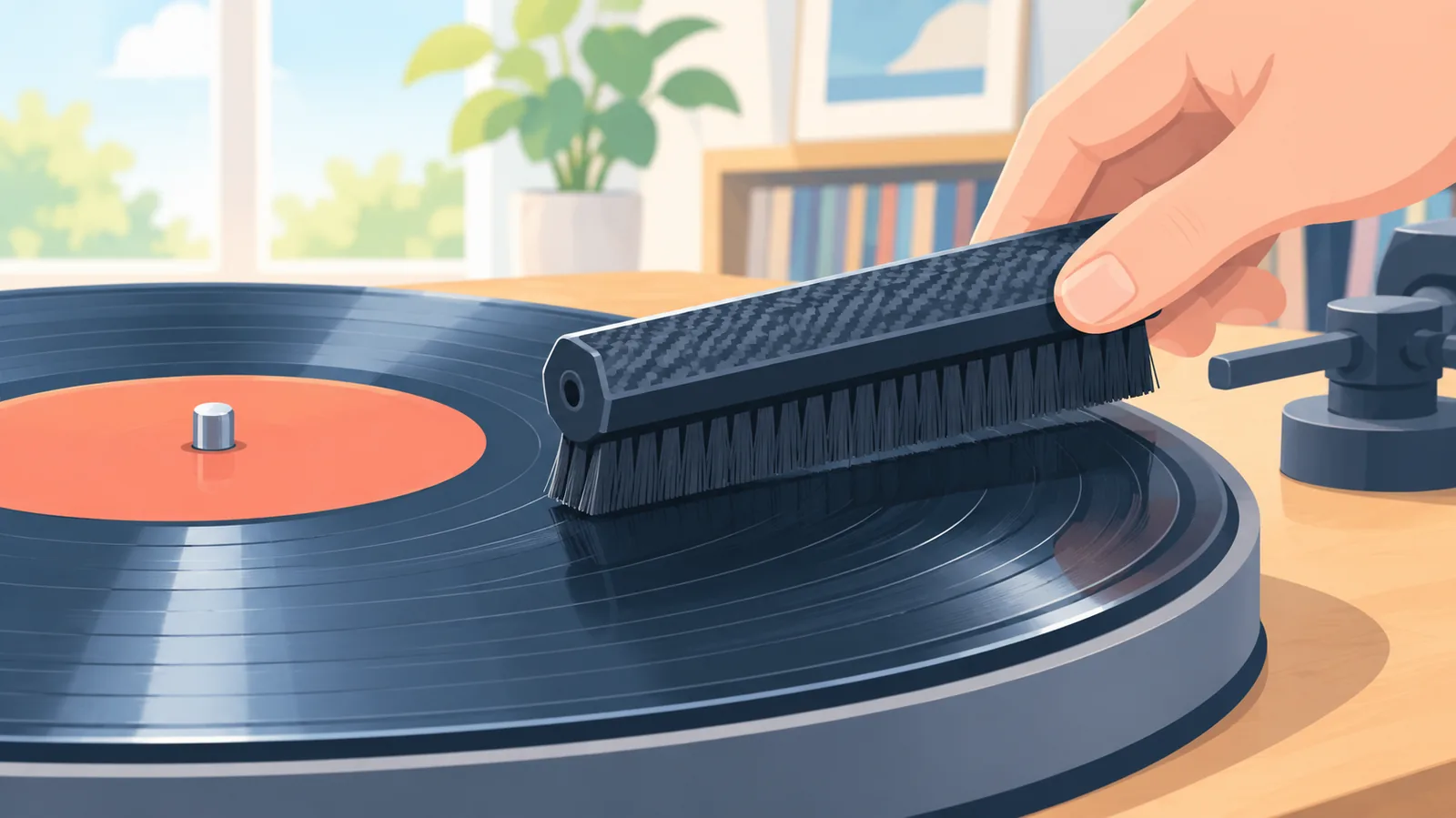
Place the record on a clean, flat surface or on the turntable platter, then brush gently along the grooves. Use light pressure and move in the direction of the grooves rather than across them.
- Hold the record by the edges and label area.
- Rest the brush lightly on the surface.
- Sweep along the grooves until the visible dust is lifted.
- Flip the record and repeat on the other side.
A suggested routine is to brush before each play. If your brush looks worn, matted, or dirty, clean or replace it, because a dirty brush can move debris around instead of removing it.
Step 2: Wet Cleaning by Hand
Wet cleaning lifts the oils and embedded grime that a dry brush cannot reach. Use a small amount of a record-safe solution and work gently.
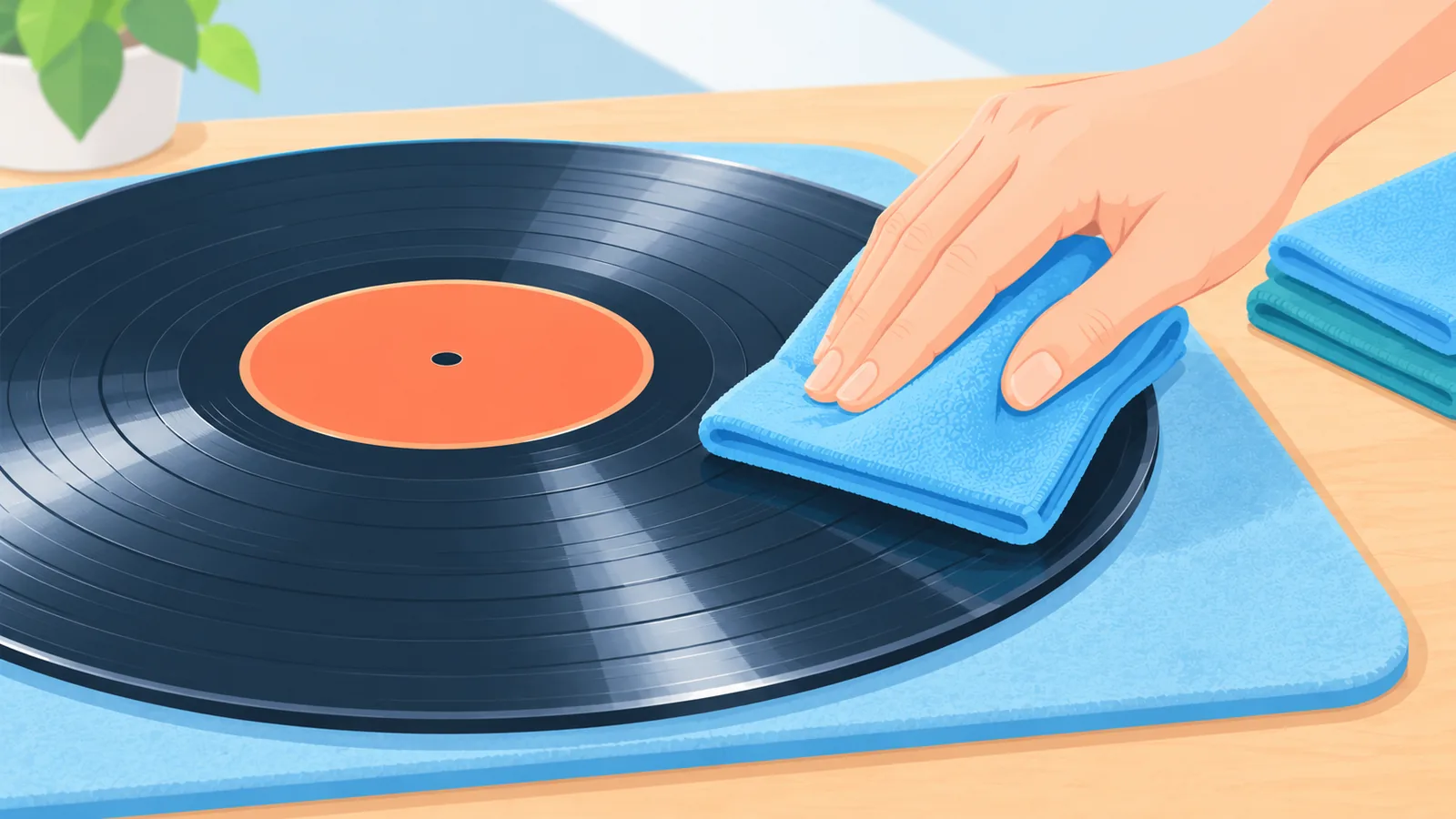
- Lay the record on a soft, clean mat.
- Apply a small amount of solution to the microfiber cloth or lightly to the playing surface.
- Wipe gently along the grooves, following their direction. Do not scrub in circles.
- Keep liquid away from the paper label, since moisture can cause warping or staining.
- Flip the record and repeat on the second side.
Check: The surface should look evenly damp, not soaked. If liquid pools near the label, blot it right away with a dry microfiber cloth.
Step 3: Rinse, Dry, and Store
Rinse away any leftover solution with a cloth lightly dampened with distilled water, wiping along the grooves. Distilled water is preferred because tap water can leave mineral residue behind.
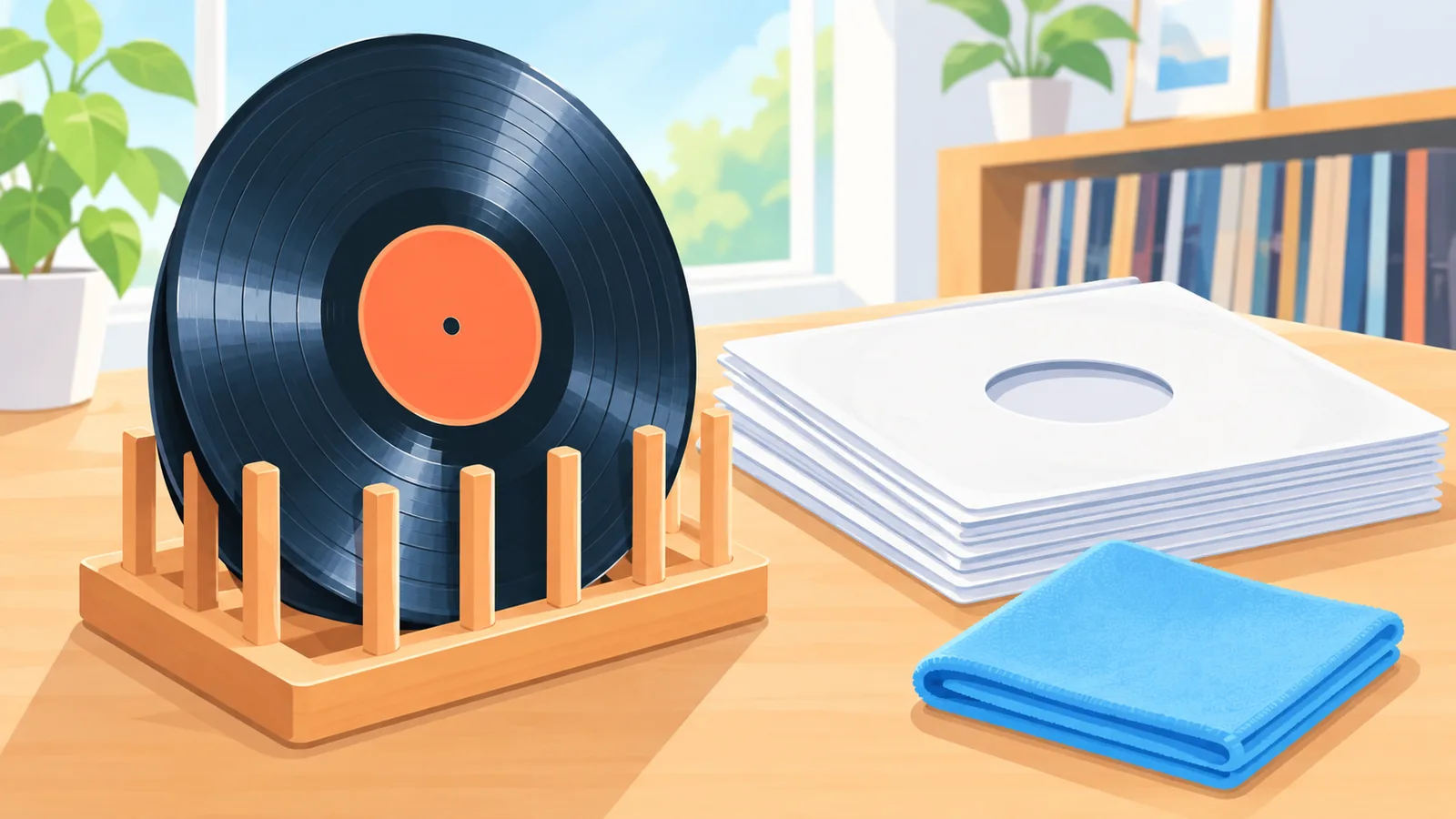
- Air dry the record on a drying rack or on a clean, lint-free cloth.
- Confirm the record is fully dry on both sides before it goes into a sleeve.
- Slide it into a fresh anti-static inner sleeve.
- Store records upright, away from heat and direct sunlight.
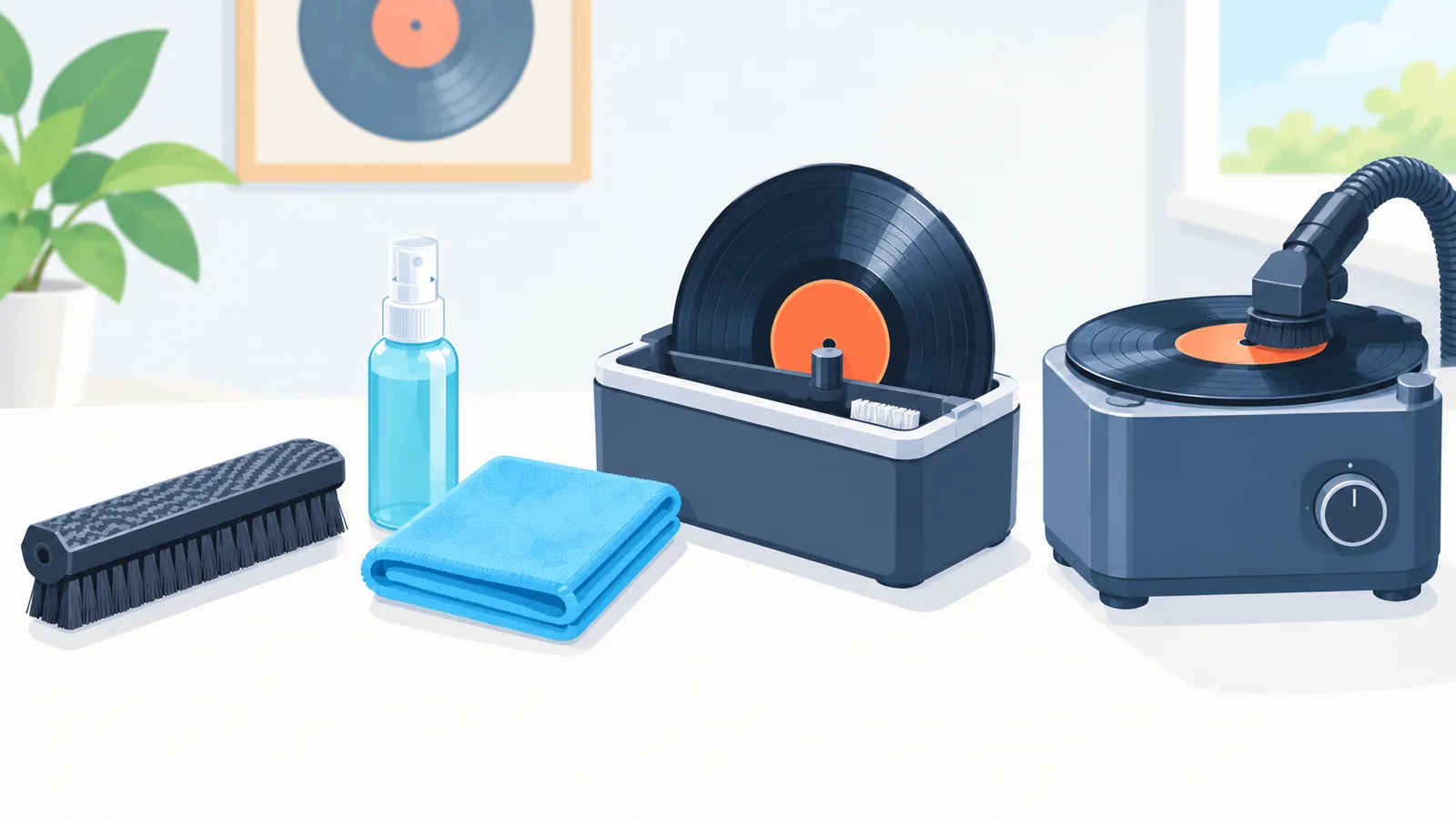
Cleaning Methods Compared
The right method depends on how often you play records, how large your collection is, and how much effort you want to put in. Ratings below are general guidance, not lab measurements.
| Factor | Carbon Fiber Brush | Spray and Cloth | Manual Wash Kit | Vacuum Record Cleaning Machine |
|---|---|---|---|---|
| Cost | Low | Low | Medium | High |
| Effort | Low | Medium | High | Medium |
| Cleaning power | Low (loose dust only) | Medium | Medium | High |
| Best for | Quick pre-play dust removal | Regular upkeep of a small collection | Occasional deeper cleans on a budget | Large collections and used-record buying |
Vacuum machines generally give the deepest clean, but they cost more and need more upkeep. Spray-and-cloth and manual kits cost less but take more time and clean less deeply.
How to Deal With Stubborn Dirt, Fingerprints, and Used Records
Records from thrift stores, garage sales, and used bins often arrive with heavy dust, fingerprints, and sleeve residue. A suggested approach is to wet clean any used record before its first play.
- Fingerprints: Wipe gently along the grooves with a microfiber cloth and record-safe solution, then rinse with distilled water.
- Heavy grime: Repeat the wet clean with a fresh cloth rather than pressing harder.
- When to upgrade: If you regularly buy used records or your collection keeps growing, a vacuum cleaning machine may be worth the investment.
Keep expectations realistic: cleaning will not repair heavily scratched or visibly damaged records.

What Not to Use
Using the wrong product is one of the fastest ways to make a record worse. Avoid the following:
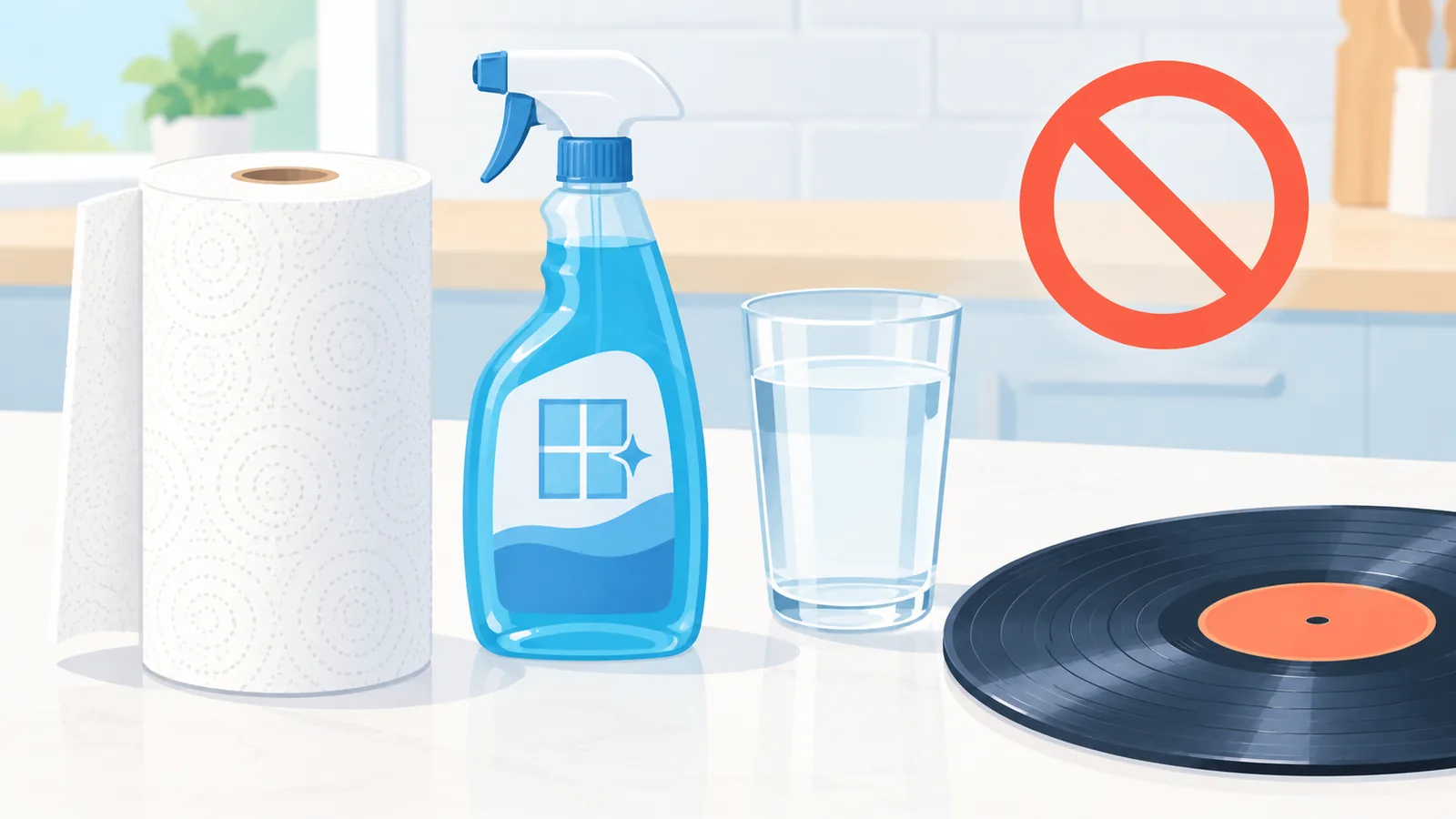
- Paper towels: They can leave lint and fine scuffs.
- Household glass cleaner: General-purpose cleaners are not made for vinyl.
- Tap water: It can leave mineral residue in the grooves.
- Undiluted isopropyl alcohol: Widely discouraged. Choose a purpose-made record cleaning solution instead.
- Circular scrubbing: It can push debris across the grooves. Always wipe with the grooves.
How to Choose Cleaning Supplies
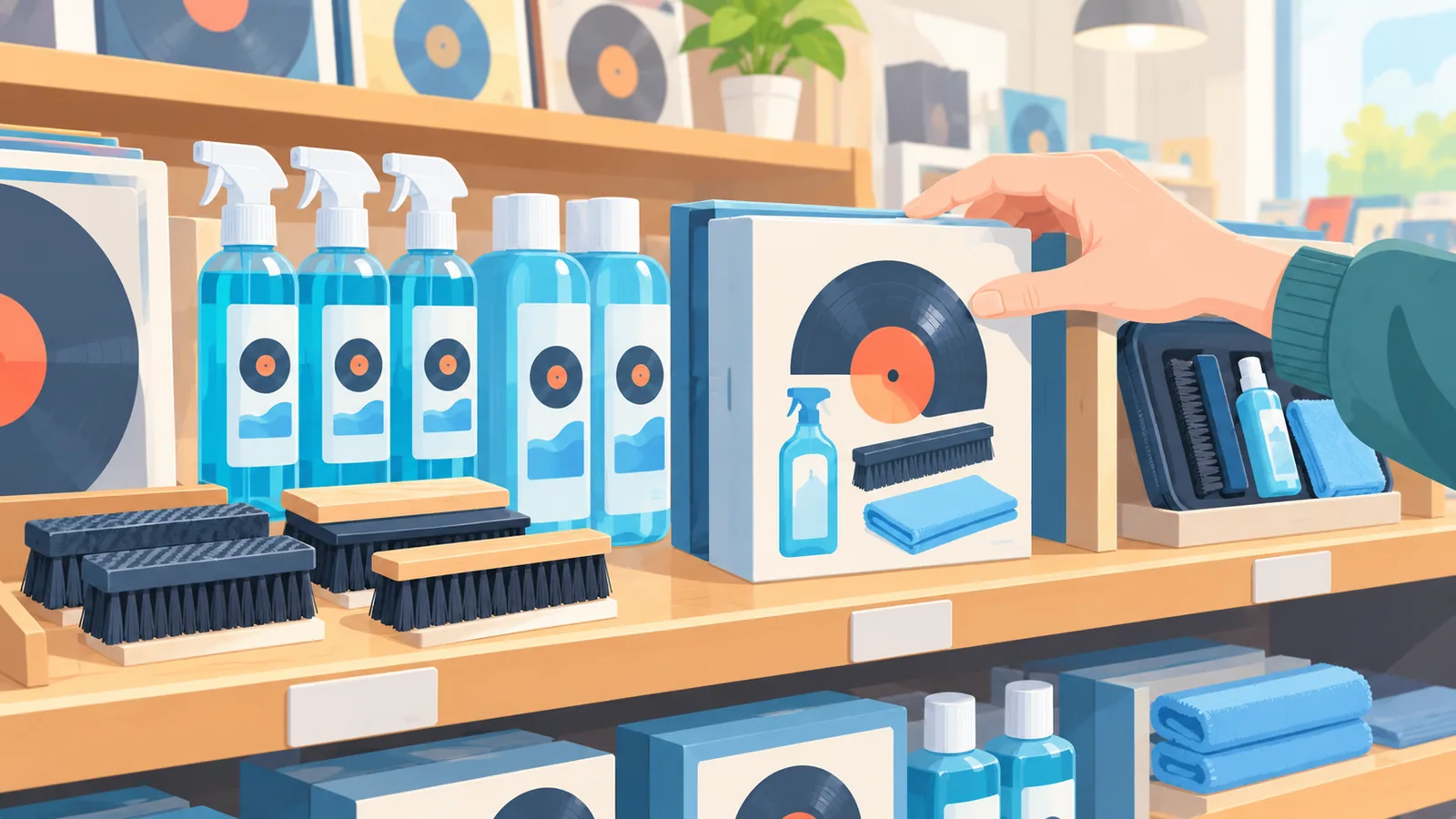
Use these criteria to compare products without relying on marketing claims.
- Formula: Many buyers prefer alcohol-free or low-alcohol solutions made for vinyl. Manufacturer claims vary, so treat this as a preference, not a guarantee.
- Brush quality: Look for dense, even bristles that sit flat and are easy to keep clean.
- Cloth material: Choose soft, lint-free microfiber.
- Collection size and budget: Small collections rarely need a machine. Larger collections benefit from faster, deeper cleaning.
Budget tiers by method:
- Starter: A carbon fiber brush plus microfiber cloths and a record-safe spray.
- Mid-range: A manual wash kit with solution, distilled water, and a drying rack.
- Enthusiast: A vacuum record cleaning machine for deep, repeatable results.
Cleaning Routine Checklist
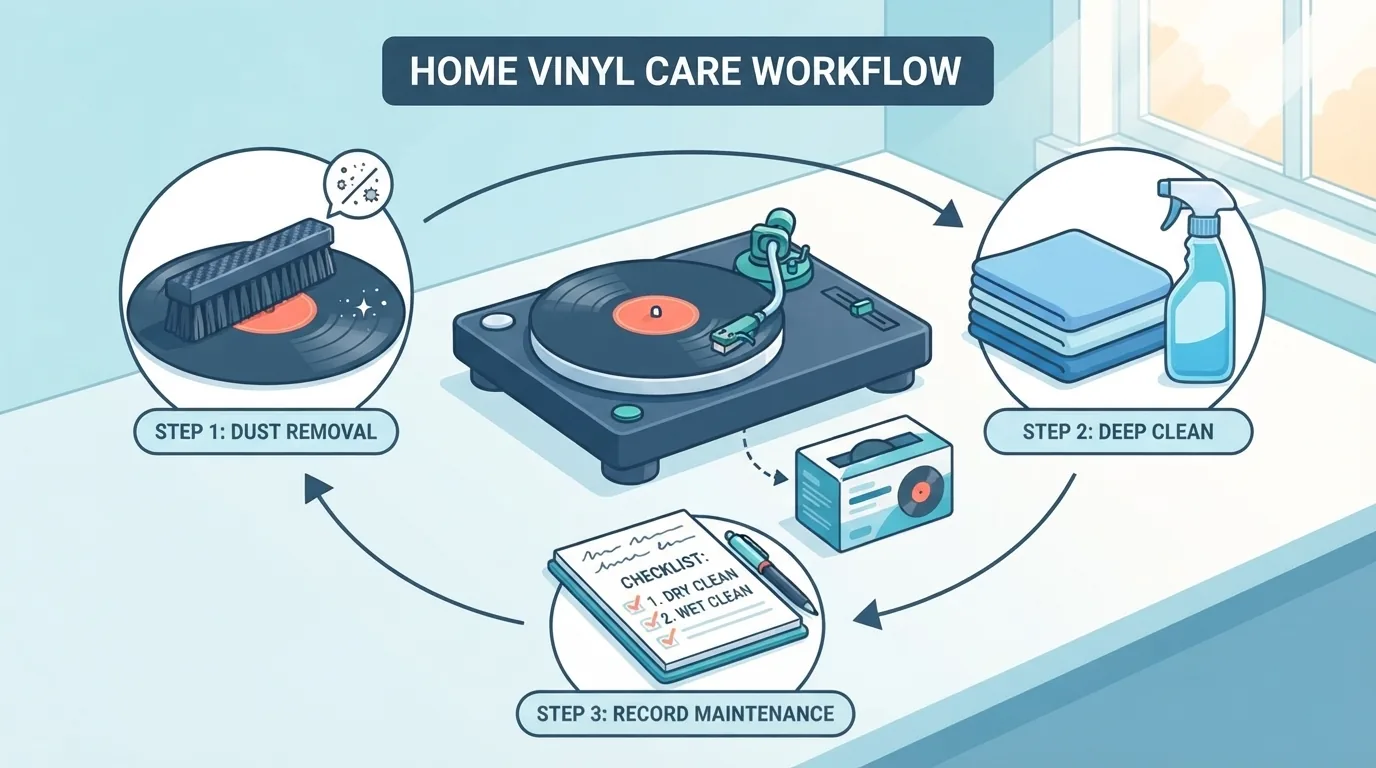
This is a suggested routine, not a strict rule. Adjust it to how often you play and how your records look and sound.
- Before each play: Dry brush both sides along the grooves.
- When a record looks or sounds dirty: Wet clean, rinse with distilled water, and dry fully.
- Monthly: Check your collection for dusty sleeves, a worn brush, and records that need attention.
- New or used records: Give them a light clean before the first play.
- After cleaning: Sleeve records only when fully dry, and store them upright away from heat and sunlight.
Frequently Asked Questions
Can I use isopropyl alcohol to clean vinyl records?
It is best to avoid it. Undiluted isopropyl alcohol is widely discouraged, and some hobbyists use small diluted amounts, but there is no agreed safe mix. A purpose-made record cleaning solution is the safer choice.
Is tap water safe for cleaning records?
Distilled water is the better choice. Tap water can leave mineral residue in the grooves as it dries.
How often should I clean my records?
A suggested routine is to dry brush before each play and wet clean when a record looks or sounds dirty. Many collectors also check their collection about once a month.
Do new records need cleaning?
Many collectors give new records a light clean before the first play to remove dust and sleeve residue. It is a common habit rather than a strict requirement.
Can I clean records with just a damp cloth?
It is better than nothing, but less effective than a proper solution. If you do this, use a clean microfiber cloth lightly dampened with distilled water, never soaking wet, and wipe along the grooves.
Can cleaning fix scratches?
No. Cleaning removes dirt and debris, but it cannot repair physical scratches or groove damage.
Ready to build your cleaning setup? Browse a vinyl record cleaning kit that includes a brush, microfiber cloths, and a record-safe solution.
Browse Record Cleaning Kits
- General collector and manufacturer care guidance for vinyl records, including brushing, distilled water rinsing, and inner sleeve recommendations. No specific external sources were consulted for this article.
Want more comparisons and buying guides?
Citing this article
Source: Atovia (Atovia). https://atovia.kr