
⚠️ This page connects you to Atovia’s partners and affiliate markets. We may receive a commission from affiliate partners for activities made through these links. Discount offers may change at any time according to policy! Rest assured, there are no additional costs to you! We hope this saves you time in finding the right items!
The other driver ran the light, and now their insurer keeps calling you. Before you say much, here is how to pick the person who handles it.
As an Amazon Associate I earn from qualifying purchases.
This guide gives you criteria, consultation questions, red flags, and fee terms to check before you sign. It is general education, not legal advice, so talk with a licensed attorney in your state about your own claim.
- Do You Need a Lawyer When the Other Driver Is at Fault?
- What Makes an Attorney the “Best” for Your Case?
- Six Criteria to Compare Before You Choose
- Local Firm vs. National Firm
- Fee Structures Explained
- Questions to Ask in the First Consultation
- Red Flags That Should Make You Walk Away
- What a Good Lawyer Does to Build Your Claim
- What to Gather Before You Call
- Frequently Asked Questions
- Your Next Step Today
Do You Need a Lawyer When the Other Driver Is at Fault?
Not always, but injuries, disputed fault, or a low insurer offer are strong reasons to book a consultation. Being the innocent party does not guarantee a smooth claim.
When you can probably handle it yourself
If there are no injuries, the damage is minor, and the other driver’s insurer has accepted fault, you may be able to manage the claim on your own. Keep records of every call and every document you receive.
When a lawyer usually makes sense
Get advice if you were hurt, missed work, or the other side is disputing who caused the crash. The same goes for uninsured or underinsured drivers and crashes involving several parties.

Here is a common scenario. The other driver’s insurer offers a quick settlement while you are still in treatment. If you don’t yet know the full cost of your care, that is a good moment to get advice before you sign anything.
[[IMAGE_1]]
What Makes an Attorney the “Best” for Your Case?
The best attorney is the one whose experience, resources, and communication fit your claim, not the one with the loudest ads. “Best” depends on your injuries, the size of the claim, and your state.
A firm that is excellent with catastrophic injury cases may not be the right fit for a modest soft-tissue claim, and the reverse can be true too. Ask whether the lawyer regularly handles cases like yours.

Be cautious about ranking lists and advertising volume. Many lists are marketing or paid placements, and they say little about how a lawyer will treat your file. Use them as a source of names, never as proof of quality.
[[IMAGE_2]]
Six Criteria to Compare Before You Choose
Compare each lawyer on license and discipline history, similar-case experience, trial readiness, communication, resources, and fee clarity. Score every candidate the same way so the comparison stays fair.
- An active license and a clean or explainable discipline record.
- Experience with car accident claims like yours.
- Willingness and ability to take a case to trial if needed.
- Clear, regular communication and a named point of contact.
- Resources to hire experts and investigators when the case needs them.
- A written, plain-language fee agreement.

| Criterion | What to look for | How to verify |
|---|---|---|
| License and discipline | Active status, no unexplained sanctions | State bar attorney lookup |
| Case-type experience | Regular work on injury claims like yours | Ask for examples (no confidential details) |
| Trial readiness | Recent courtroom experience | Ask how often cases go to trial |
| Communication | Named contact, update schedule | Ask in the consultation |
| Resources | Access to experts and investigators | Ask who is hired and who pays |
| Fee clarity | Percentages and costs in writing | Request a sample agreement |
- Check the lawyer’s license and discipline record on your state bar site.
- Get the fee agreement in writing and read it before signing.
- Ask how medical bills and liens are handled from the settlement.
- Ask which filing deadlines apply to your claim.
[[IMAGE_3]]
Local Firm vs. National Firm
Local firms tend to know your courts and adjusters, while larger firms bring resources and volume. The right pick depends on how complex your claim is.
| Factor | Local firm | Large or national firm |
|---|---|---|
| Local knowledge | Often strong with local courts and judges | Varies by office |
| Personal attention | Usually more direct access to the lawyer | May rely on case managers or staff |
| Resources | Can be limited for costly experts | Often deeper budgets |
| Case handling | Fewer files per lawyer, in many cases | Higher volume |
| Referrals | May refer out complex cases | May refer to partner firms |

Who will actually handle my file?
Ask this at every firm, large or small. The lawyer you meet in the consultation is not always the one doing the daily work, and you should know who is.
[[IMAGE_4]]
Fee Structures Explained
Most car accident attorneys work on contingency, meaning they are paid from your recovery, though percentages and costs vary by firm. Hourly billing is less common for these claims, but some situations use it.
Contingency fees are usually a percentage of the recovery, and the percentage may increase if a lawsuit is filed or the case goes to trial. Your state may regulate these fees, so confirm the terms that apply to you.

Costs versus fees
Fees are the lawyer’s payment. Costs are case expenses such as filing fees, records, and expert reports. Ask who advances them and whether you owe them if the case does not succeed.
What to look for in the written agreement
- The percentage, and when it changes.
- Whether fees are calculated before or after expenses.
- How medical liens and insurer reimbursement claims are handled.
- What happens if you end the relationship.
[[IMAGE_5]]
Questions to Ask in the First Consultation
Ask who will work on your case, what similar cases the firm has handled, how fees and costs work, and how often you will get updates. Use the same questions with every firm.

- Who will be my main contact, and who does the daily work?
- What cases like mine have you handled?
- How do your fees and case costs work?
- What is your view of fault and the likely challenges?
- How often will I get updates, and by what method?
- Would you be ready to file a lawsuit if the insurer will not negotiate fairly?
Bring photos, the police report number, and medical records so the answers are more useful. If you are meeting two or three firms in one week, take notes in the same format so you can compare them afterward.
🛒 Recommended Product
🛒 Recommended Product
[[IMAGE_6]]
Red Flags That Should Make You Walk Away
Guaranteed results, pressure to sign immediately, vague fees, and unsolicited contact right after the crash are the clearest warning signs.

- Guaranteed outcomes. No honest lawyer can promise a result.
- Pressure to sign on the spot. A good lawyer lets you think.
- Fees that are unclear or not in writing.
- Unsolicited contact soon after the crash. Solicitation rules vary by state, so be skeptical.
- Hard-to-reach staff or no named contact.
[[IMAGE_7]]
What a Good Lawyer Does to Build Your Claim
A good lawyer preserves evidence, documents your losses, deals with the insurer, and prepares the case as if it may go to court.
Evidence and fault
This includes the police report, photos, witness statements, and sometimes vehicle data. Evidence gets harder to collect over time, so early action helps.
Damages
Damages can include medical bills, lost income, future care, and pain and suffering. A lawyer helps document each item so it is not overlooked in a settlement.
Negotiation and filing deadlines
Every state sets a statute of limitations for injury claims, and the time limit varies. Ask the lawyer to tell you your deadline in writing early on.
[[IMAGE_8]]
What to Gather Before You Call
Collect the basics now so each consultation is short and useful.
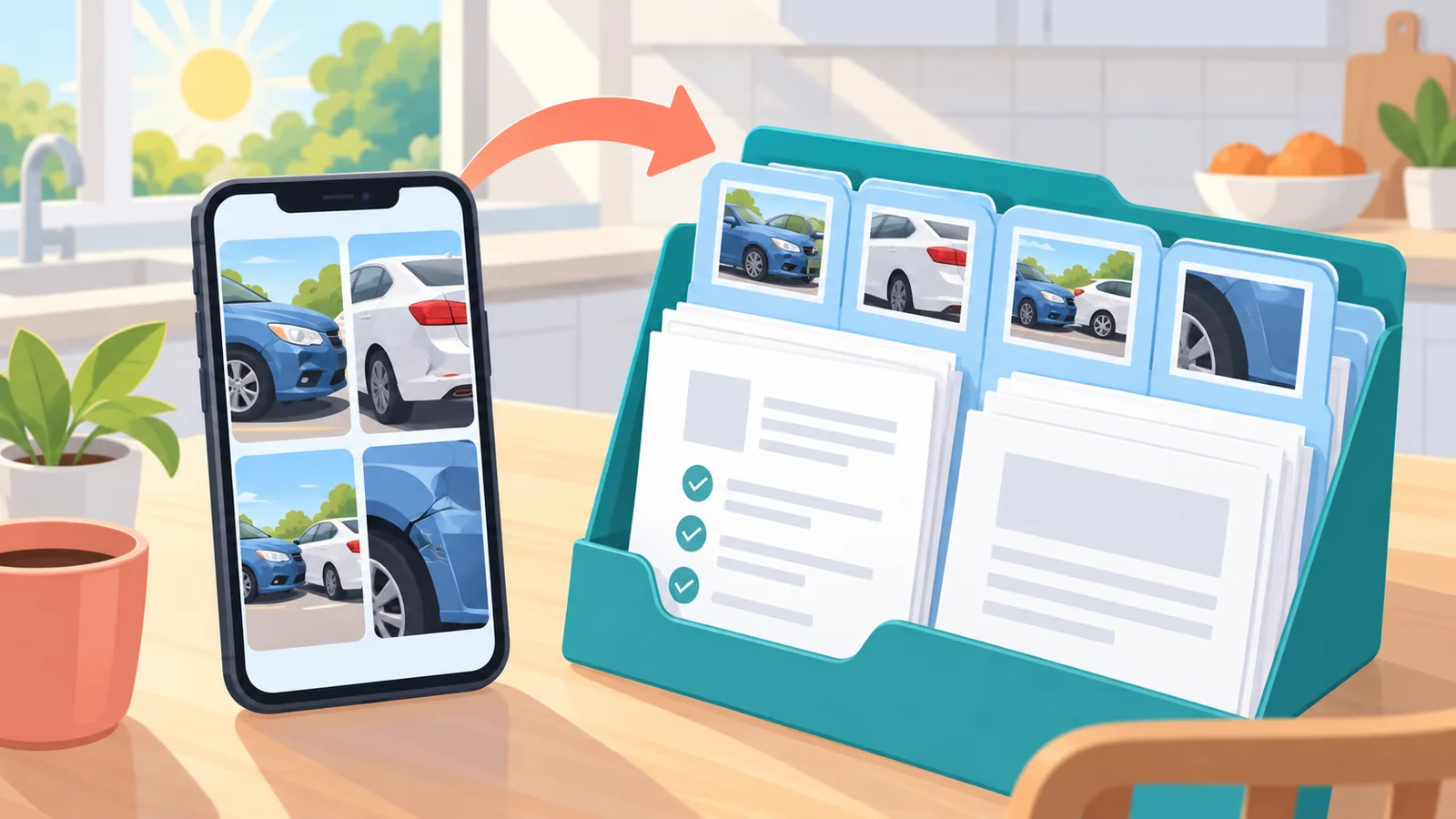
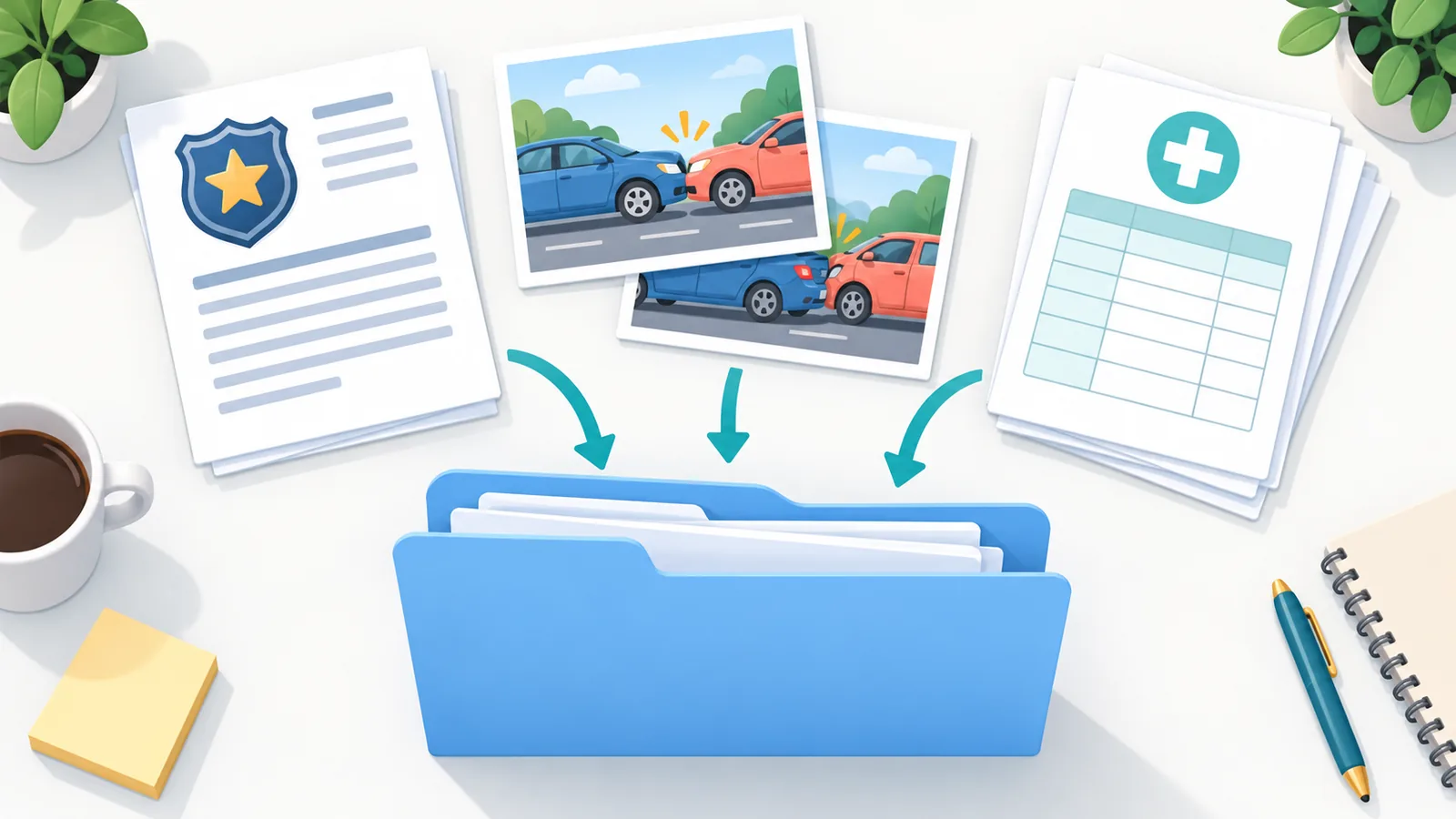
- Police report number.
- The other driver’s name and insurance details.
- Photos of the scene, vehicles, and injuries.
- Medical records and bills.
- Proof of lost wages.
- Your own insurance policy.
- Letters, emails, and notes from adjusters.
Avoid posting about the crash online, and do not sign releases or broad medical authorizations until someone you trust has reviewed them.
[[IMAGE_9]]
Frequently Asked Questions
Who pays for my losses when the other driver is at fault?
Usually the at-fault driver’s liability insurance is the first source. Your own coverage, such as medical payments or uninsured motorist coverage, may also apply depending on your policy and state.

How long does a car accident claim take?
It depends on injury severity, how long treatment lasts, and whether fault is disputed. Simple claims may resolve in months, while contested ones can take much longer.
What if I was partly at fault?
Many states reduce your recovery by your share of fault, and a few bar recovery in some situations. The rules vary, so ask a local attorney.
Can I switch lawyers after hiring one?
Generally yes, but the first lawyer may have a claim for fees or costs. Check your agreement before you switch.

What if the at-fault driver has no insurance?
Your own uninsured or underinsured motorist coverage may help, if you carry it. A lawyer can review your policy and options.
Is the first consultation free?
Many injury firms offer a free initial consultation, but not all do. Ask before you book.
[[IMAGE_10]]
Your Next Step Today
In short, write down your top three vetting questions and book two consultations this week. Use the checklist above to compare firms in your state, and check each lawyer’s license on your state bar website before you sign anything.
Ready to compare? Print the criteria table and the question list, and take them to each consultation.
[[IMAGE_11]]
References
- Your state bar association’s attorney lookup and discipline pages
- Your state’s statute of limitations summary for personal injury claims
- Your state insurance regulator’s consumer guidance on claims handling
- State bar guidance on contingency fee agreements
- American Bar Association consumer legal information pages
Want more comparisons and buying guides?