⚠️ This page connects you to Atovia’s partners and affiliate markets. We may receive a commission from affiliate partners for activities made through these links. Discount offers may change at any time according to policy! Rest assured, there are no additional costs to you! We hope this saves you time in finding the right items!
If your battery is completely dead, a smart multi-stage charger is the safest all-around choice for most drivers, while a portable jump starter is better when you need the car running in minutes and a trickle charger/maintainer is best for a vehicle that sits unused for weeks at a time. The right pick depends on how dead the battery is, how fast you need the car back, and how often this happens.
As an Amazon Associate I earn from qualifying purchases.
🛒 Recommended Product
- Why Your Car Battery Died (and What Fixes It)
- Types of Car Battery Chargers Explained
- Key Features to Check Before You Buy
- Best Car Battery Chargers by Use Case
- How to Safely Charge a Dead Car Battery, Step by Step
- Trickle Charger vs Jump Starter vs Smart Charger: Which Do You Need
- Common Mistakes That Damage Batteries or Chargers
- Maintenance Tips to Prevent Future Dead Batteries
- Buying Checklist Before You Checkout
- Frequently Asked Questions
- Match charger type to your situation: maintainer for storage, jump starter for emergencies, smart charger for full recharging.
- Check your battery’s amp-hour rating and choose a charger amperage that fits it rather than the highest number available.
- Look for a charger with automatic shutoff or multi-stage charging to reduce overcharging risk.
- Confirm the charger includes a visible safety certification mark and a clear manufacturer warranty before buying.
Why Your Car Battery Died (and What Fixes It)
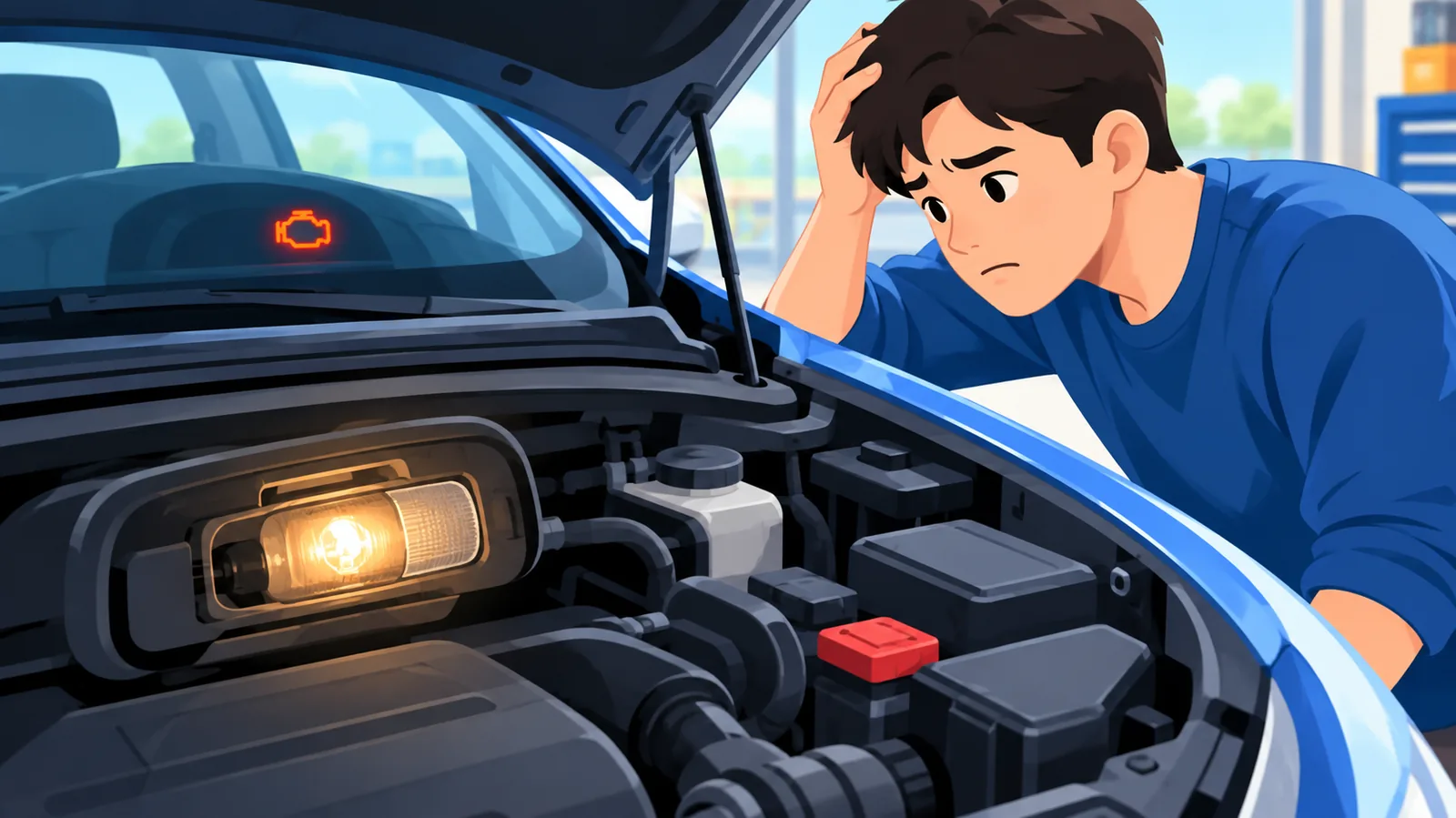
A car battery typically dies from one of a few common causes: the vehicle sat unused for too long, an interior light or accessory was left on, the battery is old and can no longer hold a charge, or cold weather reduced its output. In most of these cases, recharging with the right charger restores the battery, though a battery that is several years old may need replacement rather than charging if it no longer holds voltage.
Before buying a charger, it helps to know which scenario you’re in. A battery that died from a single accessory left on overnight usually responds well to charging. A battery that struggles to hold charge repeatedly is closer to end of life and charging is only a temporary fix.
Types of Car Battery Chargers Explained
Car battery chargers generally fall into a few categories, each suited to a different need.
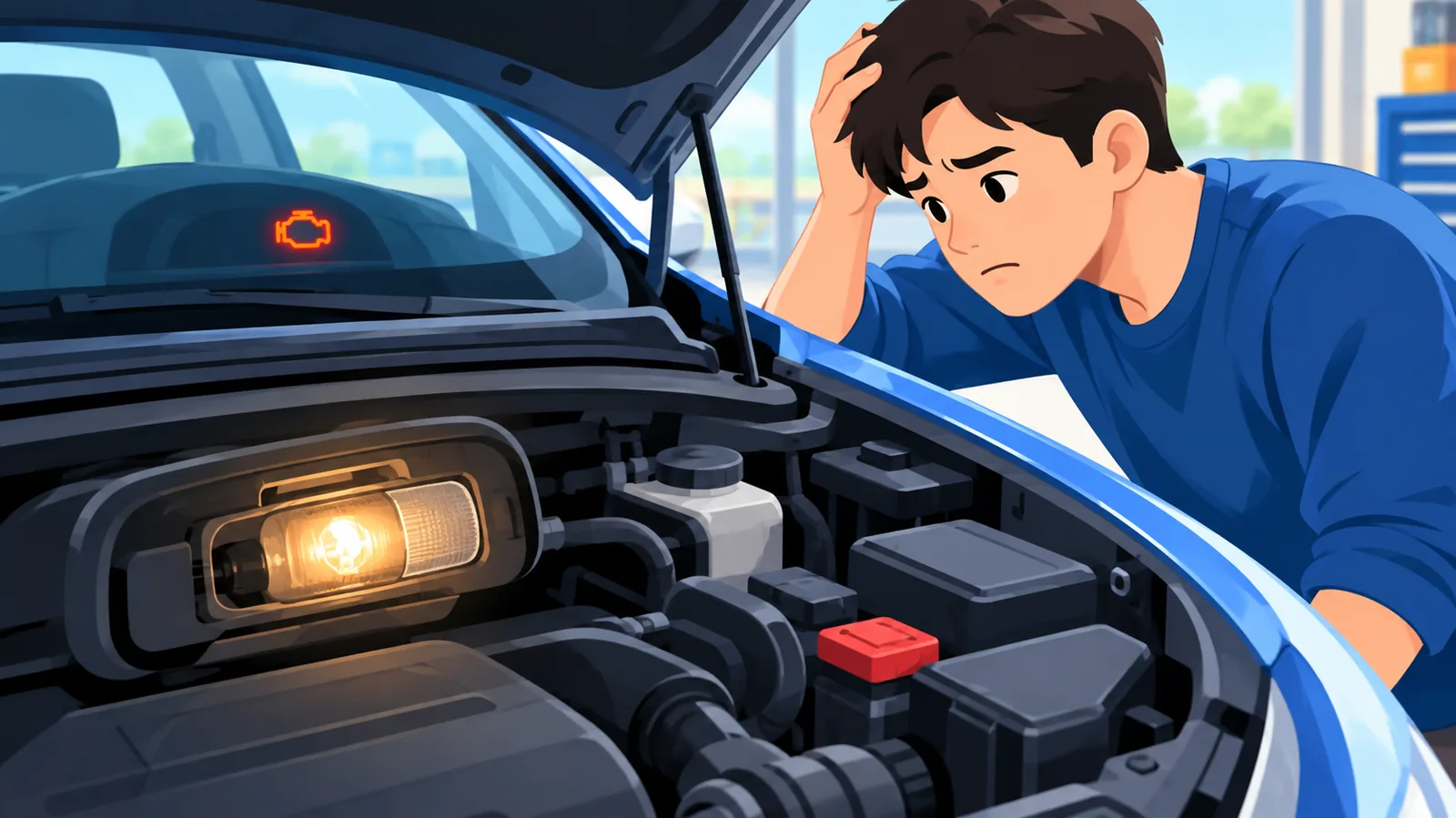
- Trickle charger/maintainer: Delivers a slow, low-amperage charge over a long period. Best for batteries in storage or vehicles driven rarely.
- Portable jump starter: Uses its own internal battery pack to start the engine directly rather than slowly recharging the battery. Best for immediate roadside emergencies.
- Smart multi-stage charger: Automatically cycles through bulk, absorption, and float charging stages to recharge fully while reducing overcharge risk. Best for restoring a dead battery to full health at home.
- Heavy-duty shop charger: Higher-amperage unit designed for larger batteries, multiple vehicles, or faster charging in a garage setting.
Key Features to Check Before You Buy
A few features make the biggest difference in safety and usability.
- Amperage output: Should be matched to your battery’s amp-hour rating rather than maximized; too high an amperage on a basic charger can cause overheating.
- Automatic shutoff/multi-stage charging: Reduces the risk of overcharging if you leave the charger connected longer than planned.
- Reverse polarity protection: Prevents damage if the clamps are connected backward.
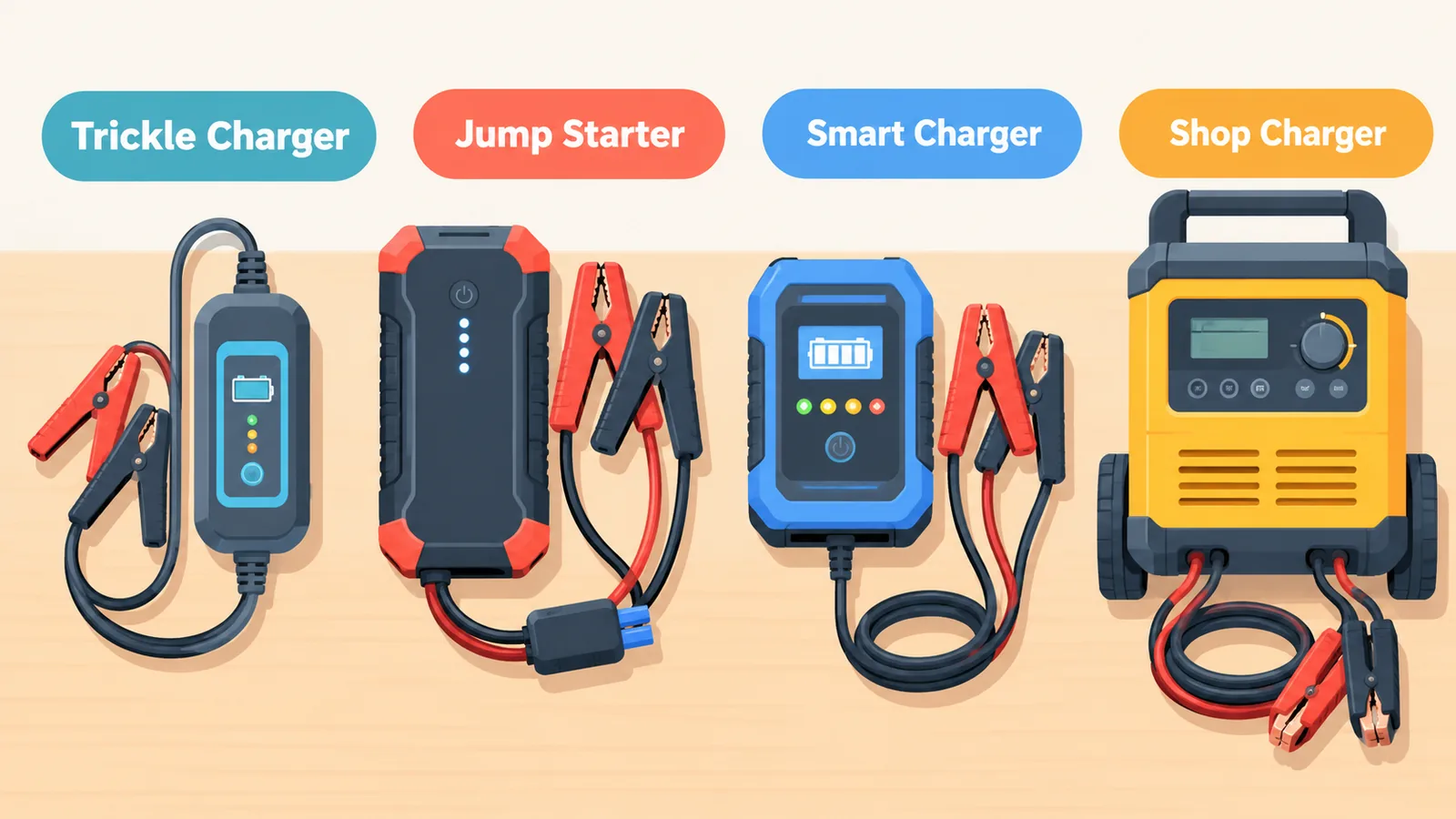
- Display and indicators: A screen or LED indicators make it easy to confirm charging progress without guesswork.
- Cable length and clamp quality: Longer cables and sturdy clamps make the charger easier to use in tight engine bays.
Best Car Battery Chargers by Use Case
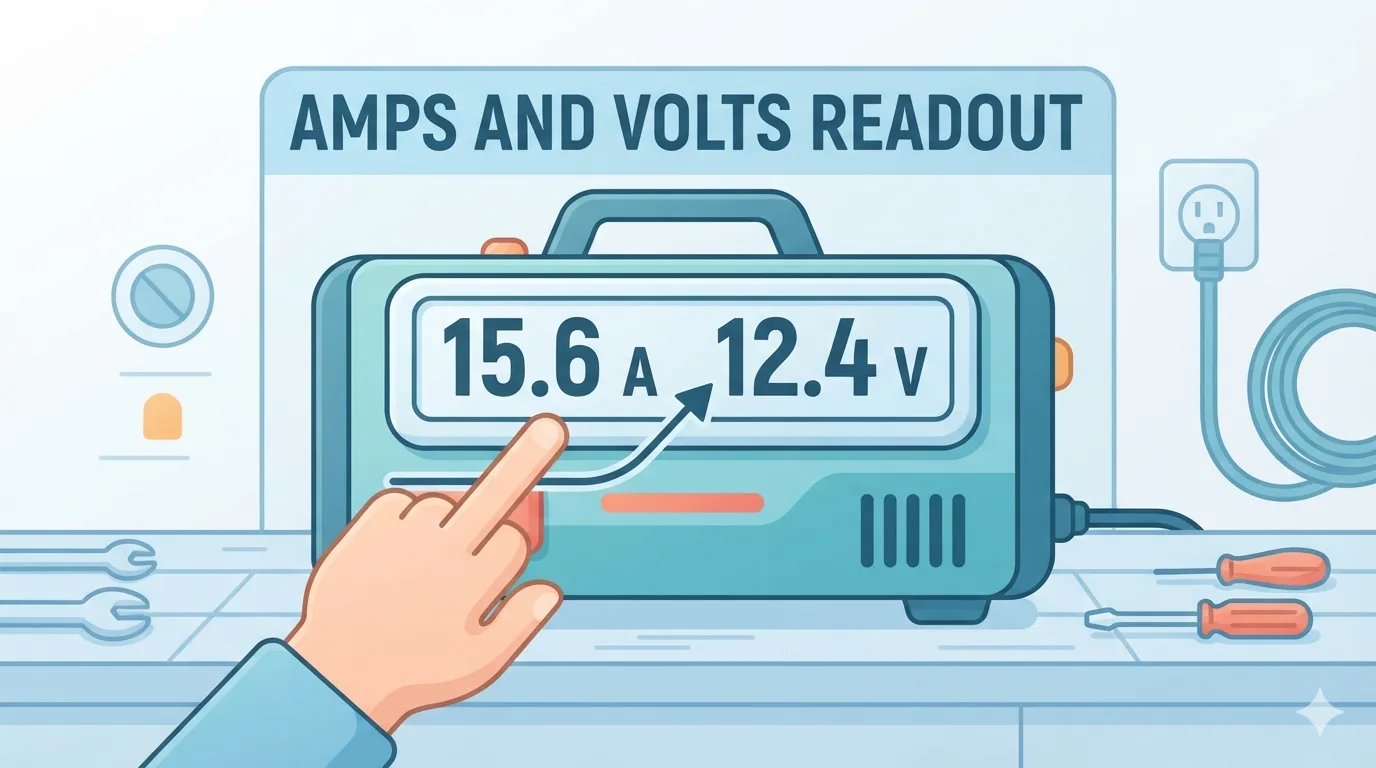
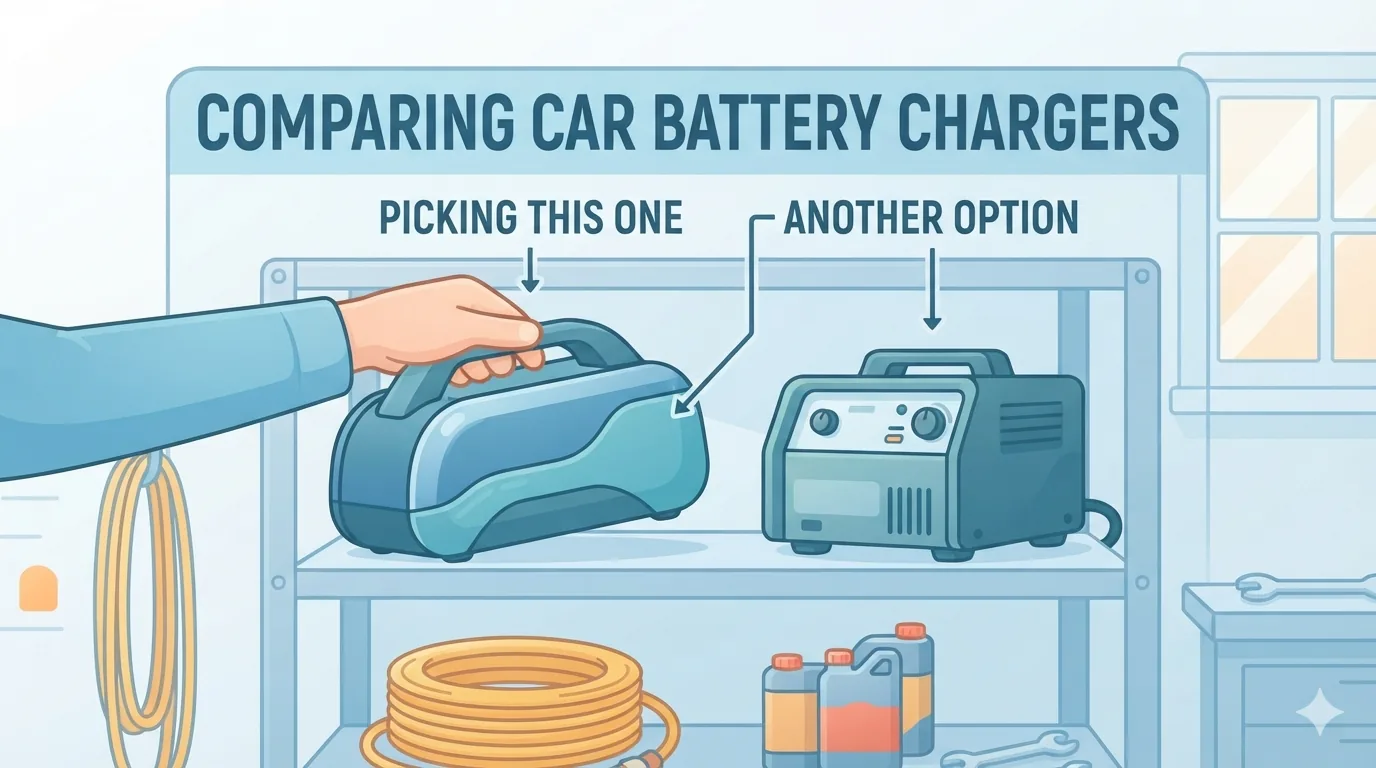
The table below compares charger types by use case rather than brand, since the right choice depends on your situation more than any single product.
| Charger Type | Best For | Charge Time | Price Range | Key Feature |
|---|---|---|---|---|
| Trickle/Maintainer | Stored or rarely driven vehicles | Slow, often overnight or longer | Budget | Safe for long-term connection |
| Portable Jump Starter | Roadside emergencies | Starts engine in minutes, does not fully recharge | Mid-range | No external power source needed |
| Smart Multi-Stage Charger | Fully recharging a dead battery at home | Faster than a maintainer, slower than a shop charger | Mid-range | Automatic multi-stage charging |
| Heavy-Duty Shop Charger | Larger batteries or frequent use | Fastest of the group | Premium | High amperage output |
How to Safely Charge a Dead Car Battery, Step by Step
- Turn off the vehicle and remove the key before connecting anything.
- Make sure you are in a ventilated area, away from open flames or sparks.
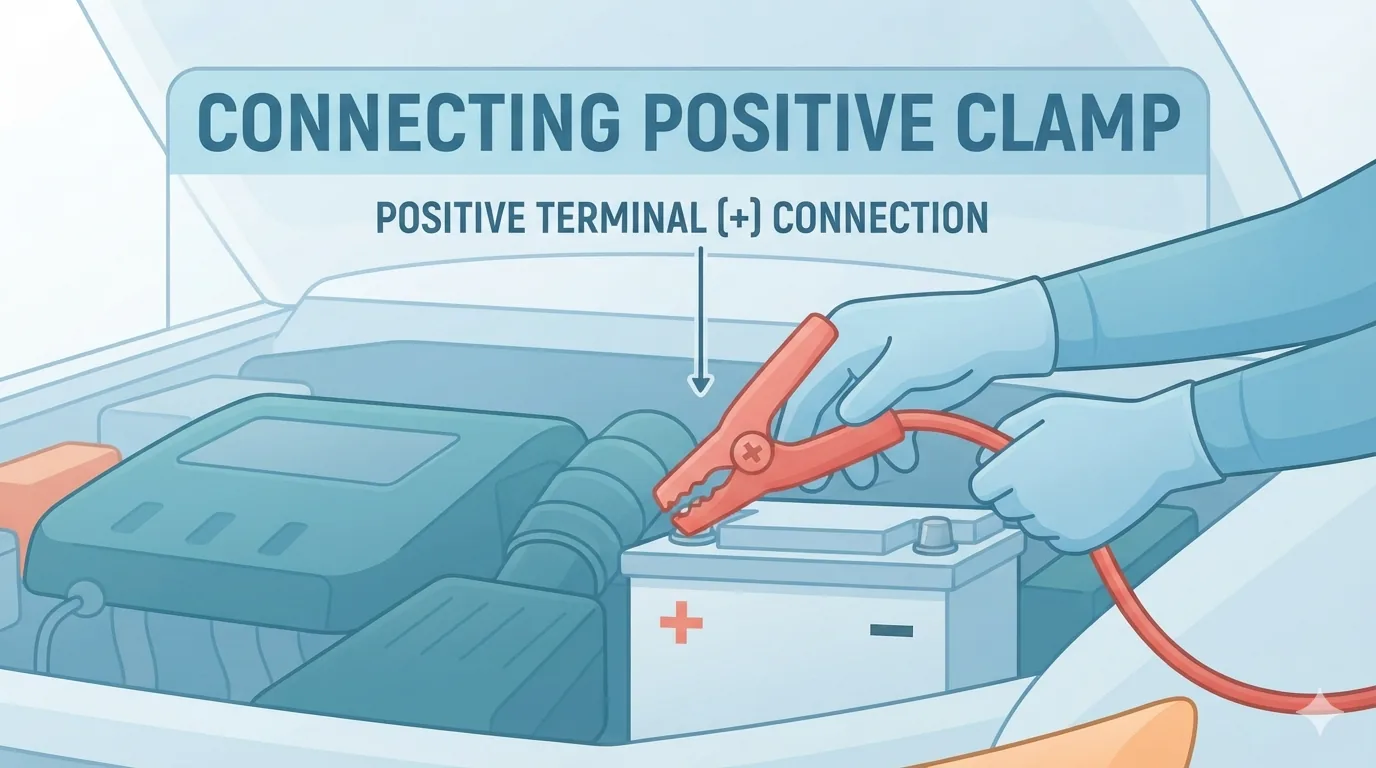
- Connect the positive (red) clamp to the positive terminal first.
- Connect the negative (black) clamp to a grounded metal point or the negative terminal as directed by the charger’s manual.
- Set the charger to match your battery’s voltage and amperage needs, then power it on.
- Let a smart charger complete its automatic cycle rather than disconnecting early.
- Disconnect the negative clamp first, then the positive clamp, once charging is complete.
Trickle Charger vs Jump Starter vs Smart Charger: Which Do You Need
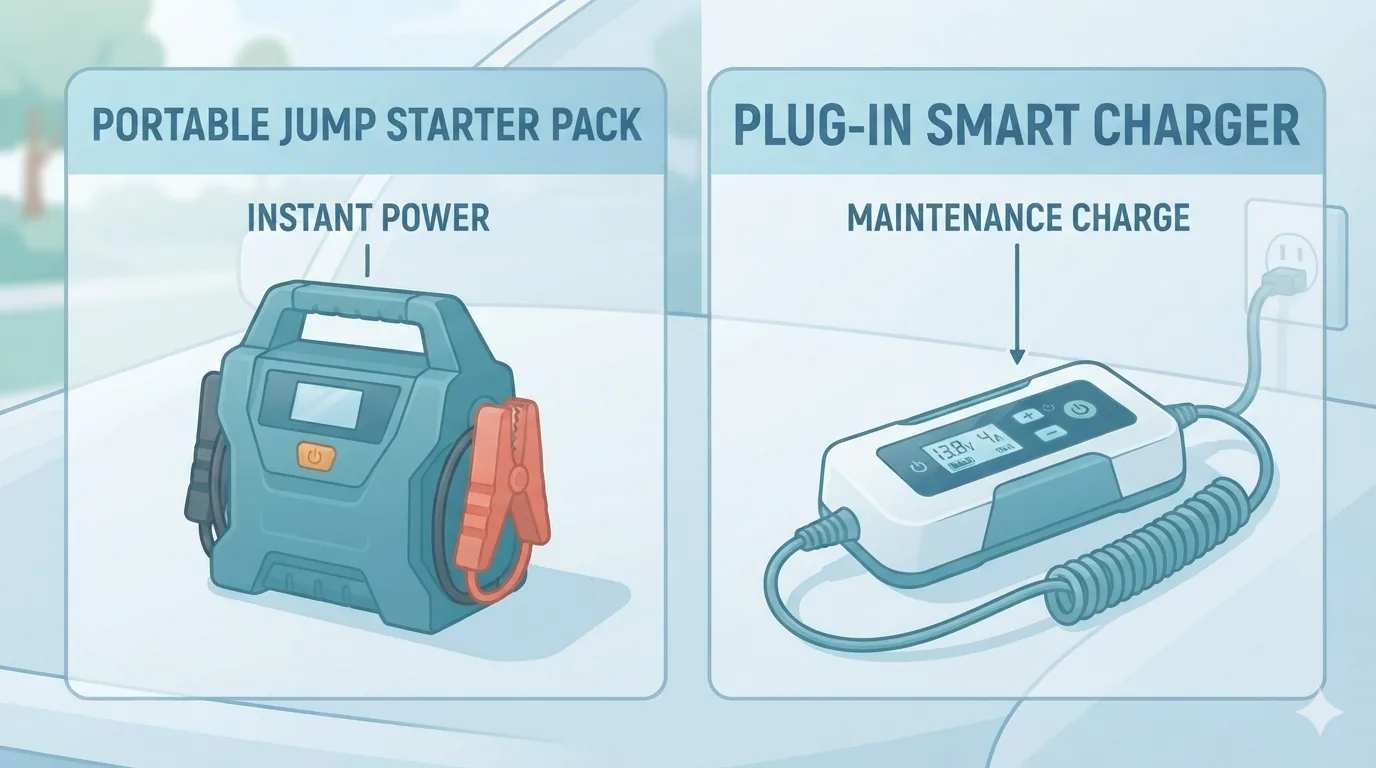
If your car won’t start right now and you need to leave immediately, a jump starter gets you moving fastest, though it doesn’t fully recharge the battery. If you have time and want the battery restored to full health, a smart multi-stage charger is the better choice. If the issue is a vehicle that sits unused between drives, a trickle charger/maintainer prevents the battery from dying in the first place rather than fixing it after the fact.
🛒 Recommended Product
Common Mistakes That Damage Batteries or Chargers
- Using a high-amperage charger not designed for your battery size, which can cause overheating.
- Leaving a basic, non-smart charger connected for days without monitoring it.
- Connecting clamps in the wrong order or to the wrong terminals.
- Charging a battery that is physically damaged, leaking, or swollen instead of replacing it.
- Ignoring ventilation and charging in an enclosed space.
Maintenance Tips to Prevent Future Dead Batteries
- Use a trickle charger/maintainer if the vehicle sits unused for more than a couple of weeks.
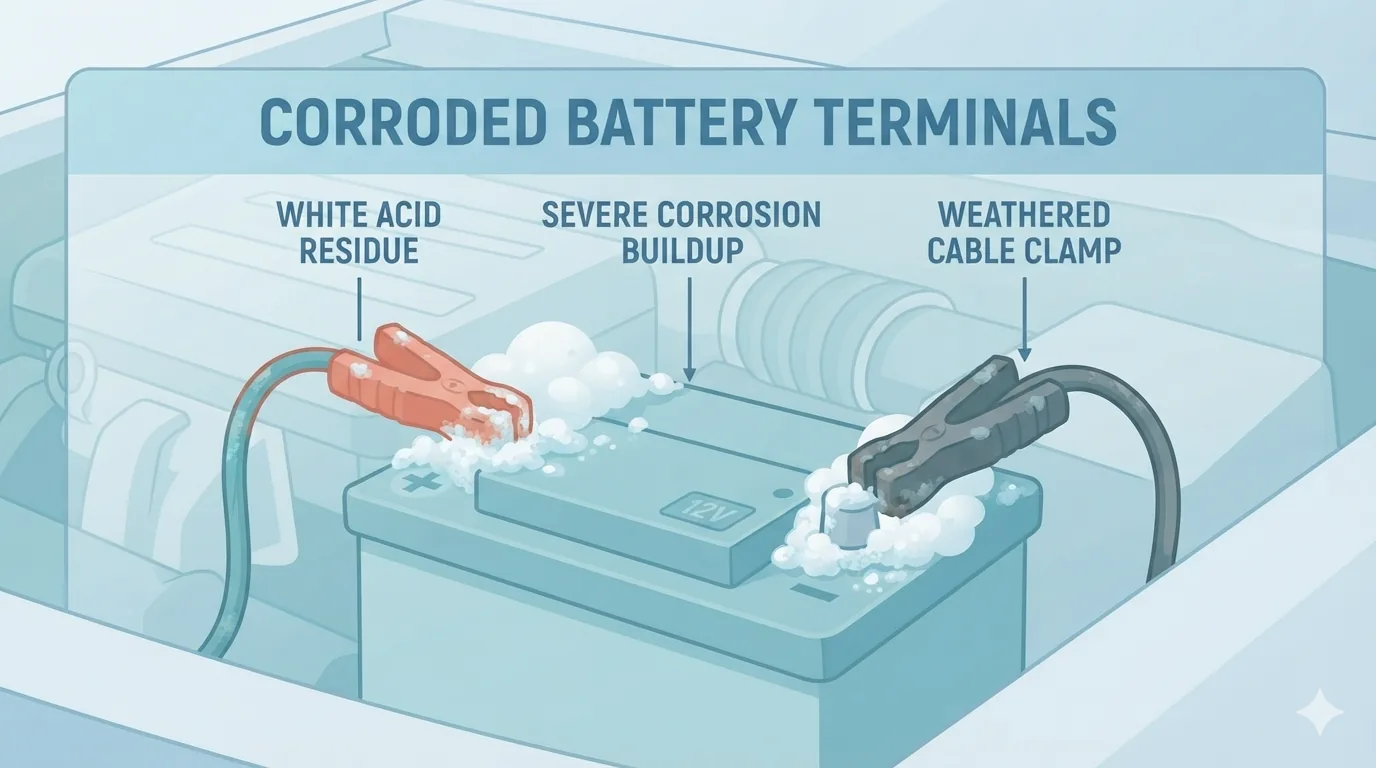
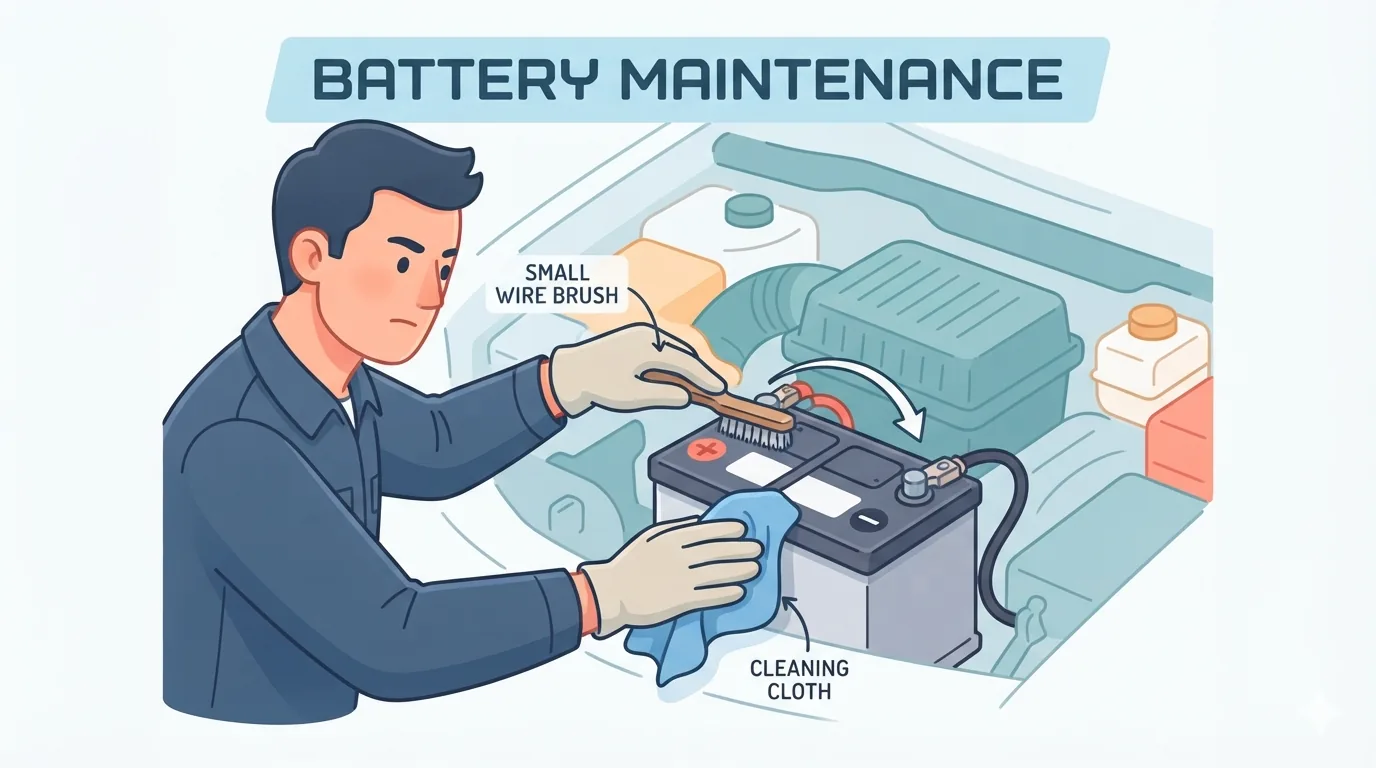
- Check terminals periodically for corrosion and clean them if buildup appears.
- Turn off interior lights and accessories fully before leaving the vehicle.
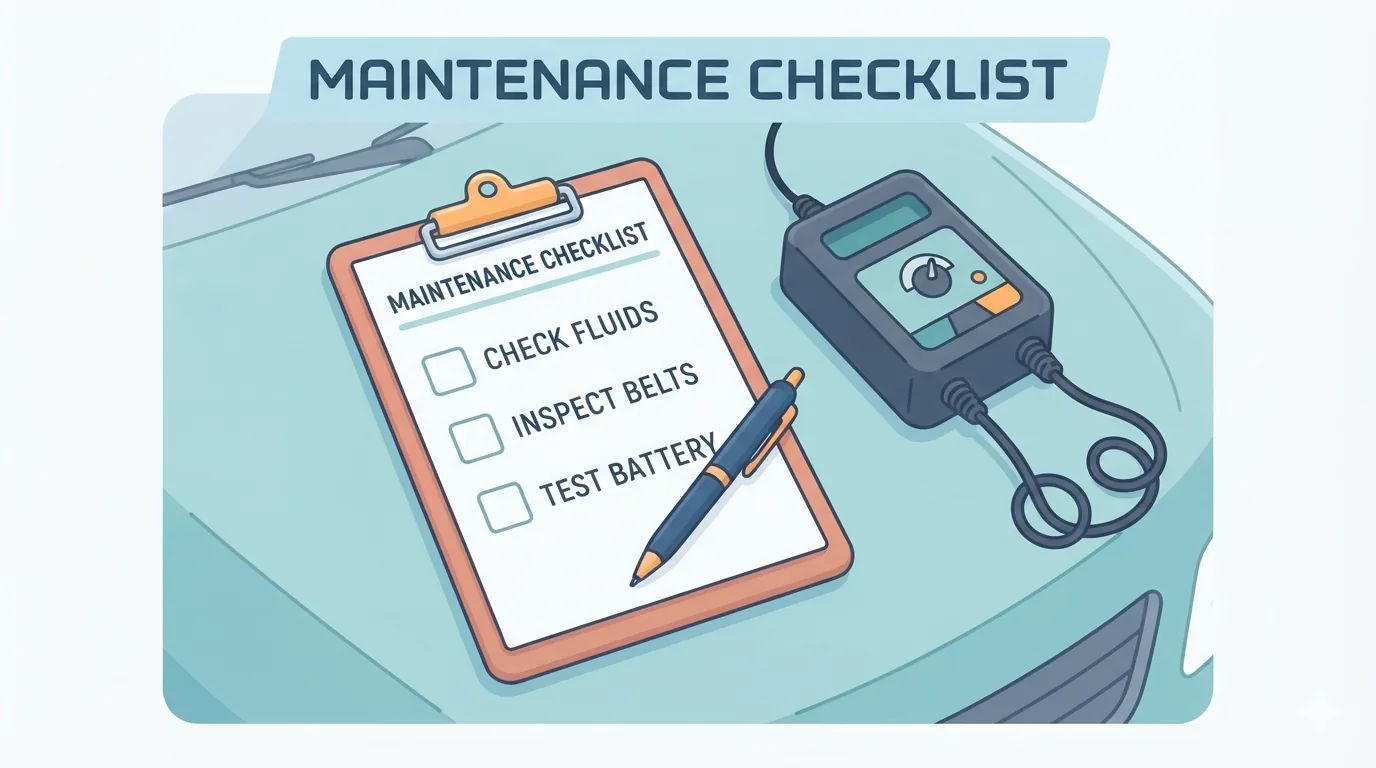
- Have the battery’s overall health checked as it approaches the end of its typical lifespan.
Buying Checklist Before You Checkout
- Does the charger’s amperage match your battery’s amp-hour rating?
- Does it include automatic shutoff or multi-stage charging?
- Does it have reverse polarity protection?
- Does it display a visible safety certification mark?
- Is there a clear manufacturer warranty listed on the product page?
Frequently Asked Questions
Can a fully dead battery be recharged?
In most cases yes, as long as the battery itself isn’t physically damaged or too old to hold a charge; a smart charger is generally the safest way to attempt a full recharge.
How long does it take to charge a dead car battery?
It depends on the battery’s capacity and the charger’s amperage; low-amp maintainers take much longer than higher-amp smart or shop chargers.
Is it safe to leave a charger connected overnight?
With a smart multi-stage charger that has automatic shutoff, overnight charging is generally considered safe; with a basic non-smart charger, it’s safer to monitor charging rather than leave it unattended for long periods.
What amperage charger do I need for my car?
Check your battery’s amp-hour rating and choose a charger amperage suited to that size rather than the highest amperage available.
Jump starter or charger, which should I buy first?
If you need the car running immediately, a jump starter comes first; if you want to fully restore the battery and prevent repeat issues, a smart charger is the better long-term purchase.
- General automotive battery and charging principles based on standard industry knowledge; no specific numeric or product sources were available for this article and none were cited.
Want more comparisons and buying guides?