
⚠️ This page connects you to Atovia’s partners and affiliate markets. We may receive a commission from affiliate partners for activities made through these links. Discount offers may change at any time according to policy! Rest assured, there are no additional costs to you! We hope this saves you time in finding the right items!
- What You Need Before You Start
- Understanding Normal Voltage Ranges
- Step-by-Step: Testing Resting Voltage
- Step-by-Step: Testing Voltage While Engine Is Running
- Interpreting Your Results
- Common Mistakes to Avoid
- When to Replace vs. Recharge the Battery
- Multimeter Testing vs. Professional Load Testing
- Maintenance Tips to Extend Battery Life
- Frequently Asked Questions
If your car has been slow to start, or you just want to catch a problem before it leaves you stranded, a multimeter gives you a fast answer. Reading the voltage at rest tells you the battery’s state of charge, and reading it with the engine running tells you whether the alternator is keeping up. This guide walks through both tests step by step, plus how to read the numbers you get.
- A healthy battery reads about 12.6V or higher at rest.
- A healthy charging system shows 13.7V–14.7V with the engine running.
- Below 12.2V at rest usually means the battery is weak or discharged.
- Let the car sit at least 30 minutes after driving before testing resting voltage.
What You Need Before You Start
You don’t need a shop full of tools for this test, but a few basics make it safer and more accurate.
- A digital multimeter set to measure DC voltage
- Safety gloves and eye protection, since battery terminals can spark or corrode skin contact
- A well-ventilated area, with the engine off for the first test and the parking brake engaged
Make sure the battery terminals are clean. Corrosion or loose connections can throw off your reading before you even start.
Understanding Normal Voltage Ranges
Before you touch the probes to anything, it helps to know what number you’re looking for.

| Condition | Reading | What It Means |
|---|---|---|
| Resting (engine off) | 12.6V or higher | Fully charged |
| Resting (engine off) | 12.4V | About 75% charged |
| Resting (engine off) | 12.2V | About 50% charged |
| Resting (engine off) | Below 12.0V | Significantly discharged |
| Running (engine on) | 13.7V–14.7V | Alternator charging normally |
| Running (engine on) | Below 13.5V | Alternator may be undercharging |
| Running (engine on) | Above 14.8V–15V | Possible overcharging |
Keep in mind these are general benchmarks, not exact specs for every battery type. Temperature and battery age can shift the numbers slightly.
Step-by-Step: Testing Resting Voltage
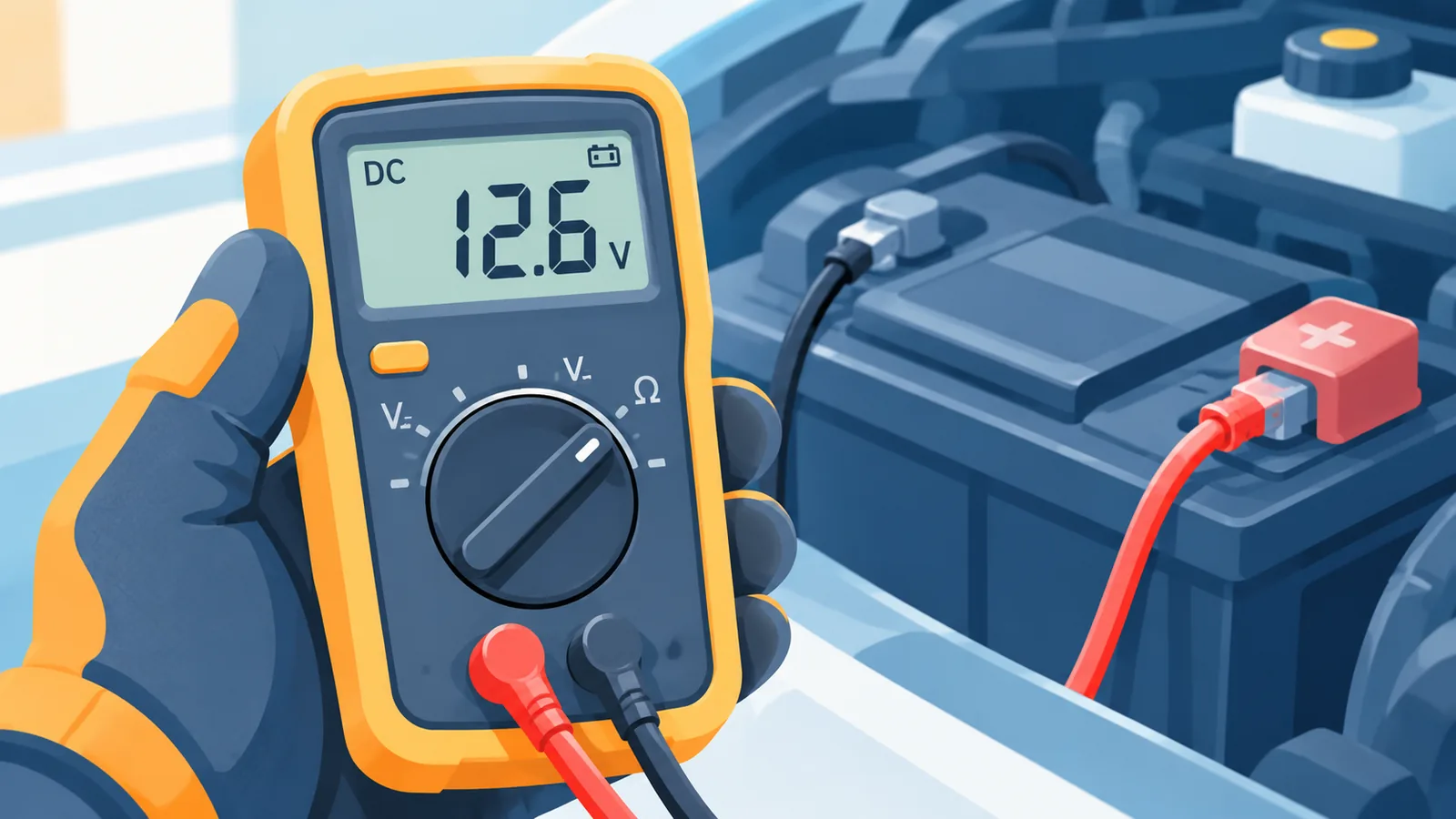
Test resting voltage first, ideally after the car has been off for at least 30 minutes so any surface charge from recent driving has dissipated.
- Set the multimeter dial to DC volts (the 20V range works well on manual-range meters).
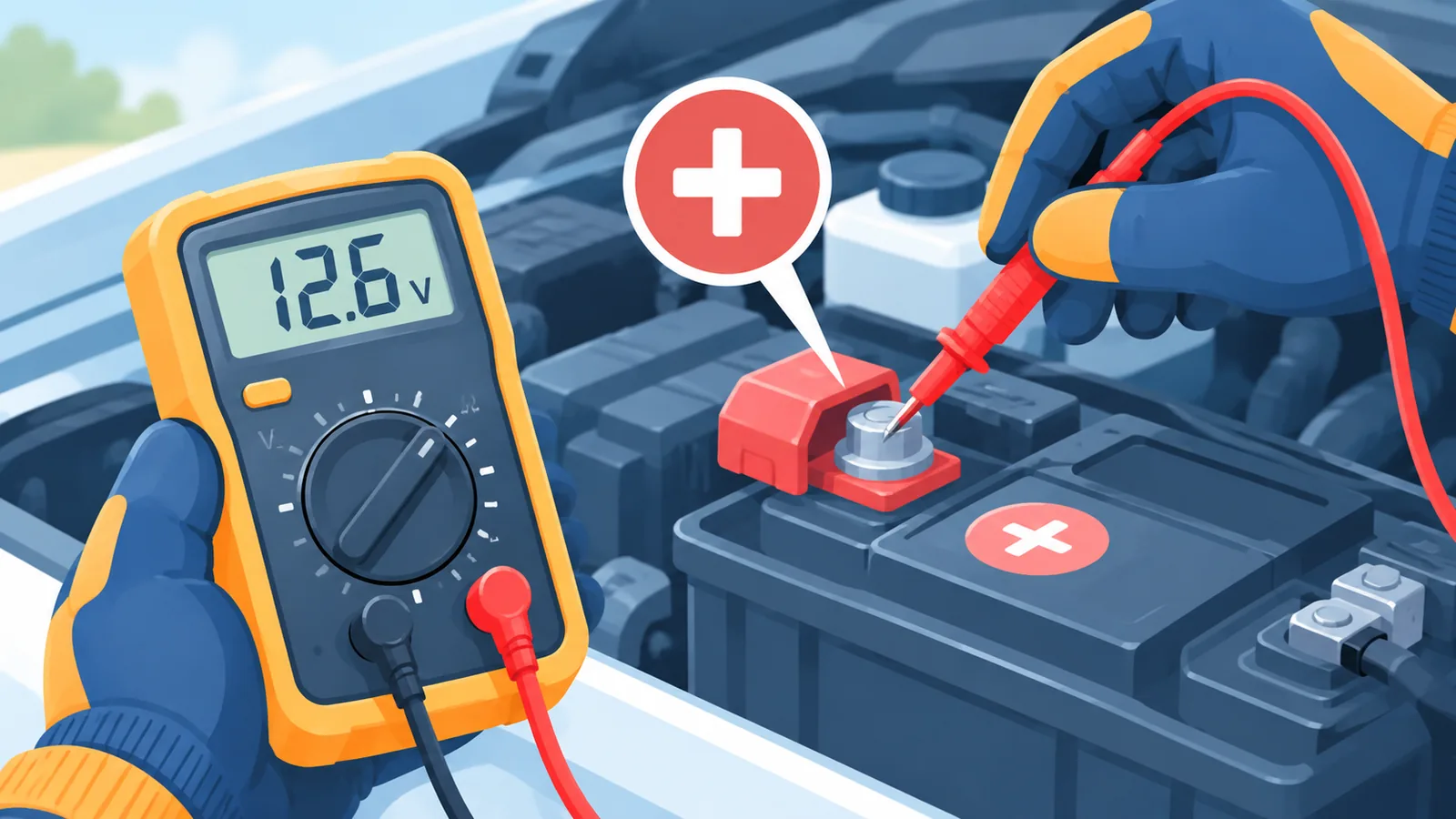
- Touch the red probe firmly to the positive terminal, making contact with bare metal rather than corrosion.
- Touch the black probe firmly to the negative terminal.
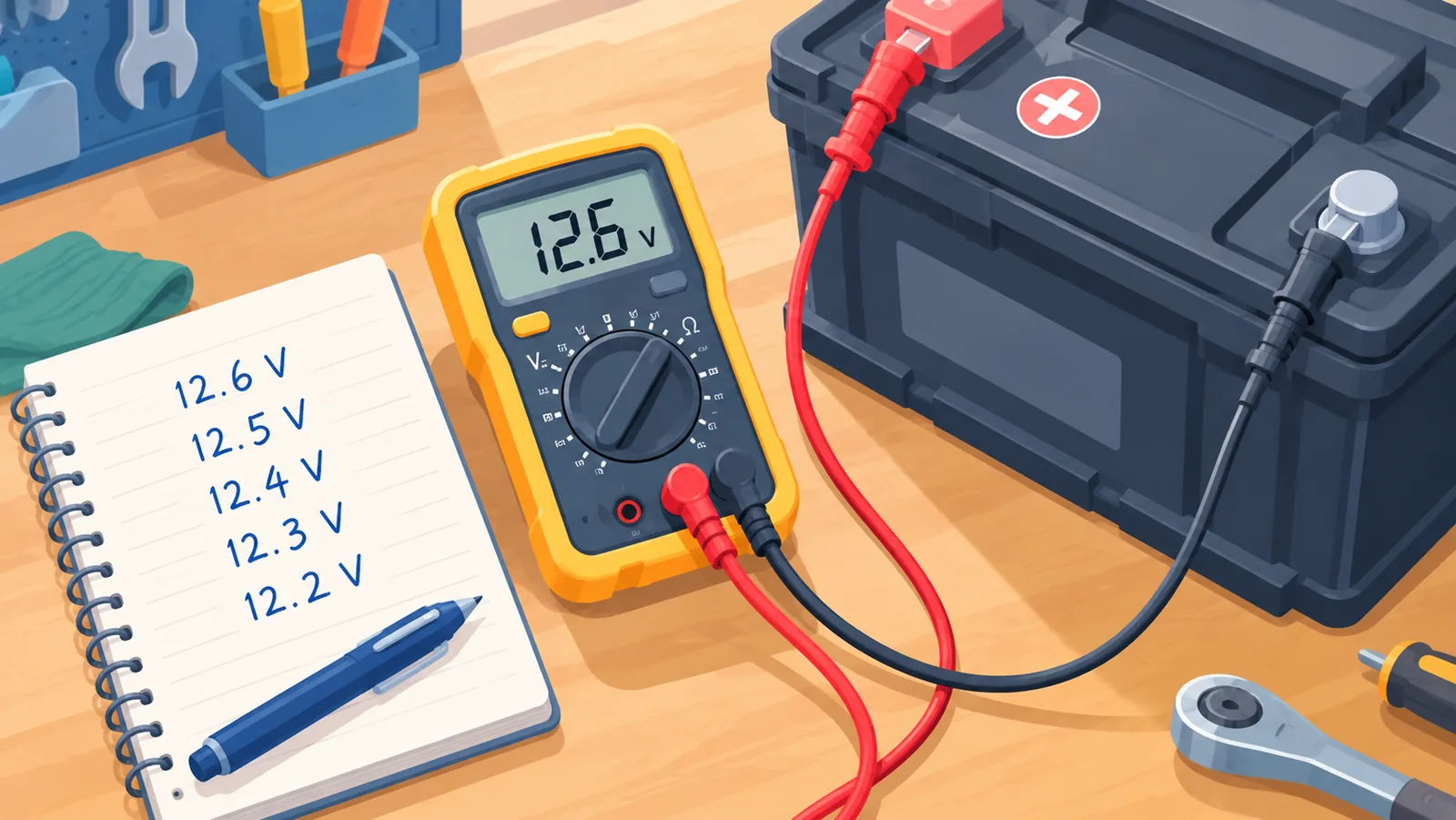
- Read the number on the display and write it down before moving on.
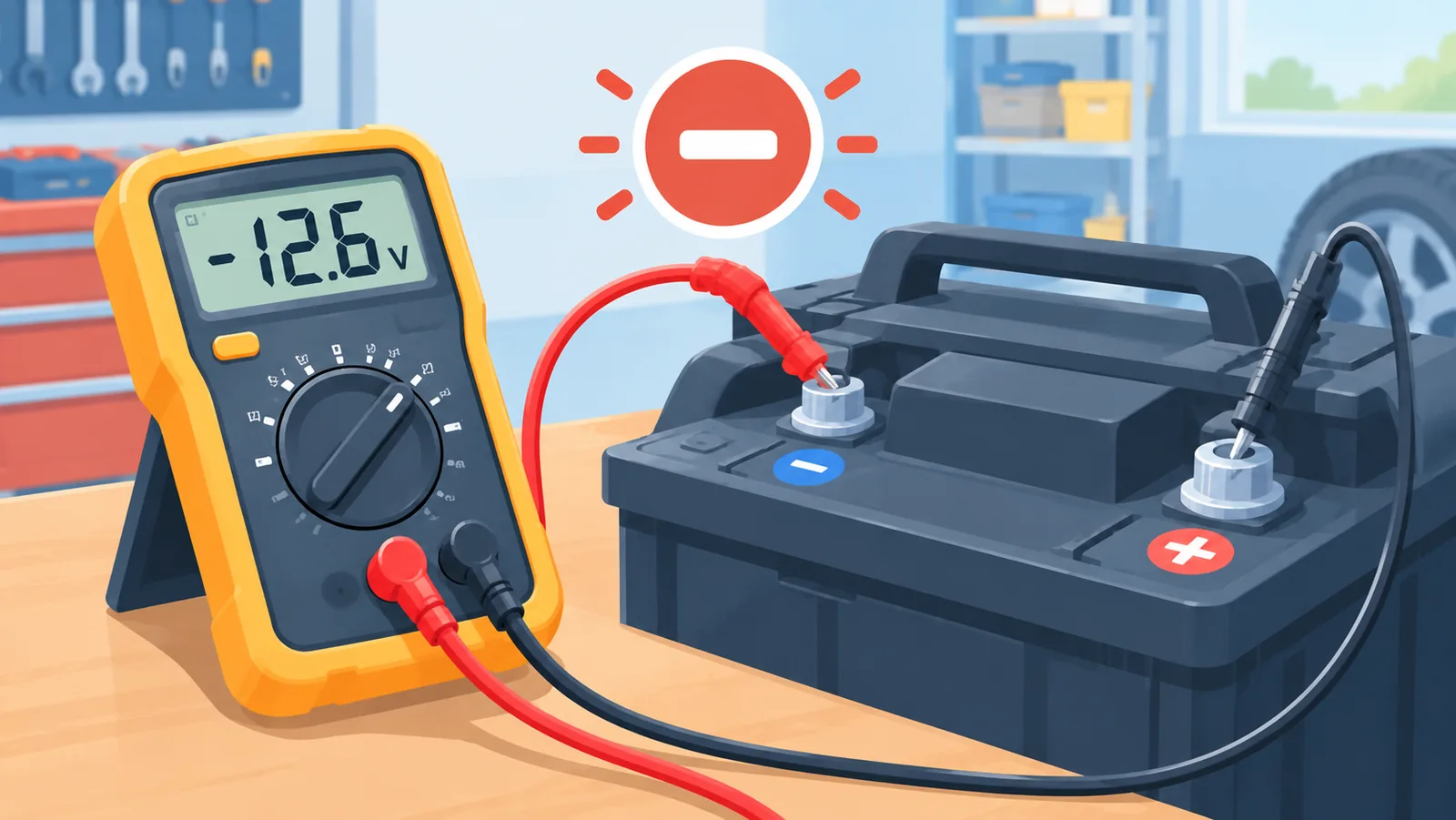
If the display shows a negative number, the probes are likely reversed. This won’t damage most digital multimeters, but swap them for an accurate reading.
Step-by-Step: Testing Voltage While Engine Is Running
This second test shows whether the alternator is charging the battery properly while the engine runs.
- Start the engine and let it idle in a well-ventilated space.
- Reconnect the probes the same way as before: red to positive, black to negative.
- Watch the reading and compare it to the 13.7V–14.7V healthy range.
- Turn on headlights or the AC briefly to see if the voltage holds steady or drops sharply.

🛒 Recommended Product
A steady reading in the healthy range suggests the charging system is doing its job. A reading well outside that range points to the alternator rather than the battery itself.
Interpreting Your Results
Once you have both numbers, here’s how to make sense of them.
- Battery is healthy: Resting voltage 12.6V or above, running voltage 13.7V–14.7V.
- Battery is weak or discharged: Resting voltage below 12.2V, but running voltage rises normally when the engine starts.
- Charging system issue suspected: Resting voltage is fine, but running voltage stays below 13.5V or spikes above 15V.
If both numbers are low, the battery may simply need a recharge rather than replacement — but if it happens repeatedly, the alternator is worth checking too.
Common Mistakes to Avoid
- Reversing the probes and misreading a negative sign as a dead battery.
- Testing resting voltage right after driving, which can show a falsely high number from surface charge.
- Leaving the multimeter on the wrong setting, such as AC volts or a resistance mode, which gives meaningless readings.
When to Replace vs. Recharge the Battery
A low voltage reading doesn’t automatically mean the battery is dead.
- Batteries typically last 3–5 years depending on climate, usage, and maintenance.
- A battery that recharges fully and holds a steady resting voltage afterward is likely still usable.
- A battery that repeatedly drops below 12.2V shortly after a full charge, or struggles to crank the engine, is a stronger candidate for replacement.
- A dedicated load tester, which a multimeter alone can’t replicate, gives a clearer picture of whether the battery can hold up under starting load.
Multimeter Testing vs. Professional Load Testing
| Feature | Multimeter Test | Professional Load Test |
|---|---|---|
| Cost | Low, one-time tool purchase | Often free at auto shops, or paid diagnostic fee |
| What it measures | Voltage only | Voltage plus ability to hold load under stress |
| Convenience | Can do it yourself, anytime | Requires a shop visit or dedicated tester |
| Best for | Quick health checks | Confirming replacement is actually needed |
Maintenance Tips to Extend Battery Life
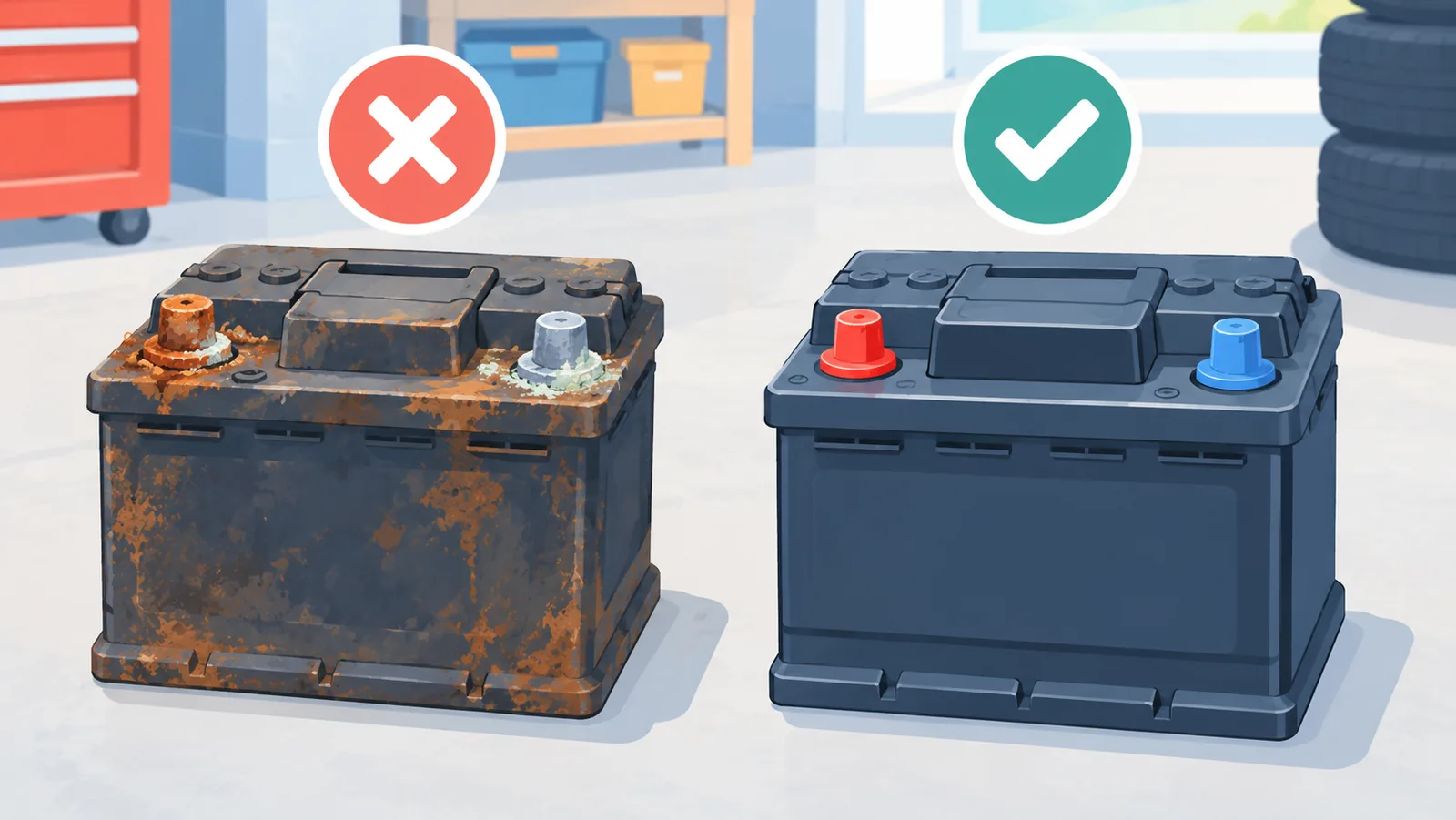
- Keep terminals clean and free of corrosion buildup.
- Check that terminal connections are tight, not just present.
- Avoid letting the battery sit fully discharged for long periods.
- Do a resting voltage check every few months as part of routine maintenance.
Frequently Asked Questions
How often should I test my battery?
Checking every few months, or before a long trip, is a reasonable habit that catches problems early.

Can I test a battery without disconnecting it?
Yes. A basic voltage test is done with the battery connected in the vehicle, both at rest and with the engine running.
What voltage means the battery is dead?
There’s no single universal cutoff, but a resting voltage well below 12.0V generally points to a significantly discharged or failing battery, especially if it doesn’t recover after a full charge.
Is it safe to test in the rain?
As a general precaution, avoid testing in wet conditions. Moisture on exposed terminals and probe tips increases the risk of a poor or unsafe connection.
- General automotive electrical fundamentals on lead-acid battery voltage and charging system ranges.
Want more comparisons and buying guides?