
⚠️ This page connects you to Atovia’s partners and affiliate markets. We may receive a commission from affiliate partners for activities made through these links. Discount offers may change at any time according to policy! Rest assured, there are no additional costs to you! We hope this saves you time in finding the right items!
A car cabin picks up odors fast — spilled coffee, gym bags, fast food, pets, or just years of daily commuting. The right air freshener depends less on brand and more on which format actually fits how you drive. This guide breaks down the main types of car air fresheners, how they work, and how to pick one that matches your vehicle size, budget, and scent sensitivity.
As an Amazon Associate I earn from qualifying purchases.
🛒 Recommended Product
- Gel and solid fresheners generally last longer than cardboard or paper types.
- Vent clip fresheners give the fastest, most noticeable scent but wear out sooner.
- Battery-powered diffusers let you control scent intensity but cost more upfront.
- Heat and direct sunlight speed up scent breakdown in any format.
- Check product labeling for material safety claims rather than assuming they apply to every product in a category.
How Car Air Fresheners Work
Every car air freshener relies on releasing a scent compound into the cabin air, but the delivery method differs by type. Some rely on passive evaporation from a gel or solid surface, others use airflow from the vents to push scent through the cabin, and battery-powered versions actively diffuse liquid or oil-based scent at a controlled rate.
Cabin size and vent placement also affect how noticeable a scent is. A freshener that works well in a compact car may feel weak in a larger SUV or minivan, since the same amount of scent has to fill more air volume. Where the freshener sits — near a vent, on the dash, or under a seat — changes how quickly the scent spreads and how much airflow accelerates or dilutes it.
Vent Clip Fresheners
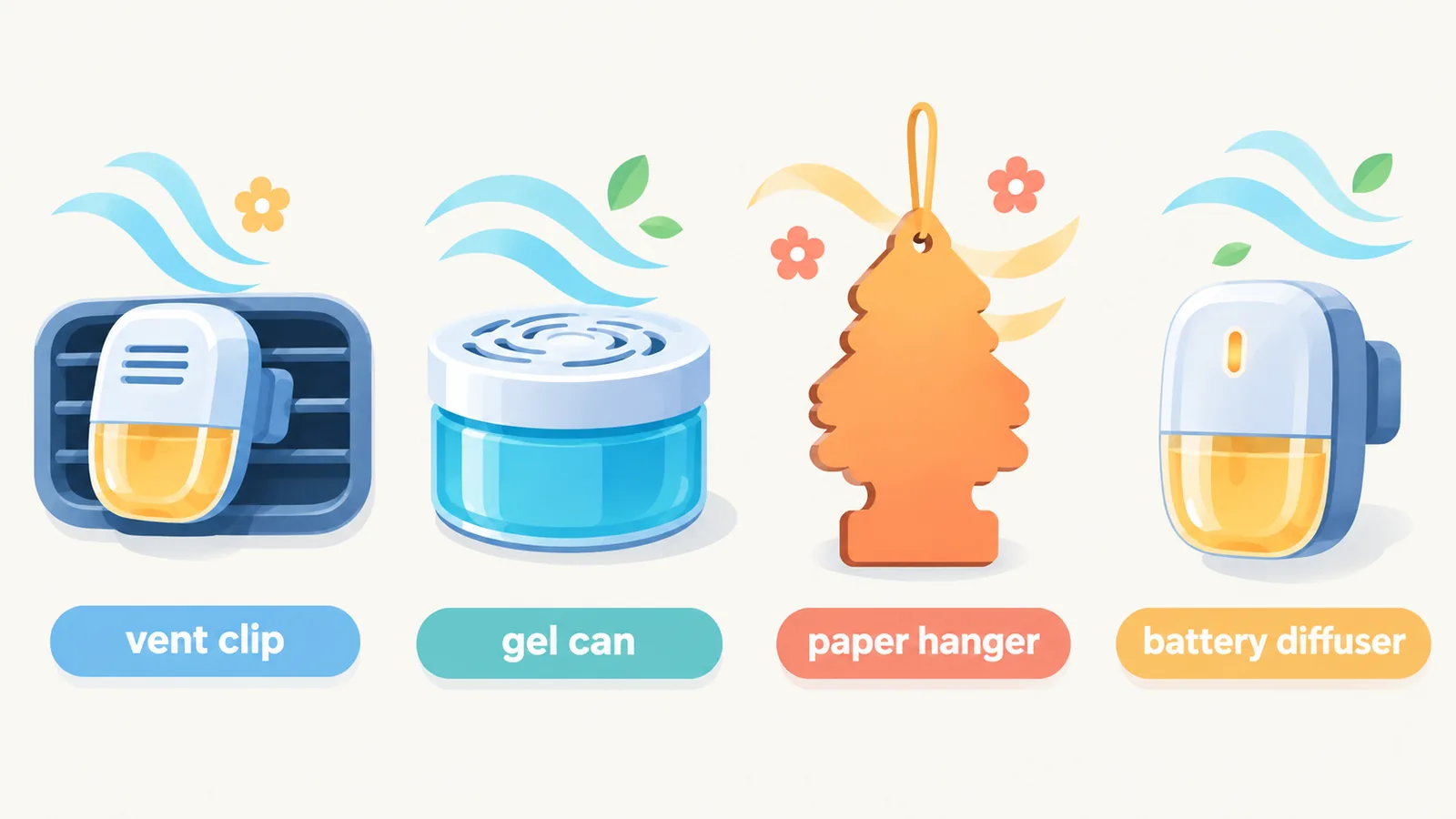
Vent clip fresheners attach directly to an HVAC vent and use the car’s own airflow to spread scent through the cabin. They tend to deliver the fastest and most immediate scent impact of any format.

- Pros: Inexpensive, easy to install without tools, and scent strength is easy to adjust simply by relocating the clip on the vent.
- Cons: Shorter lifespan compared to gel or diffuser formats, and the clip itself can partially block airflow through that vent.
- Best for: Daily commuters who want a quick, adjustable scent boost and don’t mind replacing the freshener more often.

Gel Can and Solid Fresheners
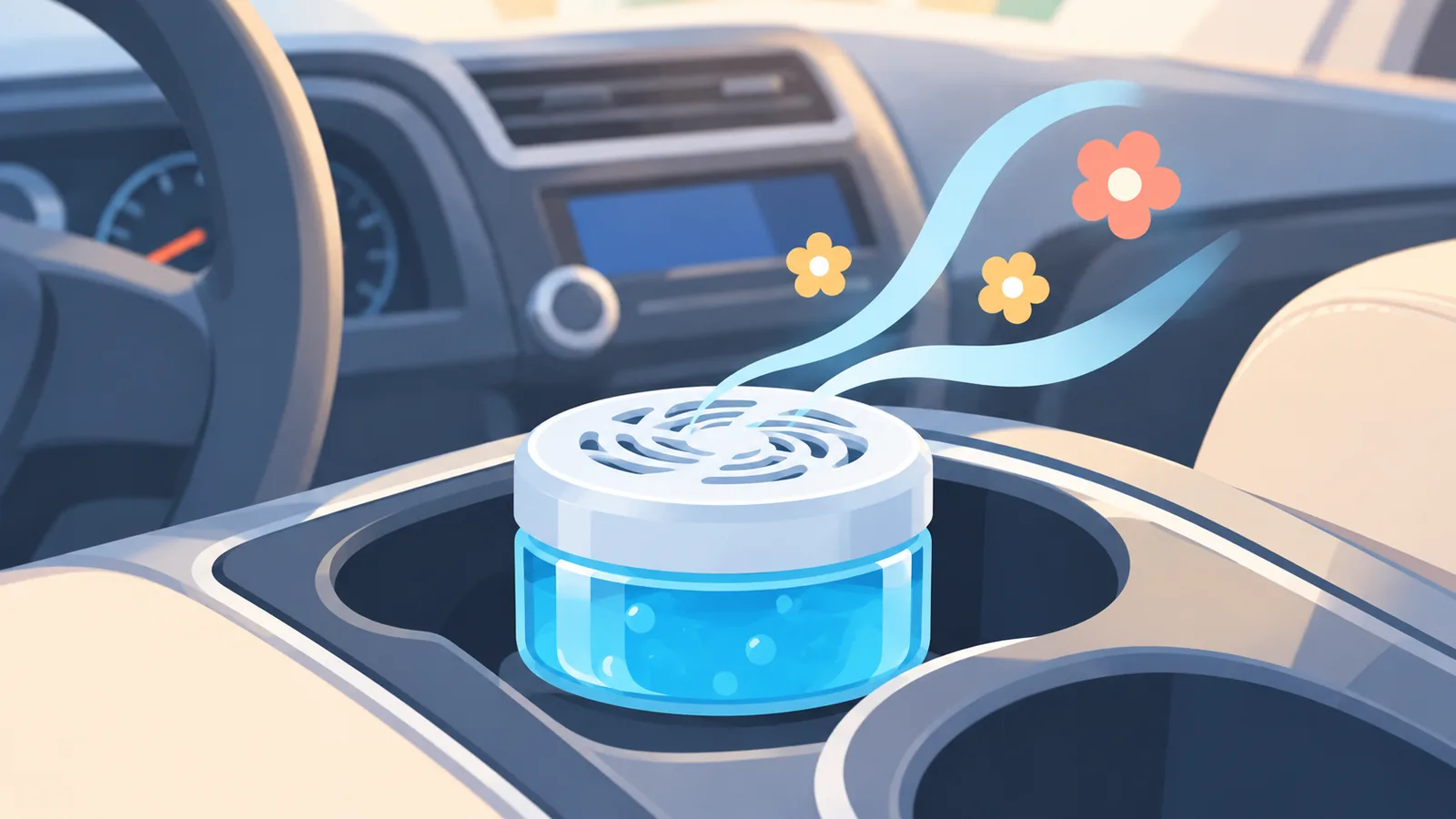
Gel and solid fresheners release scent through slow evaporation from a contained can or block. Because the release is gradual, they typically outlast paper-based formats.
- Pros: Longer-lasting than most other formats, no batteries required, and low risk of spilling since the scent medium is solid or gelled.
- Cons: Less precise control over scent intensity, and the fragrance can fade unevenly as the gel dries out over time.
- Best for: Budget-conscious shoppers who want a “set it and forget it” option without ongoing maintenance.
Hanging and Cardboard Fresheners
These are the classic mirror-hanging or clip-style paper fresheners, often sold in bulk or as novelty scents. They’re the lightest and least expensive format available.
- Pros: Very low cost, wide variety of nostalgic or novelty scent options, and lightweight with no installation needed beyond hanging.
- Cons: Shortest typical lifespan of any format, and scent strength is generally weaker and less adjustable.
- Best for: Light, short-term freshening, gifting, or trying out a new scent before committing to a longer-lasting format.

Battery-Powered Diffuser Fresheners
Battery-powered diffusers actively disperse liquid or oil-based scent cartridges at an adjustable rate, rather than relying on passive evaporation or airflow alone.
🛒 Recommended Product
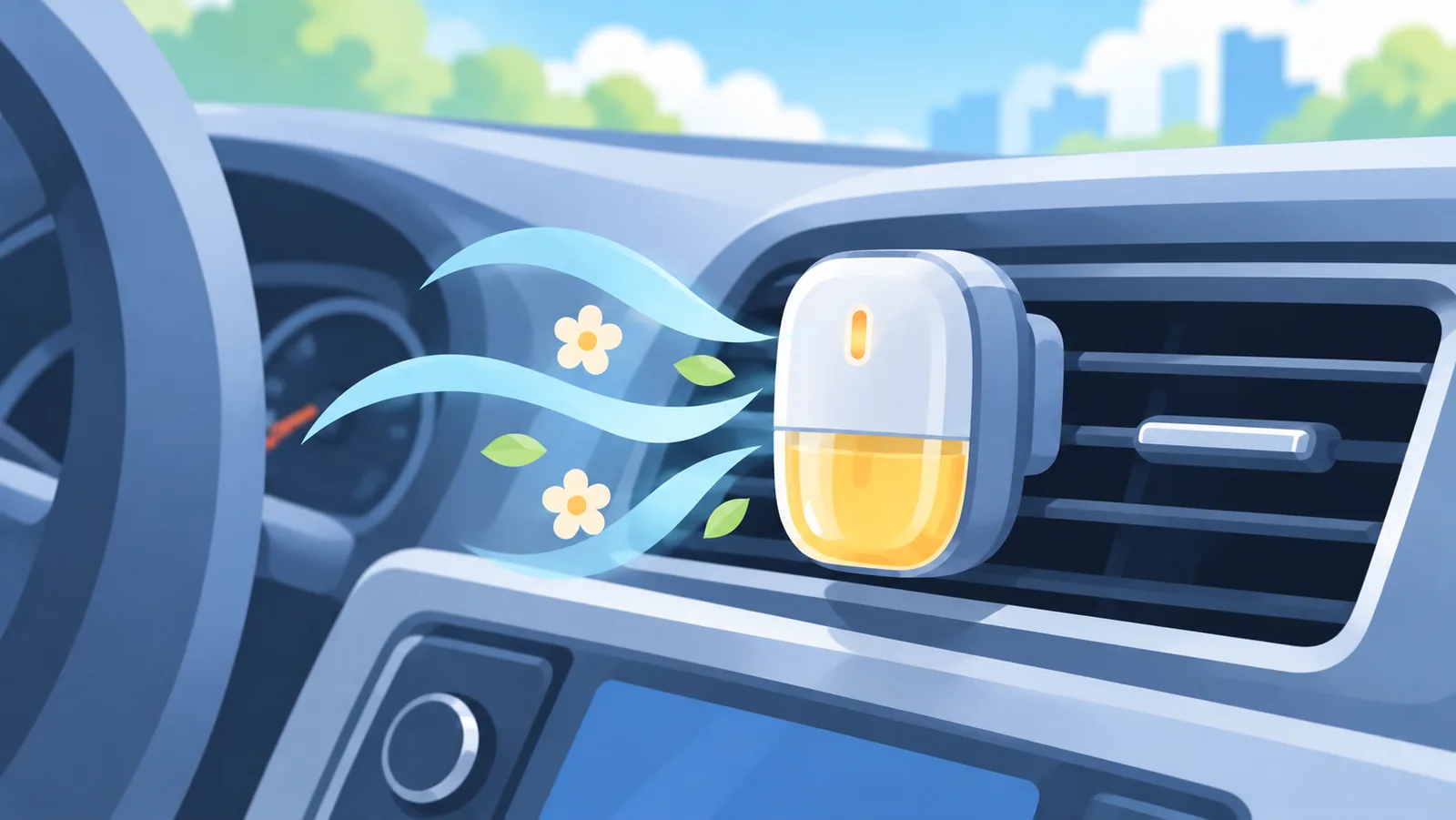
- Pros: Adjustable scent intensity, compatibility with oil-based scent cartridges for those who prefer a more customizable experience, and reservoirs that can last longer than passive formats depending on setting.
- Cons: Higher upfront cost than other formats, and batteries need periodic replacement or recharging.
- Best for: Larger vehicles where passive formats may feel weak, and for people who are sensitive to strong scents and want fine control over intensity.
Comparison Table
| Type | Relative Lifespan | Relative Cost | Best Use Case |
|---|---|---|---|
| Vent Clip | Short | Low | Daily commuters wanting quick scent |
| Gel Can / Solid | Medium to Long | Low to Medium | Budget, low-maintenance shoppers |
| Hanging / Cardboard | Shortest | Lowest | Light freshening, gifts, trial use |
| Battery-Powered Diffuser | Long (adjustable) | Highest | Larger vehicles, scent-sensitive users |
Key Buying Criteria
- Scent longevity and intensity control: Decide whether you want a strong, fast scent (vent clip) or a steady, adjustable one (diffuser).
- Vehicle-safe materials: Check product labeling for spill-proof design and material safety information rather than assuming all products in a category behave the same way.
- Cabin size compatibility: Larger vehicles may need stronger or adjustable-intensity formats to notice the scent throughout the cabin.
- Sensitivity considerations: If you drive with kids, pets, or people sensitive to fragrance, look for lower-intensity or adjustable options.
- Budget tier: Entry-level paper and clip formats cost less upfront; gel and diffuser formats cost more but may need replacing less often.

Installation and Placement Tips
- Vent vs. cupholder vs. under-seat: Vent placement spreads scent fastest; cupholder or under-seat placement gives a milder, more consistent background scent.
- Avoid direct sunlight and heat: Heat speeds up evaporation, so placing a freshener in direct sun or near the dash on hot days can shorten its usable life.
- Rotation and replacement: Check scent strength periodically and rotate or replace the freshener once the fragrance fades noticeably rather than waiting for it to disappear completely.
Common Mistakes to Avoid
- Choosing a very strong scent for a small cabin, which can feel overwhelming in an enclosed space.
- Ignoring material safety details, such as leak risk or potential staining on upholstery or dashboard surfaces.
- Picking a short-lived format (like cardboard) for infrequent drivers who won’t be around to replace it often, or a long-lasting format for someone who wants to change scents frequently.

Frequently Asked Questions
How long do car air fresheners typically last?
It varies by format — cardboard and paper types fade fastest, gel and solid types last longer, and battery-powered diffusers depend on the reservoir size and intensity setting rather than a fixed timeframe.
Are gel or spray fresheners safer for leather interiors?
This depends on the specific product’s materials and placement. Check the manufacturer’s labeling and avoid direct contact between any freshener and leather surfaces to reduce staining risk.
Can strong air fresheners cause headaches or allergies?
Some people are sensitive to strong fragrances and may prefer lower-intensity or adjustable options, such as a battery-powered diffuser with intensity control.
How often should vent clips be replaced?
Replace a vent clip once you notice the scent has faded significantly, since exact timing varies by product and usage.
Do essential oil diffusers work well in cars?
Battery-powered diffusers that use oil-based cartridges let you adjust intensity to your preference, making them a flexible option for those who want more control over scent strength.
Related Posts
- General product category information based on widely available car air freshener formats sold through major retailers.
- General physical principles regarding evaporation rate and heat exposure.
Want more comparisons and buying guides?