⚠️ This page connects you to Atovia’s partners and affiliate markets. We may receive a commission from affiliate partners for activities made through these links. Discount offers may change at any time according to policy! Rest assured, there are no additional costs to you! We hope this saves you time in finding the right items!
You sit down to focus, but time slips away and plans keep getting pushed back? Choosing the right study timer alone can sharpen your focus blocks and manage breaks, leading to noticeably better results. What you need now isn’t a “pretty timer,” but a timer that fits your study style.

🛒 Recommended Product
Why a Study Timer Improves Learning Efficiency
Study timers work because they turn vague effort into measurable sessions. When you set a fixed block—25, 45, or 60 minutes— you reduce decision fatigue and keep your attention anchored to a single task. That structure also makes breaks intentional, which helps prevent a “short rest” from turning into endless scrolling.
In guidance for self-directed learning, clear goals, consistent routines, and time management are repeatedly emphasized as practical foundations for better outcomes. A timer is the simplest way to put those principles into action: start, focus, stop, review, and repeat. (Source: National Institute for Lifelong Education, 2020)
- Faster starts: “Just 25 minutes” lowers resistance.
- Better focus: One session, one target task.
- Smarter breaks: Rest becomes part of the plan, not a mistake.
- More accurate planning: You learn how long tasks really take.
Key Features to Look for in a Study Timer
If you set clear criteria, you won’t be swayed by reviews or price alone. From the checklist below, pick just 2–3 features you absolutely can’t give up first. “Value for money” will naturally follow.
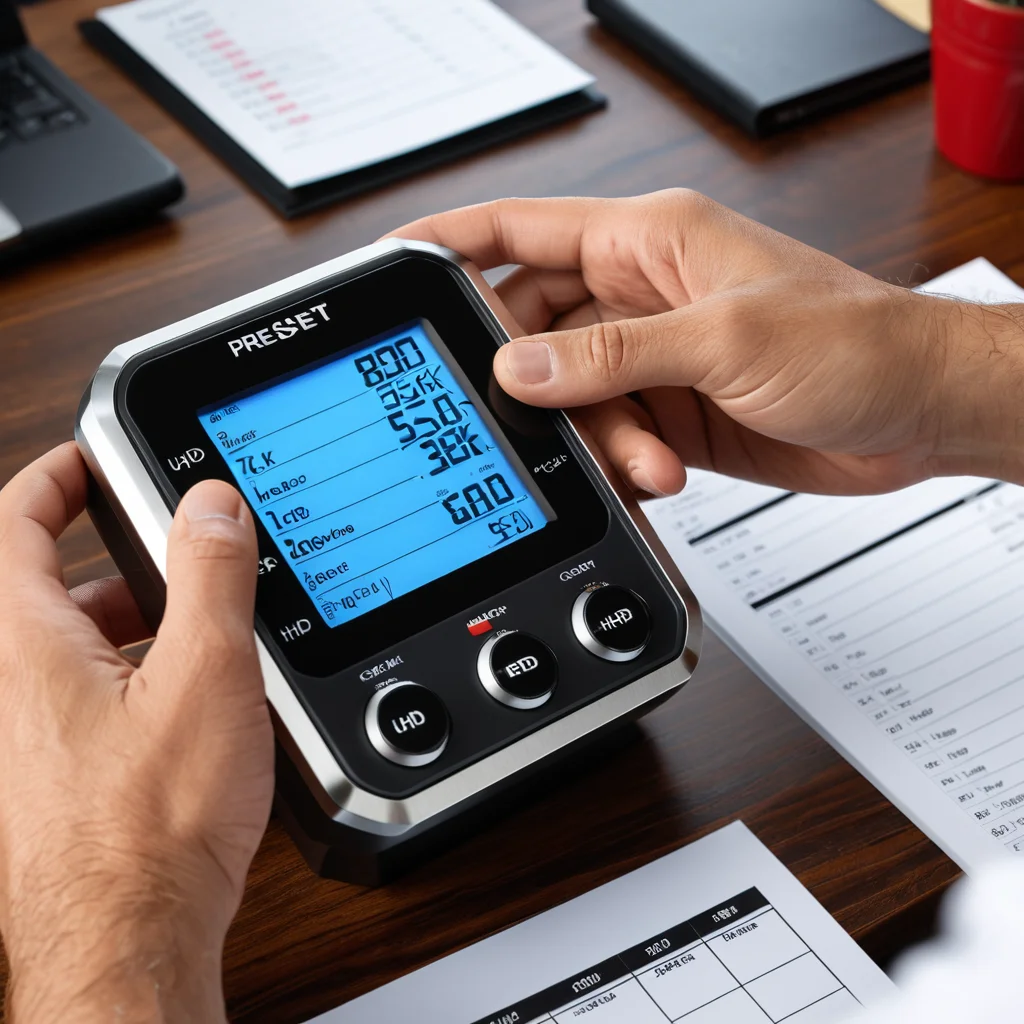
- Preset cycles: Save common routines like Pomodoro (25/5) or 50/10
- Silent mode + vibration: Alerts without sound for libraries or classrooms
- Big display + simple controls: Time is visible at a glance with minimal操作
- Count-up & count-down: Supports both problem-solving (count-up) and deadline-based study (count-down)
- Brightness control: Comfortable use at night without glare
- Battery & charging: Choose AAA, rechargeable, or USB-C based on your habits
- Durability: Button lifespan, drop resistance, portability (pouch included)
- Libraries/classrooms: Silent mode, vibration, and a large display matter most
- Exam prep: Count-up (real-test feel) plus lap/split tracking is an advantage
- Building focus habits: Preset routines (25/5, 50/10) are essential
Best Study Timer Types by Use Case
Timers aren’t about “the more expensive, the better.” The key is choosing a format that fits your situation. Start by finding the type closest to your environment.
1) For students (daily homework + exams)
- Recommended: Dedicated digital timer with presets and a big display
- Why: Start recurring routines (25/5, 50/10) with just a few button presses
2) For exam prep (mock tests, timed drills)
- Recommended: Timer with count-up, lap/split, adjustable alerts
- Why: Train real test-time awareness and check speed by section
3) For office workers (focus blocks, meeting-heavy days)
- Recommended: Silent vibration timer or a phone timer with focus mode
- Why: Easy to insert short focus blocks between meetings
4) For parents & kids (habit building)
- Recommended: Visual timer (color countdown) or a simple dial timer
- Why: Seeing remaining time helps kids understand rules and build habits
Top Study Timer Recommendations (Quick Picks)
Here, recommendations focus on conditions rather than brands. When shopping, choose the category that fits you best to greatly reduce the chance of regret.
🛒 Recommended Product
Budget pick (affordable digital study timer)
- Best for: Beginners building a 1–3 hour daily routine
- Look for: Large display, 2–3 presets, silent mode, simple buttons
- Avoid: Too many buttons or overly complex settings
Library-friendly pick (silent & distraction-free)
- Best for: Libraries, classrooms, study cafés
- Look for: Vibration alerts, brightness control, key lock
- Pro tip: Very strong vibrations can resonate through desks and make noise
Exam-prep pick (precision & tracking)
- Best for: Mock exams, subject-by-subject time allocation
- Look for: Count-up + count-down, lap/split, quick reset
- Study method: Record “target time” vs. “actual time” and adjust next week’s plan
Kids & habit pick (visual timer)
- Best for: Elementary students, habit formation
- Look for: Color-based remaining time, intuitive dial, durability
- Parent tip: Build success with 10-minute blocks, then increase by 5 minutes
Study Timer Comparison Table
To decide quickly, focus only on what matters in your situation. In many cases, alert type and routine presets are the key differentiators.
| Item | Dedicated Digital Study Timer | Visual Timer (Color Countdown) |
|---|---|---|
| Best for | Students, exam prep, office focus | Kids, habit building, time awareness |
| Focus routine | Strong (presets, custom cycles) | Moderate (simple countdown) |
| Count-up (stopwatch) | Often available | Rare |
| Silent use | Good (mute/vibration depending on model) | Good (usually quiet) |
| Ease of use | Medium (features vary) | Very easy |
| Price value | High if used daily | High for families |
Conclusion: Choosing the Right Study Timer for You
Choosing a timer ultimately depends on where you study and how you usually study. If you’re library-based, prioritize silent/vibration and a large display. For exam prep, focus on count-up and split tracking. If habit-building is your goal, prioritize preset routines or visual time cues.
- Do this today #1: Fix one primary study environment (home/library/office)
- Do this today #2: Stick to either 25/5 or 50/10 for just 7 days
- Do this today #3: After each session, spend 30 seconds on a one-line reflection
A small tool can change your entire flow. What matters isn’t a perfect plan, but a sustainable rhythm.
Need more comparisons or buying guides?