⚠️ This page connects you to Atovia’s partners and affiliate markets. We may receive a commission from affiliate partners for activities made through these links. Discount offers may change at any time according to policy! Rest assured, there are no additional costs to you! We hope this saves you time in finding the right items!
- 1. What Are High Ankle Cleats and Who Should Wear Them?
- 2. Track Spikes Explained — Speed, Surface, and Fit
- 3. Football Boots vs. Soccer Cleats — Key Differences
- 4. Cleat Types by Surface — Firm Ground, Soft Ground, Turf, and Indoors
- 5. High Ankle vs. Low Cut — Ankle Support and Injury Prevention
- 6. How to Choose the Right Sole and Stud Configuration
- 7. Top Picks — Best High Ankle Cleats, Spikes, and Soccer Boots in 2025
- 8. Care, Maintenance, and When to Replace Your Footwear
- High ankle cleats wrap above the ankle bone to reduce inversion risk — particularly valuable for skill-position players in American football and athletes recovering from ankle injuries.
- Track spikes are event-specific tools, not general-purpose footwear; using the wrong spike type or length can hurt both performance and compliance with competition rules.
- Soccer cleats and American football cleats are not interchangeable — toe stud placement, stud pattern, and upper construction differ in ways that affect both performance and player safety.
- Surface type — firm ground, soft ground, artificial turf, or indoor — is the primary variable that should drive your cleat selection before brand or price.
- Most recreational players need new cleats every one to two seasons; competitive athletes training multiple days per week should reassess every six to nine months.
1. What Are High Ankle Cleats and Who Should Wear Them?
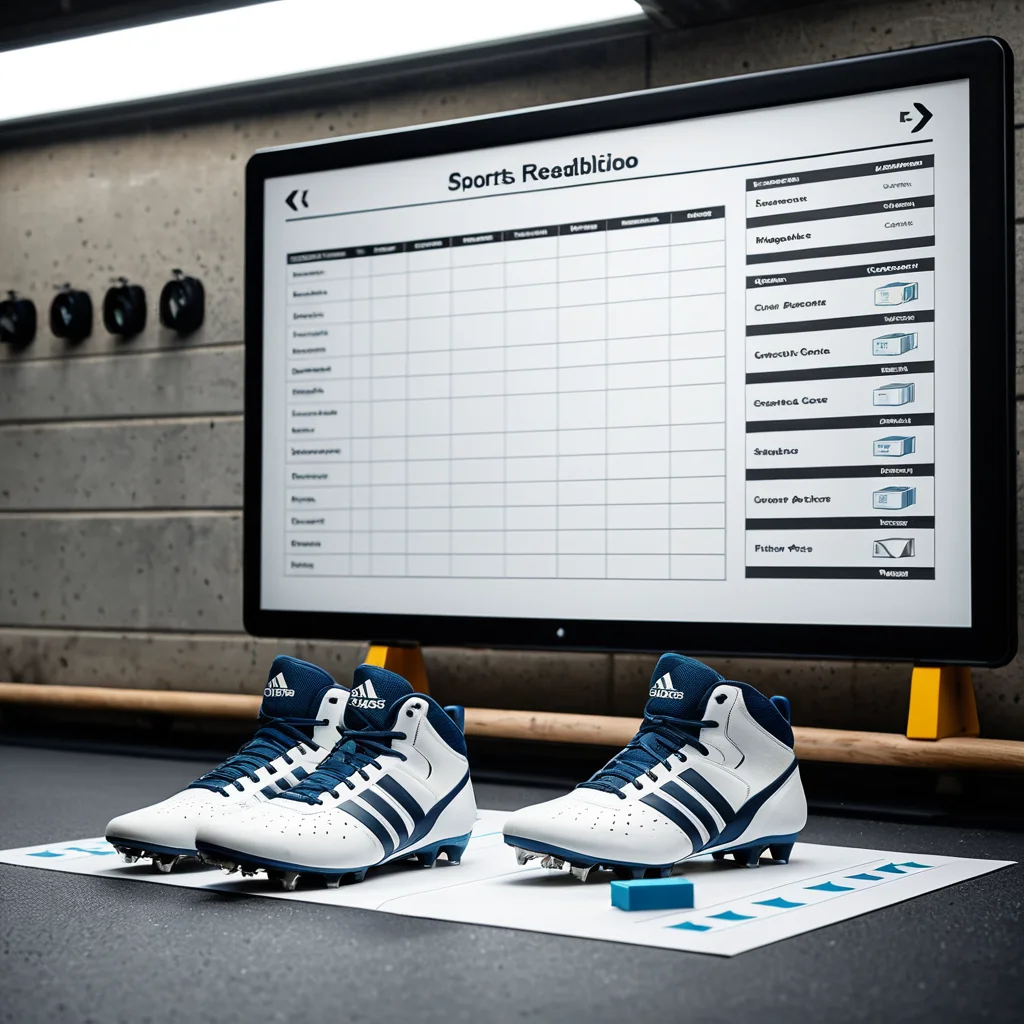
High ankle cleats are athletic shoes with an upper that extends above the ankle bone, forming a collar that wraps the lower leg for added lateral stability. The design originated in American football and has since found its way into baseball, softball, and select soccer boot lines. Modern versions use lightweight engineered knit, thermoplastic polyurethane overlays, and flexible foam padding to deliver support without adding meaningful weight.
The core functional benefit is proprioceptive feedback — the collar presses against the ankle, giving the nervous system a clearer positional signal and limiting the range of inward rolling motion that causes most ankle sprains. This matters most during explosive direction changes at high speed, exactly the movement pattern that defines skill positions in American football.
Athletes who benefit most from a high ankle design:
- Wide receivers, tight ends, and defensive backs who run precise routes and absorb contact below the knee
- Players with a documented history of lateral ankle sprains or chronic ankle instability
- Youth athletes still developing balance and lower-leg neuromuscular control
- Any player competing on soft, uneven, or waterlogged surfaces where the ankle is more likely to roll unpredictably
Performance tradeoffs to consider: Some athletes — particularly soccer players and track sprinters — find that the rigid collar reduces the subtle ground-feel and free ankle dorsiflexion they rely on for top-end speed and ball manipulation. For those positions, a low-cut or mid-cut design often remains preferable. The good news is that material science has narrowed this gap considerably; the best high ankle cleats of 2024 and 2025 flex naturally through the gait cycle while maintaining meaningful lateral restriction.
2. Track Spikes Explained — Speed, Surface, and Fit
Track spikes are the most purpose-specific footwear covered in this guide. Every design decision — plate stiffness, heel drop, spike configuration, upper weight — is optimized for a single goal: moving as fast as possible over a precisely measured distance on a prepared track surface. That specialization means track spikes perform brilliantly within their intended event category and poorly outside of it.
Types of track spikes by event:
- Sprint spikes (60m–400m): Maximally rigid carbon fiber or nylon plate, near-zero heel-to-toe drop, aggressive forefoot spike positioning angled forward for explosive toe-off. Minimal cushioning by design — every gram saved is a gain in relative power output.
- Middle-distance spikes (800m–1500m): Slightly more flexible plate with modest heel cushioning to manage the longer duration on the track. Still forefoot-loaded but with enough heel structure to accommodate heel contact on longer efforts.
- Long-distance and cross-country spikes (3000m and beyond): Greater flexibility, meaningful heel drop, and durable outsole materials that handle varied terrain including mud, grass, and gravel.
- Jumping spikes: Stiff heel section for explosive takeoff in long jump, triple jump, and high jump. Some high jump spikes also include a heel spike for uphill approach mechanics.
- Throwing shoes: Smooth rotational sole for discus and hammer throw; spike-soled versions exist for shot put approach and javelin run-up.
Spike length and compliance: Standard spike pins range from 3mm to 12mm. Indoor tracks and many artificial outdoor surfaces cap legal spike length at 6mm to protect the surface and other athletes. Always consult your meet’s technical regulations before race day — using an illegal spike length can result in disqualification.
Fit guidance: Track spikes should fit snugly with zero heel slippage and minimal toe box space. Unlike everyday running shoes, sizing down a half size from your standard running shoe size is common and often recommended by coaches. The spike plate should align precisely with your metatarsal heads when you stand on your toes.
3. Football Boots vs. Soccer Cleats — Key Differences
In international English, “football boots” and “soccer cleats” are frequently used as synonyms for the same shoe. For the purposes of this guide, the distinction that matters most is between association football footwear (worn in soccer) and American football cleats. These two shoe categories look superficially similar but differ in meaningful ways that affect legality, performance, and safety.
| Feature | Soccer / Football Boots | American Football Cleats |
|---|---|---|
| Average Weight | 150–250g (ultralight priority) | 300–500g (durability priority) |
| Ankle Height Options | Predominantly low-cut | Low, mid, and high-cut available |
| Toe Stud | None — prohibited by FIFA rules | Common — aids lineman drive stance |
| Stud Pattern | Bladed or conical, evenly distributed | Multi-directional with forward toe stud |
| Upper Material | Kangaroo leather, synthetic, knit mesh | Synthetic leather, reinforced mesh panels |
| Ball Contact Zone | Engineered strike surface on upper | Not optimized for ball manipulation |
| Primary Playing Surface | Natural grass, artificial grass, turf | Natural grass, artificial turf |
| Price Range | $30–$350+ | $40–$250+ |
The toe stud issue: The single most important structural difference between these two categories is the presence of a forward toe stud on American football cleats. This stud helps linemen generate forward push from a three-point stance. In soccer, that same stud is banned by FIFA and most youth and recreational leagues worldwide due to the risk of lacerating another player during a tackle or aerial challenge. Never wear American football cleats in a sanctioned soccer match.
Upper design: Soccer boot uppers are engineered to maximize ball feel — thin, conforming materials with textured zones for enhanced ball grip during passing, shooting, and control. American football cleat uppers prioritize durability and ankle lockdown over sensory feedback, since players never handle a ball with their feet.
🛒 Recommended Product
4. Cleat Types by Surface — Firm Ground, Soft Ground, Turf, and Indoors
Wearing the wrong cleat on the wrong surface is the most common equipment mistake amateur athletes make. It degrades performance, accelerates wear on the shoe, and — most critically — changes the biomechanical forces at the ankle and knee in ways that increase injury risk.
Firm Ground (FG): The default cleat for most recreational and competitive players. Designed for natural grass in dry to moderately firm conditions. Features molded conical or bladed studs in TPU or hard rubber. Stud count typically ranges from 12 to 16. Do not use firm ground cleats on hard, bone-dry fields or synthetic turf — the rigid studs will not compress as designed, creating abrupt stopping forces at the joints.
Soft Ground (SG): Features longer, fewer studs — often metal-tipped and fully replaceable. Designed for wet, muddy, or heavily aerated natural grass where deep stud penetration prevents slipping. Using soft ground cleats on firm or synthetic surfaces creates excessive grip that can torque the ankle and knee dangerously during pivoting movements.
Artificial Ground / Artificial Turf (AG/TF): Shorter, more numerous rubber or TPU studs distributed across the entire outsole, including the midfoot. Designed for third-generation (3G) and fourth-generation (4G) synthetic grass surfaces. The distributed pressure prevents the aggressive localized bite that firm-ground studs create on synthetic fibers, reducing both surface wear and athlete injury risk.
Turf Trainers (TF): A rubber nub sole without traditional studs. Designed for hard artificial surfaces, futsal courts, asphalt-base outdoor courts, and training on hard-packed urban pitches. Not suitable for natural grass — traction is insufficient for lateral cuts on soft surfaces.
Indoor (IN): Flat, non-marking gum rubber outsole. Designed exclusively for gymnasium floors, sports halls, and indoor soccer and futsal arenas. Zero stud penetration. Using any studded cleat on a hardwood or polished sport surface is both a traction and floor damage issue.
5. High Ankle vs. Low Cut — Ankle Support and Injury Prevention
Few footwear debates in sports science generate more opinion than whether shoe collar height meaningfully prevents ankle injuries. The evidence is more nuanced than either side of the argument typically acknowledges.
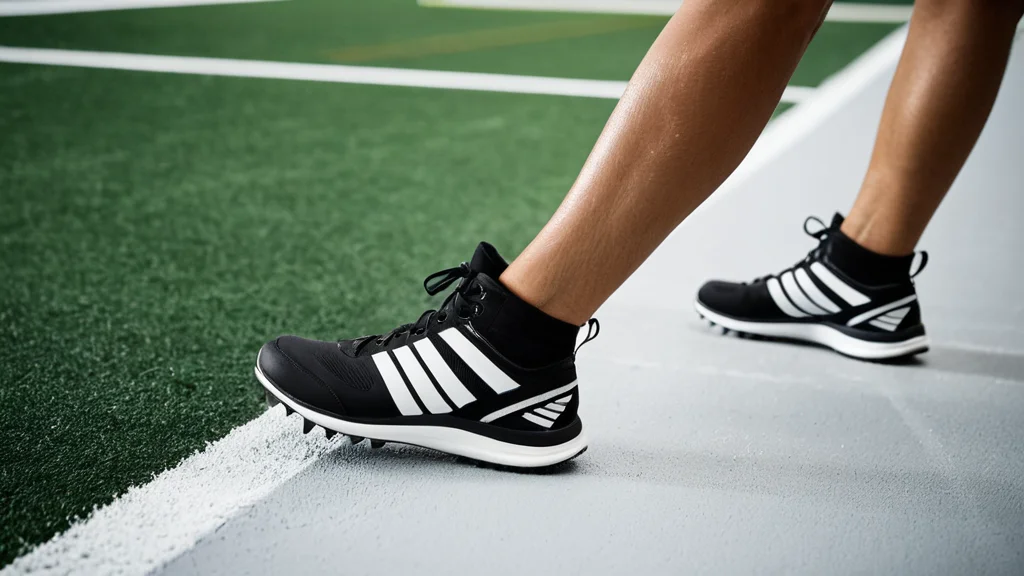
What research indicates: Studies in the Journal of Athletic Training and related publications confirm that high-top shoe collars do provide measurable proprioceptive benefit and do reduce the maximum range of inversion motion during a simulated ankle roll. However, multiple systematic reviews have found that shoe collar height alone does not significantly reduce ankle sprain incidence without accompanying ankle-strengthening exercises and neuromuscular training. The shoe collar is one layer of a multi-layer prevention strategy — not a standalone solution.
Position-by-position cut recommendations:
| Position / Event | Recommended Cut | Primary Reason |
|---|---|---|
| American Football Lineman | High | Blocking requires braced lateral stability under contact |
| Wide Receiver / Defensive Back | High or Mid | Cut routes combined with risk of low-leg contact |
| Soccer Striker / Winger | Low | Ball feel, weight savings, and free ankle plantarflexion |
| Soccer Midfielder / Defender | Low or Mid | Balance between agility and moderate contact exposure |
| Track Sprinter | Low (spike) | Every gram counts; unrestricted ankle extension is essential |
| Cross-Country Runner | Low | Terrain adaptation requires free ankle movement in all planes |
The brace-plus-low-cut approach: A growing number of collegiate and professional athletes combine low-cut cleats with external lace-up ankle braces such as the ASO Ankle Stabilizer or McDavid Ultra Ankle Brace. This pairing delivers the lateral restriction of a high-ankle collar with the ground-feel and weight profile of a low-cut shoe — an increasingly common compromise at elite levels of play.
6. How to Choose the Right Sole and Stud Configuration
Once you have matched your cleat to the correct surface category, stud configuration becomes the next performance variable. The shape, count, and placement of studs directly affect how force is absorbed and redirected during acceleration, deceleration, and lateral cuts.
Conical studs: Round, symmetrical pegs that allow full 360-degree rotation around the stud axis. Athletes can pivot easily in any direction without the stud catching. Ideal for players who change direction frequently — soccer midfielders, running backs, and cornerbacks. The tradeoff is slightly less forward drive compared to bladed alternatives.
Bladed studs: Elongated, rectangular studs that dig into the ground along a defined axis. They generate exceptional traction for linear acceleration and deceleration but make lateral rotation stiffer. Common in speed-focused soccer boots and cleats worn by wide receivers and running backs who run primarily in straight lines before a single cut.
Hybrid configurations: The current standard in premium cleats. Bladed studs at the heel for push-off power, conical studs at the forefoot for quick pivoting. Nike’s Flyplate, Adidas’s SprintFrame, and Puma’s StubbornGround technologies each implement versions of this philosophy. For most athletes, a well-designed hybrid sole outperforms a single-type stud pattern across the full range of athletic movements.
Stud count and pressure distribution: Fewer, longer studs concentrate force over a smaller contact area — better penetration on soft surfaces, but higher pressure per stud on firm ground. More, shorter studs spread load broadly — appropriate for hard or artificial surfaces where deep penetration is neither possible nor desirable. Choosing the wrong count for your surface creates uneven pressure across the foot and accelerates both stud wear and plantar tissue fatigue.
Replaceable vs. molded studs: Replaceable metal studs (standard on soft-ground soccer boots and many American football cleats) allow length adjustment between sessions based on daily conditions. They require a stud wrench and periodic tightening. Molded studs are maintenance-free and available in every surface category, but cannot be customized once the sole is formed. For athletes who play exclusively in one surface type, molded studs are a practical and cost-effective choice.
7. Top Picks — Best High Ankle Cleats, Spikes, and Soccer Boots in 2025
Best High Ankle American Football Cleats:
- Nike Alpha Menace Pro 3: Lightweight engineered knit collar with a responsive React foam midsole. Excellent lockdown for skill positions without the weight penalty of older high-top designs.
- Adidas Adizero 13.0 High: Carbon-infused sprint plate with a structured ankle collar. Built for speed-first players who want maximum energy return on each step.
- Under Armour Highlight MC: A long-trusted franchise for linemen and linebackers. The molded collar provides exceptional ankle lockdown during sustained contact.
Best Track Spikes by Event:
- Nike Dragonfly 2 (Sprint): The spike of choice at multiple world championship events. Full-length carbon plate, aggressive forefoot geometry, and a fit system that eliminates heel lift under full sprint effort.
- Adidas Adizero Ambition (Middle Distance): Versatile 800m–1500m spike with Lightstrike Pro foam for energy return over repeated laps. Accommodates both forefoot and midfoot strikers.
- New Balance MD500 v9 (Middle Distance): Strong alternative for athletes with wider feet. The roomier forefoot allows natural toe splay at race pace without sacrificing plate stiffness.
Best Soccer Cleats and Football Boots:
- Adidas Predator Elite FG: Textured upper zones designed for grip on the ball during power shots and precise passes. The Controlframe outsole provides excellent stability across all stud types.
- Nike Mercurial Superfly 10 Elite FG: The speed standard in soccer footwear. Ultralight Flyknit upper with a knit collar, asymmetric lacing for a clean strike zone, and a Flyplate for sprint-specific energy return.
- Puma Future 7 Ultimate FG/AG: Adaptive lacing system that tightens the fit around the midfoot with a single pull. Excellent choice for athletes with narrow heels and wider forefeet.
Best Budget Options (under $80):
- Nike Vapor Edge Shark (American Football): Solid multi-surface traction, supportive fit, and a durable outsole at a fraction of the elite-tier price.
- Adidas Copa Pure.3 FG (Soccer): Synthetic leather upper that mimics the feel of kangaroo leather at a significantly lower price point. Reliable conical stud traction on firm natural grass.
8. Care, Maintenance, and When to Replace Your Footwear
Proper maintenance directly extends the functional life of cleats and preserves the performance characteristics built into the sole and upper. A pair of premium cleats that is neglected after each use can degrade to the performance level of a budget shoe within a single season.
After every use:
- Remove excess mud and grass with a soft-bristle brush or damp cloth — never submerge leather uppers or run synthetic uppers through a washing machine
- Pull out insoles and allow them to air dry flat and separately from the shoe to prevent mold and odor buildup
- Loosen laces fully and open the shoe wide so airflow reaches the interior
- Store at room temperature away from direct sunlight and heat sources — UV exposure degrades TPU studs and dries out leather uppers over time
Stud maintenance schedule:
- Inspect molded studs monthly for cracking, chipping, or uneven wear patterns that alter ground contact
- Tighten replaceable studs with a stud wrench before every game and every other practice — vibration and turf resistance loosen them progressively
- Replace worn or missing metal studs immediately — a missing stud shifts load to adjacent studs and alters foot mechanics enough to cause knee and hip compensation patterns
When to replace your cleats — warning signs to look for:
- Molded stud height worn below 5mm on firm-ground cleats — at this point traction is meaningfully reduced and the sole plate may begin direct ground contact
- Upper separation from the outsole at the toe box or heel (delamination) — structural adhesives do not respond well to re-gluing under athletic loads
- Midsole foam that does not rebound after thumb compression — press firmly into the midsole and hold for three seconds; an indent that remains indicates the foam has lost its energy-return capacity
- Persistent foot, ankle, or knee soreness that appears only after wearing a specific pair of cleats and was not present when the shoes were new
- Visible cracks in the outsole plate or stud base that compromise structural integrity during lateral loading
Most recreational players playing one to two days per week should budget for replacement cleats every one to two seasons. Competitive athletes training four to six days per week should evaluate their cleats for the warning signs above every three months and plan for replacement every six to nine months.
Ready to find the perfect cleat, spike, or football boot for your sport and surface? Browse the latest models from Nike, Adidas, Puma, Under Armour, and New Balance — filtered by position, surface type, and price range.